

Sri Lanka's Former First Lady Shiranthi Rajapaksa Arrested Over Children's Hospital Donation Allegations
Sri Lankan anti-corruption investigators have detained Shiranthi Rajapaksa, the wife of former President Mahinda Rajapaksa, in connection with allegations that a charitable organis
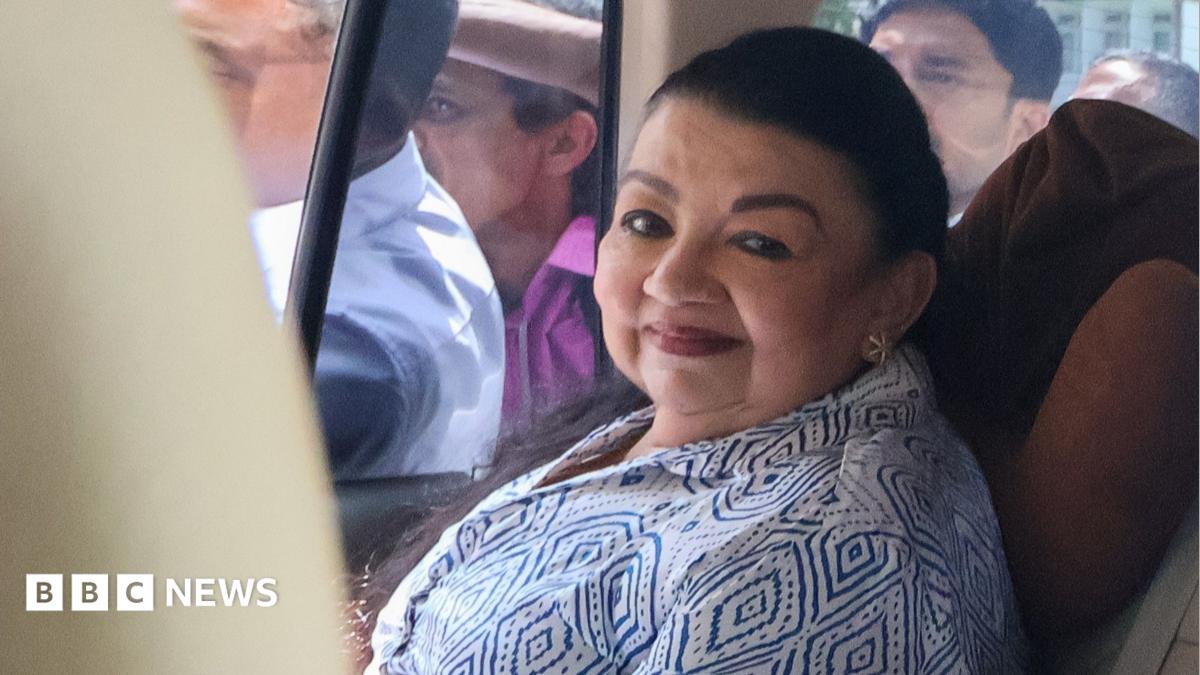
Sri Lankan anti-corruption investigators have detained Shiranthi Rajapaksa, the wife of former President Mahinda Rajapaksa, in connection with allegations that a charitable organisation linked to her diverted public donations intended for a children's hospital. The 73-year-old was taken into custody at the family's residence in Colombo on Wednesday, marking the latest development in a widening crackdown on alleged graft involving one of the country's most powerful political dynasties.
According to anti-corruption authorities, the case centres on approximately 10 million rupees — equivalent to about $30,300 or £22,800 — collected by the Siriliya Saviya charity. Those funds were reportedly raised with the stated purpose of purchasing a specialised medical scanner for Lady Ridgeway Children's Hospital in the capital. Investigators allege, however, that a scanner of the same type had already been provided to the hospital through a donation from the Chinese government, raising questions about how the charitable contributions were ultimately handled.
Rajapaksa has categorically denied any misconduct. Through representatives, she has maintained that the funds were never misappropriated and that the money remains intact. The former first lady's legal team had sought to prevent her arrest by filing a petition with the courts, but the matter was not scheduled for a hearing until 12 October — leaving authorities free to proceed with Wednesday's detention. She had returned to Sri Lanka only two days earlier, on Monday, after undergoing medical treatment in Singapore.
A spokesperson for the former president, Manoj Gamage, has publicly defended the family's position, insisting that the donations are securely held in Siriliya Saviya's bank accounts and that no fraudulent activity has taken place. Gamage's comments suggest the family intends to contest the allegations vigorously, framing the investigation as part of a broader political campaign against the Rajapaksa clan.
The arrest represents a significant escalation in the current government's efforts to revisit long-dormant corruption cases involving members of the Rajapaksa family. Under President Anura Kumara Dissanayake, Sri Lankan authorities have revived multiple investigations that had previously stalled, signalling a renewed willingness to pursue accountability at the highest levels of political life.
The Rajapaksa name has dominated Sri Lankan politics for nearly two decades. Mahinda Rajapaksa served as president from 2005 to 2015, and during his tenure, the family exercised extensive influence over the country's political and administrative machinery. He remains a polarising figure: many Sri Lankans credit him with ending a civil war that had endured for nearly thirty years, following the military defeat of the Tamil Tiger rebels in 2009 during his first term in office.
Yet the family's legacy has been severely tarnished by allegations of corruption and economic mismanagement. In 2022, widespread protests erupted as inflation soared and the nation faced crippling shortages of fuel, food and medicine. The crisis ultimately led to the removal of Mahinda's brother, Gotabaya Rajapaksa, who was serving as president at the time. The dramatic collapse of his government underscored the depth of public anger over the family's stewardship of the economy.
Since then, the Rajapaksa family has faced a growing wave of legal scrutiny. Earlier this year, Mahinda and Shiranthi's eldest son, Namal Rajapaksa, was arrested over allegations connected to an aircraft procurement deal finalised during his father's presidency. He remains in remand custody. Another son, Yoshitha Rajapaksa, was also arrested earlier this year on separate corruption charges. The pattern of detentions suggests prosecutors are systematically targeting multiple family members rather than pursuing isolated cases.
The current investigation into Shiranthi Rajapaksa focuses narrowly on the Siriliya Saviya charity and its handling of donations earmarked for medical equipment. The charity, which has been associated with the former first lady for years, operated as a prominent philanthropic organisation during her husband's time in power. The allegation that funds were collected for a scanner that had already been supplied by a foreign government raises uncomfortable questions about transparency and oversight in charitable fundraising conducted by political figures.
Anti-corruption officials have not indicated whether additional charges may follow or whether other individuals connected to the charity are under investigation. The questioning of Rajapaksa is expected to continue as authorities seek to establish a clear paper trail documenting the flow of donations and expenditures. Legal experts note that the case could hinge on whether the charity can demonstrate that the funds were reserved for legitimate future uses or whether they were solicited under false pretences.
For the Dissanayake administration, the arrest carries considerable political weight. The president came to power promising to tackle entrenched corruption, and pursuing the Rajapaksas serves as a high-profile demonstration of that commitment. However, the government must also navigate concerns that such investigations could be perceived as politically motivated retribution rather than impartial justice. Striking the right balance will be crucial to maintaining public confidence in the integrity of the legal process.
The detention of a former first lady is a rare and symbolically potent event in Sri Lankan politics, where leaders and their families have historically enjoyed substantial immunity from accountability. That Shiranthi Rajapaksa was arrested at her Colombo home — rather than voluntarily appearing before investigators — underscores the seriousness with which authorities are treating the allegations and their determination to proceed regardless of the family's political stature.
As the investigation unfolds, attention will likely focus on the upcoming court hearing scheduled for 12 October, where Rajapaksa's petition challenging her arrest is set to be considered. The outcome of that hearing, along with the progress of the broader inquiry, will shape perceptions of whether Sri Lanka's anti-corruption drive can deliver meaningful accountability or whether it will become mired in prolonged legal battles. For now, the arrest stands as a stark reminder that the Rajapaksa family's once unassailable political dominance continues to erode under the weight of multiple criminal investigations.
What's Your Reaction?
 Like
0
 Dislike
0
 Love
0
 Funny
0
 Wow
0
 Sad
0
 Angry
0

Data Journalist. Mengungkap fakta melalui data. Spesialisasi: analisis forensik digital.






Comments (0)