

Zelensky Denounces 'Vile' Russian Strikes That Killed 15 Across Ukraine
At least 15 people lost their lives overnight as Russian missiles and drones struck multiple regions across central and eastern Ukraine, in what President Volodymyr Zelensky descri
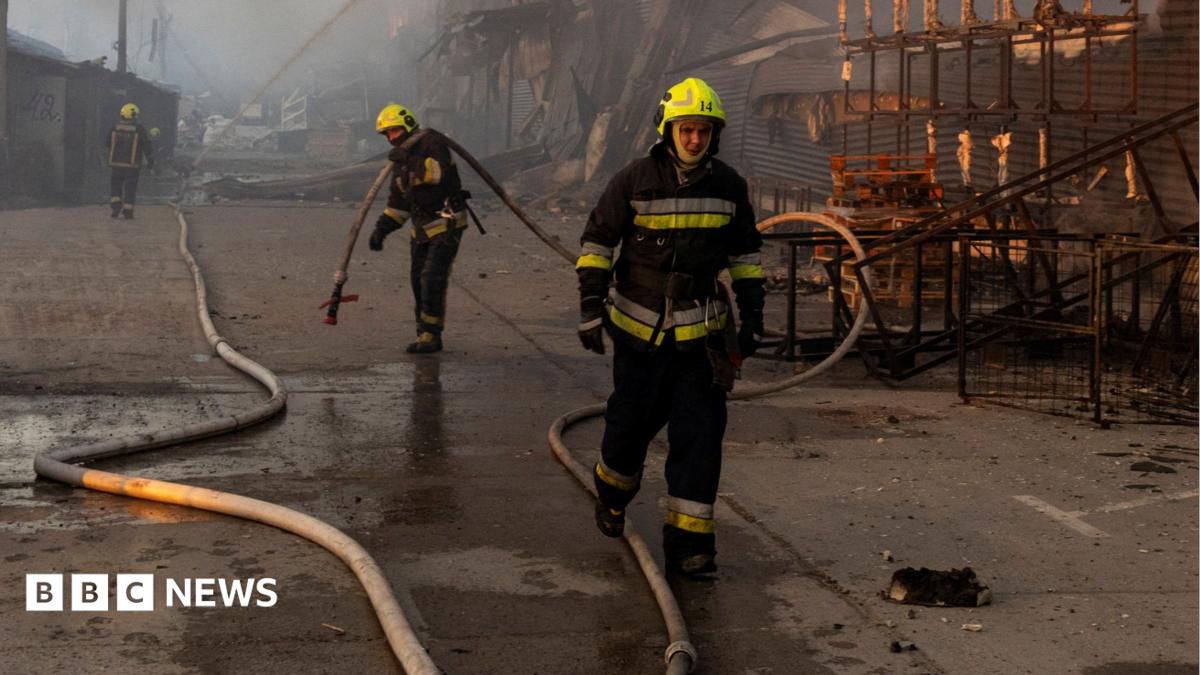
At least 15 people lost their lives overnight as Russian missiles and drones struck multiple regions across central and eastern Ukraine, in what President Volodymyr Zelensky described as one of the "most vile" attacks his country has endured since the full-scale invasion began. The bombardment, which unfolded over several hours, targeted both civilian infrastructure and residential neighbourhoods, leaving a trail of destruction from the Chernihiv region in the north to Zaporizhzhia in the south-east.
Writing on social media on Wednesday morning, Zelensky said the timing of the assault was deliberately symbolic, noting that it coincided with the 74th birthday of Russian President Vladimir Putin. He characterised the strike on a residential building in the town of Pryluky, in the Chernihiv region, as a macabre "birthday gift" to the Russian leader, underscoring what Kyiv views as Moscow's callous disregard for civilian life. The Ukrainian president stated that 70 missiles were fired in total during the overnight assault, a figure that, if confirmed, would make it one of the largest single barrages in recent months.
The human cost was heaviest in Pryluky, where a five-storey apartment block was partially destroyed. Zelensky initially reported that five people had been killed and 26 injured, including five children, in that single strike. He warned that more residents could still be trapped beneath the rubble, prompting an urgent rescue operation. By later in the morning, Chernihiv Oblast police confirmed that the death toll in the town had climbed to nine after the bodies of three children were recovered from the debris. Emergency workers continued to dig through the collapsed structure as families waited for news of missing relatives.
The town of Pryluky, located roughly 150 kilometres north-east of Kyiv, had largely escaped the worst of the war's violence until this attack. The destruction of the apartment building has shocked residents and underscored the growing reach of Russian missile capabilities, which have increasingly targeted areas far from the front lines. Local authorities described scenes of chaos and grief as rescue teams worked through the night, their efforts hampered by the scale of the damage and the ongoing threat of further strikes.
Elsewhere, the toll mounted across several regions. In the central city of Dnipro, two people were killed and eight injured after missile strikes damaged five apartment buildings, according to Zelensky. In Kremenchuk, a key industrial hub on the Dnieper River, four high-rise buildings were hit, though no fatalities were immediately reported there. In the capital, Kyiv, two people died, while another two were killed in Oleksandriya, a city in the Kirovohrad region. The strikes also targeted Zaporizhzhia, a city that has been repeatedly subjected to Russian attacks throughout the war.
Ukraine's national police released photographs showing what they identified as an unexploded Russian Iskander missile lying in the middle of a Kyiv district. BBC Verify confirmed the images were genuine and that fragments of the apparent missile landed in an open area surrounded by high-rise apartment buildings, a detail that highlights the indiscriminate nature of the attack. A separate video circulated by police showed rescue workers and volunteers digging through the collapsed remains of the Pryluky apartment block. Another verified video depicted damaged cars, rubble, and a fallen tree in an area of Kremenchuk surrounded by residential blocks.
Zelensky used the aftermath of the strikes to renew his appeal to Western allies for additional air defence systems. He acknowledged that Ukraine's military had managed to intercept only "some" of the missiles launched overnight, a candid admission that reflects the mounting pressure on the country's防空 capabilities. The president has consistently argued that without sufficient air defence support, Ukrainian cities will remain vulnerable to Russian barrages, and he has urged partners to accelerate deliveries of systems such as Patriot batteries and other advanced interceptors.
According to Zelensky, one of the "key targets" of the overnight attack was Ukraine's energy infrastructure. Moscow had previously signalled its intention to intensify strikes on power facilities in retaliation for Ukrainian attacks on Russian energy sites. The targeting of energy infrastructure is a strategy Russia has employed since the winter of 2022-2023, aiming to degrade Ukraine's ability to heat homes and power industries during the colder months. The latest strikes suggest that Moscow is preparing for another concerted campaign against the grid as winter approaches.
In a separate social media post on Wednesday, Zelensky revealed that Ukrainian forces had struck four targets inside Russia over the past 24 hours in what he described as retaliatory attacks. These included two oil facilities and a training ground located in the Perm, Samara, and Astrakhan regions, all of which lie deep inside Russian territory. He also stated cryptically that there was "also a response in the Black Sea," without providing further details. The comments signal Kyiv's willingness to take the war to Russian soil, particularly targeting infrastructure that fuels Moscow's military machine.
The Black Sea has emerged as a critical theatre in the conflict. On Tuesday evening, footage surfaced showing a massive plume of smoke billowing from an oil tanker off the coast of Sochi, a Russian resort city on the Black Sea. Russia's transport ministry later claimed that unmanned boats had attacked the Liberian-flagged Aframax Rio oil tanker, and authorities asserted that the crew had been rescued. The incident underscores the escalating maritime dimension of the war, where both sides are increasingly using drones and naval assets to strike at vessels and port infrastructure.
Separately, Bulgaria has halted its search for the missing crew of a ship that sank after being hit by a drone on Tuesday. Vice-Admiral Rumen Nikolov of the Maritime Administration Executive Agency confirmed the suspension of operations, as reported by Bulgarian television network Nora TV. Tracking data indicated that the vessel, identified by Bulgarian specialist outlet Maritime.bg as the Alfa Watan, had been anchored at the southern end of the Bosphorus strait until Monday, when it entered the Black Sea heading north. Its last reported position was at 23:43 GMT on Monday in Bulgaria's exclusive economic zone, roughly 130 kilometres east of Byala.
Bulgarian Prime Minister Rumen Radev said on Tuesday that a second vessel carrying grain had also been struck within the country's exclusive economic zone. All 18 crew members on that ship were rescued. Sofia has not publicly attributed responsibility for the attacks, though Zelensky claimed in his evening address on Tuesday that Russia was responsible. Moscow has not commented on the incidents. The attacks on civilian shipping in the Black Sea represent a dangerous escalation, potentially threatening vital grain export routes that Ukraine and its allies have worked to maintain despite the war.
The latest wave of violence comes as Russia intensifies its strikes in the Black Sea, particularly in the eastern portion, as part of its broader strategy to disrupt Ukraine's economy and military logistics. The targeting of commercial vessels, including those carrying grain, raises concerns about global food security, given Ukraine's role as a major exporter of wheat, corn, and sunflower oil. International maritime organisations have warned that the Black Sea is becoming increasingly perilous for civilian shipping, with insurers raising premiums and some operators avoiding the region altogether.
Moscow has yet to comment on the overnight strikes across Ukraine. In the past, the Russian defence ministry has claimed that its attacks target military infrastructure and energy facilities linked to Ukraine's armed forces, though evidence on the ground frequently contradicts such assertions. The destruction of residential buildings in Pryluky, Dnipro, and Kremenchuk adds to a growing body of documentation by international monitors and journalists of civilian harm caused by Russian strikes. The United Nations has repeatedly condemned attacks on civilian areas, noting that they may constitute war crimes under international law.
As rescue operations continued in Pryluky and other affected cities, the human toll of the overnight bombardment became clearer. Families mourned the dead, including children whose lives were cut short by missiles that struck their homes while they slept. The attack served as a stark reminder that, more than two and a half years into the full-scale invasion, civilians across Ukraine remain exposed to the daily threat of Russian violence. For Zelensky and his government, the strikes reinforced the urgent need for stronger air defences and continued international support, while also highlighting the grim reality that diplomatic efforts to end the war remain stalled.
Additional reporting by BBC Verify.
What's Your Reaction?
 Like
0
 Dislike
0
 Love
0
 Funny
0
 Wow
0
 Sad
0
 Angry
0

Editor Investigasi. Pemenang penghargaan jurnalisme investigasi. Spesialisasi: korupsi, kolusi, dan maladministrasi.




Comments (0)