

Canada Halts Expansion of Assisted Dying to Mental Illness Patients Indefinitely
The Canadian government has announced it will indefinitely shelve its controversial plan to broaden its medically assisted dying legislation to include individuals whose only medic
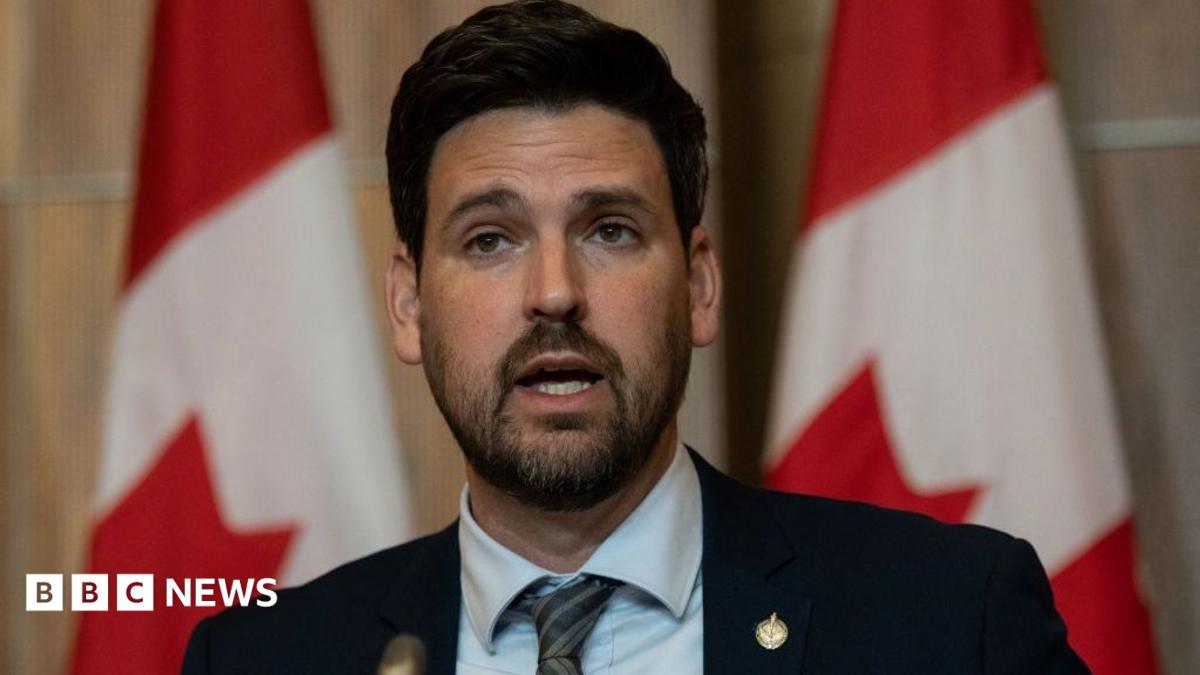
The Canadian government has announced it will indefinitely shelve its controversial plan to broaden its medically assisted dying legislation to include individuals whose only medical condition is a mental illness. The decision, revealed on Wednesday by Justice Minister Sean Fraser, effectively ends a years-long process that had been closely watched by lawmakers, medical professionals, and rights advocates around the world.
Fraser told reporters that the government had arrived at the conclusion that there is no clear consensus on which patients should qualify under an expanded regime. He described the choice to pause the expansion as a difficult one, but insisted it was the right path forward. "While there is not a perfect consensus on this issue, we believe this is the correct approach," he said during the announcement.
The move follows a recommendation issued earlier this year by a parliamentary committee that reviewed the matter in depth. That panel concluded that Canada should permanently exclude people whose sole underlying condition is a mental illness from accessing the program, known domestically as Maid, or Medical Assistance in Dying. The committee also stressed what it called a pressing need for broader and more equitable access to mental health services across the country.
Under the new timeline that had been set before Wednesday's reversal, Canadians suffering solely from a mental disorder would have become eligible to seek assisted dying by March 2027. That deadline had already been pushed back twice since the expansion was first proposed in 2023, when the government sought additional time to study how such requests could be safely assessed and delivered.
Fraser confirmed that the government now intends to introduce fresh legislation in the coming weeks. That bill will formally and indefinitely suspend the expansion, removing the March 2027 date from the statute books. The same piece of legislation is expected to include another significant change: permitting patients with a progressive, incurable illness to give advance consent to assisted dying before their condition deteriorates to the point where they can no longer express their wishes. Such advance requests are not currently permitted under Canadian law.
The debate over extending Maid to people with mental illness has been deeply divisive in Canada. Proponents argue that denying access to this group amounts to discrimination, violating their constitutional rights to equality and healthcare. They contend that individuals with severe, treatment-resistant psychiatric conditions suffer just as profoundly as those with physical ailments and should be afforded the same end-of-life choices.
Among those challenging the government's earlier delays is Claire Brosseau, a Toronto woman living with treatment-resistant bipolar 1 disorder. She is part of a federal court case arguing that the current restrictions are unjust. In an interview with the BBC earlier this year, Brosseau said euthanasia would provide her with what she described as "a safe death," framing it as a form of dignity and control over her own suffering.
Opponents, however, have raised a host of concerns. Chief among them is the argument that medical science still lacks sufficient tools to reliably determine when a mental illness is truly irremediable, meaning beyond any hope of recovery. Fraser echoed that worry on Wednesday, saying that hearing about the lack of medical consensus on the irremediable nature of certain psychiatric conditions gave him real cause for concern.
Other critics have taken aim at the broader Maid framework itself, warning that it has increasingly been used to address suffering rooted in poverty, social isolation, or inadequate housing, rather than as a genuine last resort. These experts argue that offering death as a solution to people who would be better served by improved access to affordable housing, mental health care, and social supports is a troubling abdication of state responsibility.
The parliamentary committee that studied the question heard testimony from physicians, advocates, and specialists from countries that already permit assisted dying for people with mental illness alone, most notably the Netherlands and Belgium. Those nations have become reference points in the Canadian debate, cited both by supporters who see them as models and by skeptics who point to cases that have generated public controversy.
Not all committee members endorsed the final recommendation. A dissenting report was issued by some members who argued that the committee's process was fundamentally flawed and biased, suggesting that its conclusion had been predetermined. That dissent highlights how deeply the issue has split even the bodies tasked with evaluating it.
The courts may yet intervene. A federal lawsuit continues to challenge the government's previous decision to delay access to Maid for people with mental illness. Fraser acknowledged that the Supreme Court of Canada could ultimately have the final word on the matter, a possibility that leaves the long-term future of the expansion uncertain despite Wednesday's announcement.
Public opinion on the subject appears nuanced. Survey data indicates that a majority of Canadians broadly support access to medically assisted death, but that backing diminishes noticeably when the question turns specifically to patients whose only condition is a mental illness. That divide has given the government political cover for its cautious approach.
Assisted dying first became legal in Canada in 2016, initially limited to adults with terminal illnesses whose deaths were reasonably foreseeable. Those patients still make up the overwhelming majority of cases. A Quebec court ruling later paved the way for a major expansion in 2021, allowing people with incurable but non-terminal conditions to seek the procedure as well. That second track is known in Canada as "track two" Maid.
Wednesday's decision means Canada will not follow through on what would have been one of the most permissive assisted dying regimes in the world. For now, the government is opting for caution, citing medical uncertainty and the absence of consensus. Yet with a court challenge ongoing and advocates vowing to continue their fight, the issue appears far from settled.
The government's proposed legislation, expected in the coming weeks, will be closely scrutinized by both supporters and opponents of the expansion. Beyond the mental illness question, its provisions on advance consent could reshape how Canadians approach end-of-life planning, allowing them to make decisions while still capable rather than waiting until capacity is lost. How that measure is received may determine whether Wednesday's pause marks a lasting settlement or merely another chapter in a long-running national argument.
What's Your Reaction?
 Like
0
 Dislike
0
 Love
0
 Funny
0
 Wow
0
 Sad
0
 Angry
0

Editor Investigasi. Pemenang penghargaan jurnalisme investigasi. Spesialisasi: korupsi, kolusi, dan maladministrasi.




Comments (0)