

Maricarmen Abascal, 87, Whose Eviction Ignited Spain's Housing Revolt, Dies
Maricarmen Abascal, the 87-year-old Spanish pensioner whose forced removal from her Madrid apartment galvanised nationwide demonstrations and triggered a snap general election, has
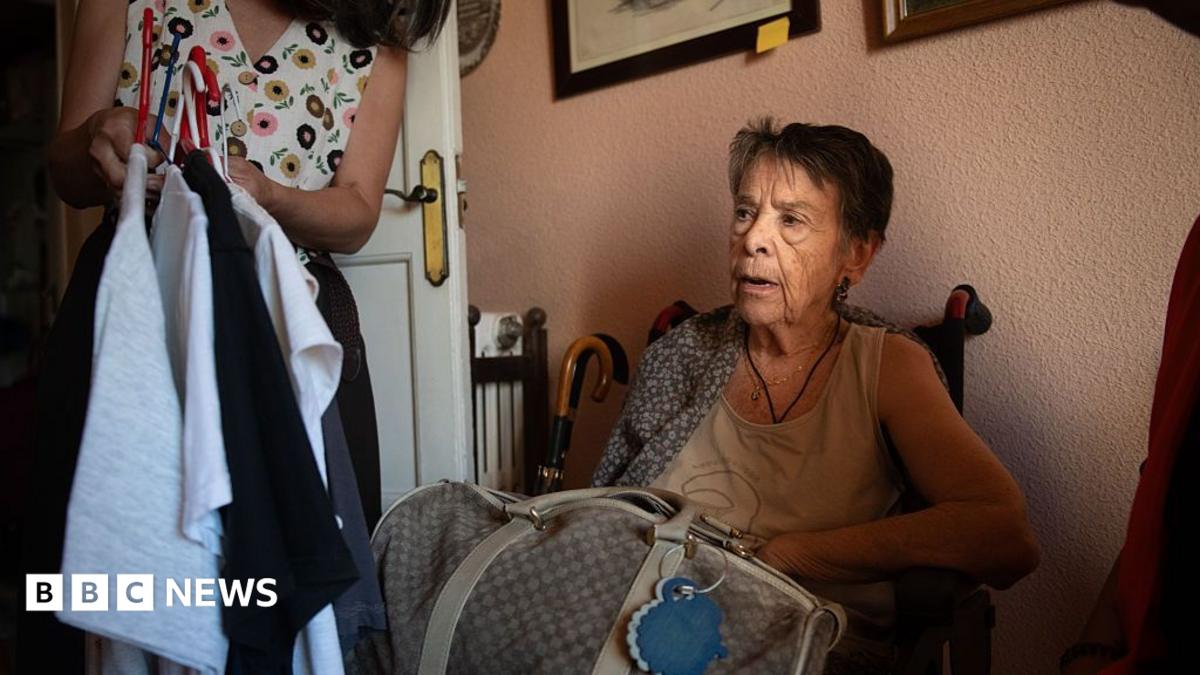
Maricarmen Abascal, the 87-year-old Spanish pensioner whose forced removal from her Madrid apartment galvanised nationwide demonstrations and triggered a snap general election, has died, according to the Madrid Tenants' Union. The union announced her passing on Wednesday, confirming that the woman who had become the human face of Spain's escalating housing emergency had succumbed after being hospitalised in the wake of her eviction.
Abascal was removed from the flat she had occupied for more than seven decades on 23 September 2026, carried out on a stretcher by authorities after she was unable to meet steep rent increases imposed by the property's owner. The image of the elderly woman being taken from her home immediately became a rallying point for activists, opposition politicians, and ordinary Spaniards struggling with soaring housing costs.
Her connection to the apartment dated back to 1956, when her father first signed the tenancy agreement. Abascal remained in the property after her parents died, benefiting from a rent cap that had kept her monthly payments at €500. That arrangement unravelled after Urbagestión acquired the building in 2018 and raised the rent to €2,650 per month — more than five times the original figure and far beyond what a pensioner could reasonably afford.
The company subsequently offered to lower the rent to €1,650, but even that reduced sum exceeded Abascal's monthly pension by €300. Three separate attempts to evict her were previously blocked by Spanish courts, and the case attracted growing media scrutiny as her legal options narrowed. The eventual eviction in late September 2026 marked the end of a prolonged battle that had already drawn national attention.
The Madrid Tenants' Union, which had campaigned on Abascal's behalf, confirmed her death in a statement describing her ordeal as "a turning point in the history of this country." Union spokesperson Alicia del Río delivered a pointed criticism of the forces she blamed for Abascal's fate. "Speculation costs lives, and today rentierism has finished killing our colleague Maricarmen," del Río said, while insisting that "her memory lives on with us."
In a video recorded from her hospital bed after the eviction, Abascal struck a defiant but reflective tone. "I haven't managed to defend my home, but I have fought so that others can learn to fight for what's theirs," she said. The union said it would honour her final instruction to supporters: "fight, keep fighting for what is yours." The organisation also noted that while a historic agreement had been reached that would have allowed her to return home, the solution arrived too late, calling the outcome "an absolutely avoidable situation after a torturing process."
News of her death prompted an outpouring of grief and anger. Protesters converged on Madrid's Puerta del Sol, the central square that has hosted a protest encampment for the past two weeks. Photographs from the scene showed demonstrators embracing one another, lighting candles, and holding posters bearing Abascal's image. The square, long a symbolic site of Spanish public life, has become the epicentre of a movement demanding urgent reforms to the country's rental market.
Spanish Prime Minister Pedro Sánchez, who leads a leftist coalition without a parliamentary majority, offered his condolences. "All my love goes to Maricarmen's family and loved ones," he wrote, adding "a hug as well to everyone who today feels this loss as their own." Sánchez has positioned himself as an ally of the housing movement, arguing that intervention is necessary to protect tenants from speculative practices that have driven rents to unaffordable levels in major cities.
The political consequences of Abascal's case have been swift and substantial. Anger over her eviction intensified pressure on the coalition government to approve emergency housing legislation, but the measure was rejected in Congress last week. That defeat, combined with mounting public outrage, led Sánchez to call an early general election for 29 November 2026 — a decision announced on Monday after the parliamentary setback.
Tens of thousands of people took to the streets in cities across Spain over the weekend in response to the legislative failure, in one of the largest displays of housing-related unrest the country has seen in years. The protests reflected deep-seated anxieties about affordability, inequality, and the growing influence of large property investment firms in Spain's residential market.
Earlier on Wednesday, before the announcement of Abascal's death, trade unions had already called a general strike for 11 November to demand comprehensive housing reforms. The strike call represents an escalation of labour and civil society pressure on the government, linking the housing crisis to broader concerns about wages, job security, and the cost of living.
The political right has countered that the government's proposed intervention in the housing market would ultimately backfire by discouraging landlords from renting properties, thereby reducing supply and pushing prices even higher. These arguments were central to the rejection of the emergency legislation in Congress and form part of a broader ideological battle over the role of the state in regulating housing.
Sánchez's political difficulties extend beyond housing. His party has been buffeted by numerous corruption scandals, sustained pressure over the rising cost of living, and contentious debates over immigration policy. Even as he frames the election as a chance to secure "a broader progressive majority" capable of overcoming "the resistance of the elites," opinion polls generally suggest the conservative opposition is positioned to become the largest party.
Should those forecasts hold, the conservatives would likely require the support of the hard-right Vox party to assemble a governing majority — a prospect that would mark a significant shift in Spain's political landscape. The election, now set for 29 November, will serve as a referendum not only on Sánchez's leadership but on the direction of Spanish housing policy and the broader social contract.
Abascal's death has added a sombre and potentially politically potent dimension to the campaign. For the tenants' movement and its allies, she has become a symbol of what they describe as a system that prioritises property speculation over human dignity. For the government, her case illustrates the urgent need for reforms that it has so far been unable to deliver. For the opposition, it raises difficult questions about how to address a crisis that has clearly moved to the centre of Spanish public life.
What began as a personal struggle over a rent increase in a single Madrid apartment has, within weeks, reshaped the national conversation, toppled legislation, triggered a general strike, and now set the stage for an early election. Whether Abascal's memory will translate into lasting policy change remains uncertain, but the union's pledge to continue her fight suggests that the movement her eviction helped ignite shows little sign of fading.
What's Your Reaction?
 Like
0
 Dislike
0
 Love
0
 Funny
0
 Wow
0
 Sad
0
 Angry
0

Editor Investigasi. Pemenang penghargaan jurnalisme investigasi. Spesialisasi: korupsi, kolusi, dan maladministrasi.





Comments (0)