

Three Years After October 7, Israelis Press for Answers as Netanyahu Seeks Another Term
Three years after the deadliest attack in Israel's history, the community of Kfar Aza gathered at dawn on Wednesday to remember its dead. As first light spread over the border with
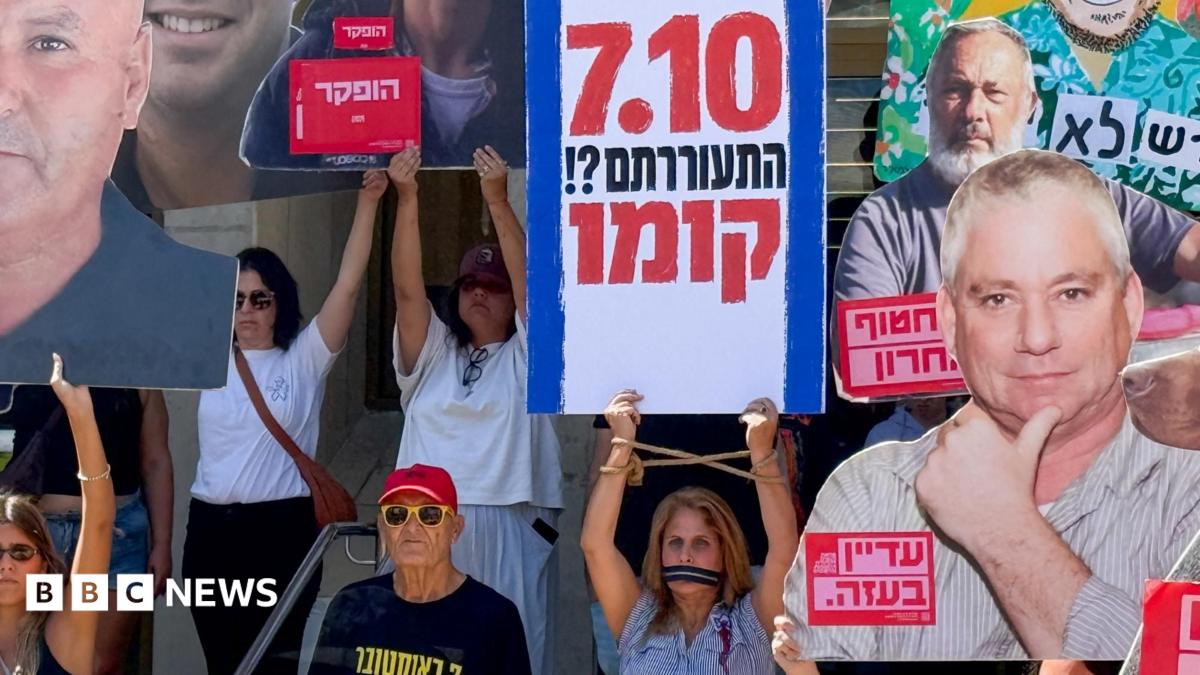
Three years after the deadliest attack in Israel's history, the community of Kfar Aza gathered at dawn on Wednesday to remember its dead. As first light spread over the border with Gaza, residents walked quietly toward the kibbutz armoury — the site where, shortly after 7am on 7 October 2023, Hamas-led gunmen killed half of the community's 14-member civil defence squad. In total, 64 people from Kfar Aza were killed that day and 19 were taken hostage into Gaza.
The anniversary ceremonies reflect a grief that has not faded. But they also reflect a growing political demand: that someone be held responsible for the security catastrophe that allowed the attack to happen. "I need my country to take responsibility," said Inbar Goldstein, whose brother and niece were killed and four other relatives were abducted from the kibbutz.
The scale of the attack remains difficult to comprehend. Around 1,200 people were killed across southern Israel when gunmen breached the border fence and assaulted nearby communities, making it the worst loss of life Israel had suffered since the state's founding in 1948. A further 251 people were dragged back into Gaza as hostages.
What has not followed, three years on, is an independent state inquiry into how the failure was possible. No such investigation has been established, leaving central questions unresolved: what caused the intelligence breakdown, what warnings reached military and political leaders in the weeks and months beforehand, and what the prime minister knew.
Those questions are now colliding with electoral politics. Benjamin Netanyahu, who was in office at the time of the attack, is running for election again on a familiar platform — promising to be tougher and stronger than any rival in defending Israel from its enemies. He has consistently rejected personal responsibility for the failures of that day.
For families like Goldstein's, the absence of accountability is itself a wound. She argues the attack did not begin or end on 7 October, describing what she called a long process of abandonment whose roots have never been examined.
Much of the scrutiny has focused on warnings that went unheeded. For months before the assault, young female soldiers stationed at observation bases along the Gaza border had flagged suspicious activity and possible preparations for an attack to their superiors. One of them was Roni Eshel, killed along with 14 other members of her unit when gunmen overran their base at Nahal Oz, adjacent to Kfar Aza.
Her uncle, Elad Levy, wants a full accounting. He asked whether Egypt or the United Arab Emirates had passed warnings to the prime minister, and whether other alerts were ignored. "We need to find out what happened — not just on the day, but the year before, and five years before that," he said, warning that without an inquiry the failure would repeat itself.
Over the past three years, reports have accumulated suggesting that Netanyahu received warnings — from his own security chief and from regional neighbours — ahead of the attack. He denies this. Last month, the Israeli newspaper Haaretz published extracts from a new book alleging that the leader of the United Arab Emirates telephoned Netanyahu ten days before the attack to warn of Hamas plans for a major operation. Netanyahu's office dismissed the report as "an absolute lie" and said he would sue the newspaper.
Defenders within his Likud party have pushed back hard. Amir Ohana said in a social media video last month that it was "preposterous and absurd" to suggest Netanyahu could have known of the attack when Yahya Sinwar, then Hamas's leader in Gaza, had shared the plan with only a handful of people. Ohana credited the prime minister with reshaping the Middle East and said he did not give up even when voices at home and abroad urged him to stop.
Netanyahu has instead directed blame at his own security chiefs, accusing them of deliberately deciding not to wake him in the hours before the attack because they feared he would order a massive IDF deployment and escalate the situation. In an interview with the right-wing Channel 14 television network, he suggested that had he been woken, the outcome would have been different and Israel would have been better protected.
That argument — that a more aggressive response was available and was withheld — sits at the centre of the political fight now unfolding. For critics, it is an attempt to shift responsibility away from the decision-making level. For supporters, it is proof that the prime minister remains the leader best equipped to confront Israel's enemies.
For the bereaved families, the dispute is not abstract. Kfar Aza lost roughly a tenth of its residents in a single morning, and survivors still live alongside the memory of the armoury, the observation bases and the warnings that never produced action. Many say the passage of three years without an independent inquiry has deepened their sense that the state has not fully owned what happened.
The demand for accountability therefore extends beyond any single person. It touches on how intelligence is assessed, how warnings travel up the chain of command, and whether political leaders can be examined as rigorously as soldiers and officers. Until those questions are answered in a formal process, the families argue, the country cannot meaningfully claim to have learned from 7 October — and the risk of a repeat remains.
What's Your Reaction?
 Like
0
 Dislike
0
 Love
0
 Funny
0
 Wow
0
 Sad
0
 Angry
0

Editor Investigasi. Pemenang penghargaan jurnalisme investigasi. Spesialisasi: korupsi, kolusi, dan maladministrasi.






Comments (0)