

Russia Unleashes Major Strike on Ukraine's Power Grid, Killing at Least Six
Russia has carried out its most extensive assault on Ukraine's energy infrastructure in months, with Kyiv and the surrounding region bearing the brunt of the overnight bombardment,
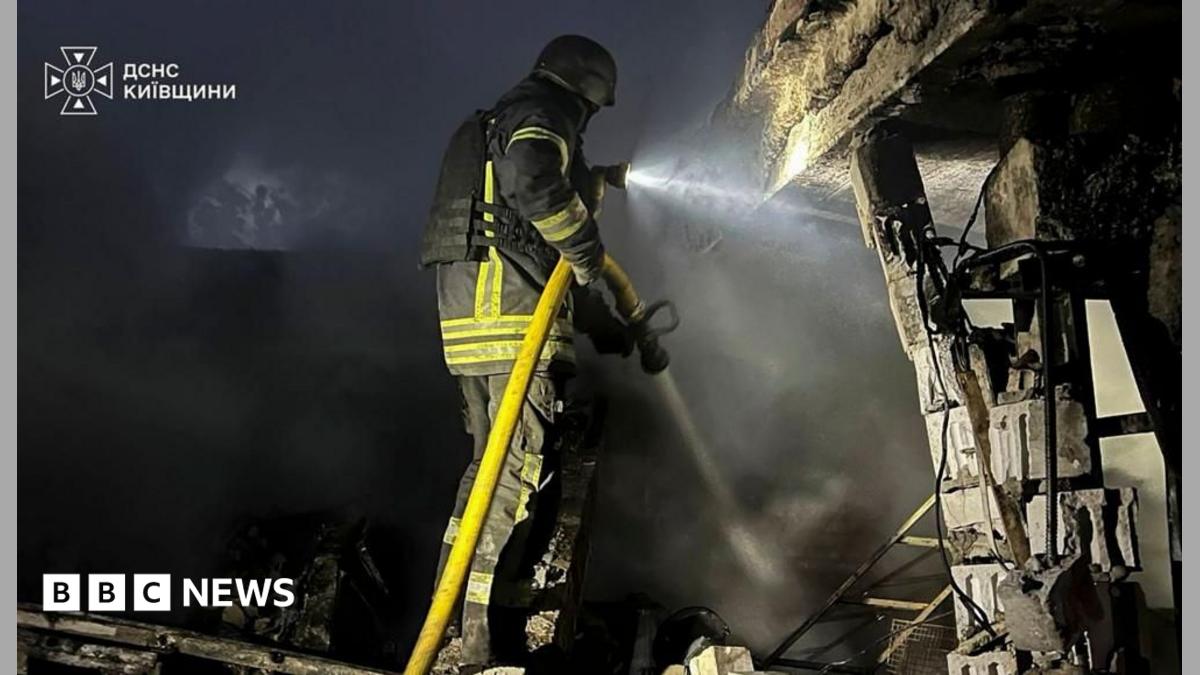
Russia has carried out its most extensive assault on Ukraine's energy infrastructure in months, with Kyiv and the surrounding region bearing the brunt of the overnight bombardment, according to Ukrainian Prime Minister Serhiy Koretskyi. The attack marks a significant escalation in Moscow's campaign against civilian infrastructure as winter approaches.
At least six people lost their lives and 33 others were wounded across the country during the overnight strikes, local authorities confirmed. Among the dead was a child whose body was discovered beneath the rubble of a destroyed house in the Kyiv region, according to regional governor Timur Tkachenko.
The assault also disrupted electricity supplies for thousands of residents. Ukraine's largest private energy company, DTEK, reported that power had been restored to 8,000 homes following what it described as "a difficult night" for the capital. The outages underscored the vulnerability of Ukraine's energy system to sustained Russian attacks.
Russia's defence ministry claimed one of its targets was the Trypilska power station, which it identified as the largest electricity supplier to Kyiv. Ukrainian officials have not confirmed this claim, and the discrepancy highlights the information challenges that often accompany such attacks.
In a statement posted on Telegram, Prime Minister Koretskyi emphasised the relentless nature of Russia's campaign against Ukraine's energy infrastructure. "Since the summer, there has effectively not been a single day without enemy attacks on our energy infrastructure," he said. "However, a mass and combined attack of this scale has occurred for the first time since the end of the last heating season."
The timing of the strike is particularly concerning for Ukrainian authorities, who have been bracing for another protracted Russian assault on the country's power grid. Such attacks have occurred every winter since Russia's full-scale invasion in 2022, part of what analysts describe as a deliberate strategy to weaponise energy supplies and undermine civilian morale during the coldest months.
The overnight attacks affected 11 regions across Ukraine, according to Koretskyi. Beyond energy facilities, the strikes also hit residential buildings, social infrastructure, civilian enterprises, and railway networks. The breadth of the targets suggests a coordinated effort to disrupt multiple aspects of Ukrainian daily life simultaneously.
Ukrainian President Volodymyr Zelensky reported strikes on critical infrastructure in the Zhytomyr, Mykolaiv, Kirovohrad, and Rivne regions. The geographic spread of the attacks demonstrates Russia's continued ability to strike deep into Ukrainian territory, far from the front lines in the east and south.
As of Wednesday, households in several regions—including Kyiv, Dnipropetrovsk, Donetsk, Sumy, and Kharkiv—remained without electricity, Ukraine's energy ministry reported. The persistent outages have forced authorities to implement emergency measures to stabilise the grid.
State-owned grid operator Ukrenegro advised residents to avoid using powerful electrical appliances between 10:00 and 16:00 local time, as electricity supplies remained lower than usual. Such advisories have become a familiar feature of life in wartime Ukraine, where civilians must constantly adapt their routines to the vagaries of a damaged power system.
In Kyiv itself, residents woke to find the city shrouded in thick, acrid smoke after a night punctuated by the sound of explosions. An air raid alert remained in effect, and the distant echo of air defence gunfire could be heard through the murky atmosphere, according to witnesses. Authorities in several districts urged residents to keep their windows closed until the smoke dissipated.
Kyiv Mayor Vitaly Klitschko confirmed that three people were killed in the capital, including a utility company worker who died at a warehouse building. It remains unclear whether the three fatalities he referenced included the child whose body was found in the broader Kyiv region.
Beyond the capital, two people were killed in the north-eastern Sumy region, according to governor Oleh Hryhorov. Another fatality was reported in the Mykolaiv region by acting regional governor Heorhiy Reshetilov. The scattered death toll reflects the wide geographic reach of the overnight assault.
The strikes come against the backdrop of a protracted conflict that began with Russian President Vladimir Putin's full-scale invasion of Ukraine in 2022. Moscow currently controls approximately 20% of Ukrainian territory, and the war has settled into a grinding pattern of attrition, with neither side achieving decisive breakthroughs on the battlefield.
Energy infrastructure has been a recurring target throughout the conflict. Ukrainian officials and Western analysts have characterised such attacks as part of a deliberate strategy to inflict maximum suffering on civilians and to pressure Kyiv into concessions. Russia has consistently denied targeting civilians, though the pattern of strikes on power stations, heating plants, and water facilities has drawn widespread international condemnation.
The scale of the latest attack—described as the largest since the spring—raises concerns about Ukraine's ability to protect its energy grid as winter approaches. Ukrainian air defences have improved significantly since the early months of the war, but Russia has continued to adapt its tactics, deploying combinations of drones and missiles in an effort to overwhelm defensive systems.
For ordinary Ukrainians, the attack means another winter of uncertainty. Power cuts, heating disruptions, and the constant threat of aerial bombardment have become enduring features of life for millions. The resilience of the population has been remarkable, but each successive assault tests that resilience further.
The international community has repeatedly pledged support for Ukraine's energy sector, providing equipment and funding for repairs. However, the sheer volume of damage and the frequency of attacks make it difficult to keep pace with the destruction. Ukrainian officials continue to call for additional air defence systems and long-range weapons to strike the launch sites from which Russia conducts its attacks.
As emergency crews worked to restore power and clear debris on Wednesday, the full extent of the damage remained unclear. What is certain is that the assault represents another grim milestone in a conflict that shows no signs of abating, and that civilians continue to bear the heaviest burden of Russia's military campaign.
What's Your Reaction?
 Like
0
 Dislike
0
 Love
0
 Funny
0
 Wow
0
 Sad
0
 Angry
0

Editor Investigasi. Pemenang penghargaan jurnalisme investigasi. Spesialisasi: korupsi, kolusi, dan maladministrasi.




Comments (0)