

UK and US Complete Final Troop Withdrawal from Iraq, Ending Decade-Long Anti-IS Mission
The last remaining British and American military personnel have departed Iraq, formally concluding a coalition mission against the Islamic State group that spanned more than ten ye
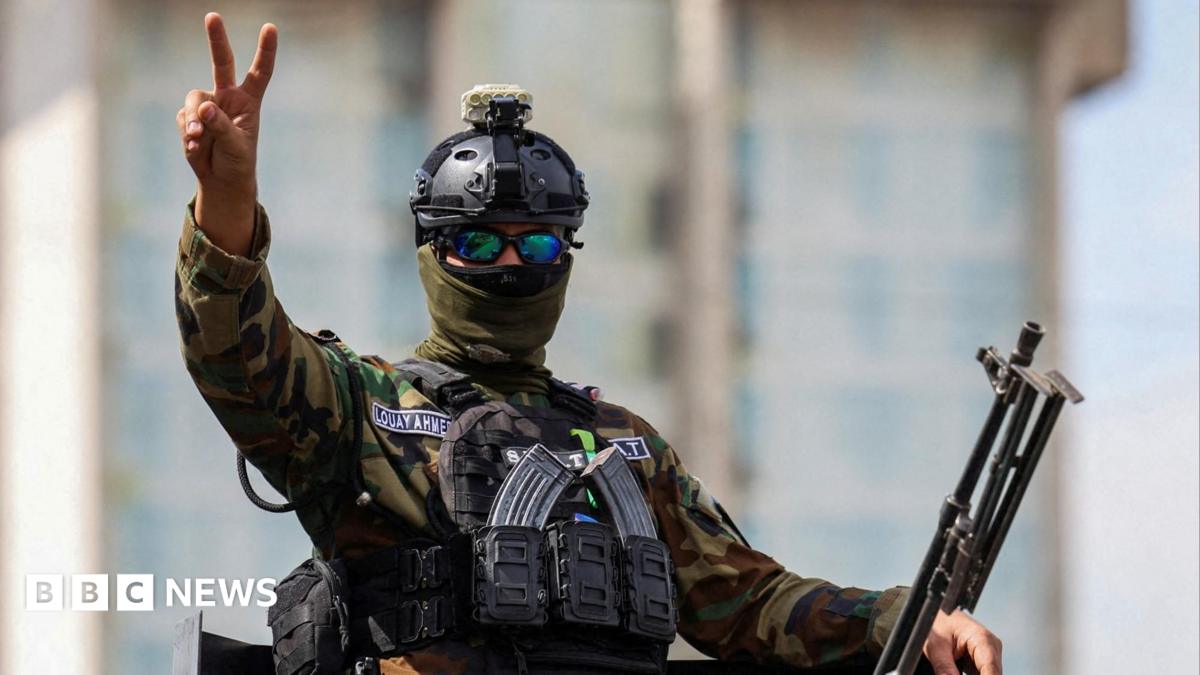
The last remaining British and American military personnel have departed Iraq, formally concluding a coalition mission against the Islamic State group that spanned more than ten years. Approximately 100 UK troops left their base in Irbil, located in the northern Kurdistan region, in a carefully coordinated operation with US forces who also withdrew on Wednesday. The departure was carried out under an agreement signed two years ago between Washington and Baghdad, which stipulated that foreign troops would leave Iraqi territory by the end of this month.
British and American forces had maintained a presence in Iraq since 2014 as part of the international coalition assembled to counter the rise of the extremist Islamic State group, which had seized substantial territory across Iraq and neighbouring Syria. The coalition effort, officially designated Operation Inherent Resolve, brought together dozens of nations in a campaign of airstrikes, training, and advisory missions that ultimately broke the militants' grip on the region. With the withdrawal now complete, that mission has formally come to an end, and Iraq's security forces have assumed full responsibility for safeguarding the nation.
Iraqi Prime Minister Ali al-Zaidi characterised the conclusion of the coalition's mission as a pivotal moment for his country. He described it as Iraq's transition to a phase in which it assumes full responsibility for its security and stability. To commemorate the withdrawal, Iraq is set to observe four "Sovereignty Days" as a national holiday, a gesture underscoring the symbolic weight Baghdad attaches to the departure of foreign forces after years of dependence on international military support.
The UK Ministry of Defence issued a statement praising the achievements of the coalition, noting that following more than a decade of operations, training, and capacity building, Iraqi Security Forces and the Kurdish Peshmerga had secured the enduring territorial defeat of Daesh in Iraq. The ministry, using the Arabic acronym for the group, said Iraqi and Kurdish forces were now well placed to take primary responsibility for the country's security. It added that with these objectives achieved, Iraq and its international partners could begin a new chapter focused on enduring security co-operation under Iraqi leadership.
From the Pentagon, spokesman Sean Parnell said the coalition's departure from Irbil represented the successful conclusion of the military mission that defeated the Islamic State in Iraq. He emphasised that the primary responsibility for addressing Iraq's remaining security challenges, including IS remnants and Iran-aligned militias that undermine Iraqi sovereignty and regional stability, now rests with the government of Iraq. The statement reflected Washington's expectation that Baghdad will manage both the lingering militant threat and the powerful Shia armed factions that operate with varying degrees of autonomy from the state.
Iraq's government declared the military defeat of the Islamic State in 2017, following a brutal campaign that reclaimed major cities including Mosul and Fallujah. Yet coalition forces remained in the country for nearly a decade after that declaration, tasked with preventing the group's resurgence through training, intelligence sharing, and targeted operations. A recent United Nations report estimated that sustained counter-terrorism pressure by Iraqi forces had reduced IS to several hundred fighters who are now able to carry out unsophisticated operations only, a significant decline from the group's peak strength when it controlled territory the size of a small country.
Despite the territorial defeat of IS, the Iraqi government confronts the persistent challenge of Iranian-backed militias operating within its borders. Zaidi, who took office in May, has publicly vowed to disarm these factions and bring all weapons under state control following the coalition's exit. However, several powerful militia groups have resisted his plans, and analysts suggest their influence could grow now that the US military presence, which served as a counterweight to their power, has been removed from the equation entirely.
The period leading up to the withdrawal was marked by heightened security risks for the remaining coalition personnel. Since the outbreak of war between the United States and Israel against Iran earlier this year, militias had been actively targeting US and UK forces stationed at Irbil air base. Hundreds of NATO troops stationed in Baghdad left the country in March as tensions escalated across the region. A BBC team that visited the coalition base in Irbil in April, during a fragile ceasefire between Washington and Tehran, was forced to circle the base in an RAF transport aircraft while drones were being launched nearby, illustrating the dangerous environment in which the final troops were operating.
At the height of the US bombing campaign against Iran, the coalition base was being targeted by up to 28 drones and missiles in a single day. RAF Regiment Gunners, among the last British military personnel stationed there, had shot down more than 100 drones during the first six weeks of the war. Many of the attack drones were launched by Iranian-backed militias operating inside Iraq, highlighting the complex and volatile security landscape that the departing forces were leaving behind for Iraqi authorities to manage.
In marking the end of the mission on Wednesday, the Ministry of Defence paid tribute to UK personnel who contributed to the counter-IS campaign. It noted that British forces had provided valuable support, training, and assistance to more than 111,000 members of the Iraqi Security Forces, including over 21,000 Peshmerga forces in the semi-autonomous Kurdistan Region. The ministry also reported that the RAF had conducted thousands of sorties and struck more than 2,300 Islamic State targets over the course of the campaign, a substantial contribution to the degradation of the group's fighting capacity.
Looking beyond Iraq, the RAF is expected to continue flying missions over neighbouring Syria to prevent IS remnants from regaining a foothold there. The Pentagon confirmed that the US would maintain targeted training and intelligence support for its Iraqi partners, though the scale and nature of that assistance will be reduced now that combat forces have departed.
US Central Command announced that the coalition's joint taskforce remains operational and is now based in Jordan, allowing it to continue coordinating regional counter-terrorism efforts from outside Iraqi territory. American forces will also persist in their mission against IS in Syria, where the United Nations estimates the group still has up to 3,000 fighters scattered across the country's contested regions.
This marks the third time that US and British forces have withdrawn from Iraq, a historical pattern that underscores the cyclical nature of Western military involvement in the country. Tens of thousands of American and British troops were first deployed to the region in 1991 following Saddam Hussein's invasion of Kuwait, part of a multinational effort to expel Iraqi forces from the emirate. They returned in 2003, when US President George W Bush ordered Operation Iraqi Freedom to remove Saddam from power and eliminate weapons of mass destruction that ultimately turned out not to exist. The fierce sectarian insurgency that engulfed Iraq following the 2003 invasion cost tens of thousands of lives and destabilised the entire region for years afterward.
The final withdrawal now places Iraq's future security squarely in the hands of its own forces, which have received extensive training and equipment from coalition partners over the past decade. Whether Baghdad can effectively counter both the remaining IS threat and the formidable influence of Iranian-backed militias will determine whether the sacrifices made during the coalition campaign yield a lasting peace or give way to renewed instability.
What's Your Reaction?
 Like
0
 Dislike
0
 Love
0
 Funny
0
 Wow
0
 Sad
0
 Angry
0

Fact-Check Editor. Verifikator bersertifikasi IFCN. Memeriksa klaim viral dan disinformasi.






Comments (0)