

Ramaphosa orders nationwide safety audits after 12 women found dead east of Johannesburg
South African President Cyril Ramaphosa announced on Tuesday that high-risk areas across the country will be cleaned up and audited, following the discovery of the bodies of 12 wom
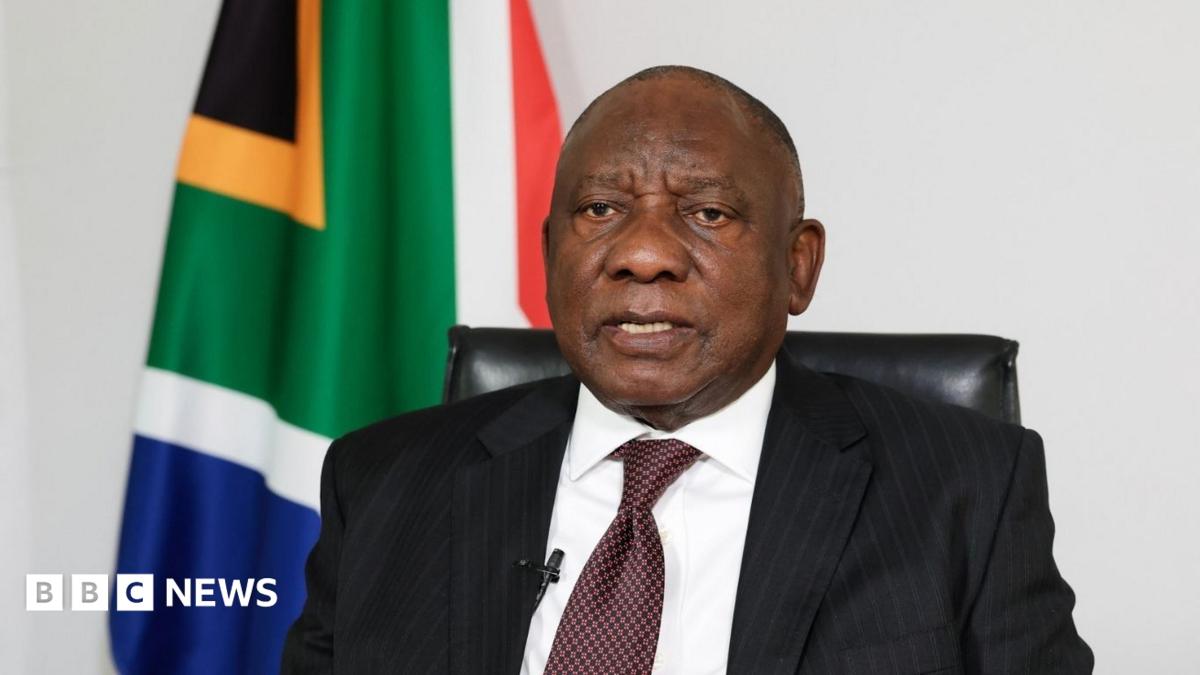
South African President Cyril Ramaphosa announced on Tuesday that high-risk areas across the country will be cleaned up and audited, following the discovery of the bodies of 12 women in an area east of Johannesburg over a two-month period. Speaking in an address to the nation, the president said every municipality must begin a women's safety audit "without delay", identifying the conditions in public space that leave women vulnerable.
The killings triggered a national outcry over the scale of violence against women in a country the BBC reports has one of the highest rates of gender-based violence in the world. The grim discoveries have dominated South African news coverage for weeks, with reports on grim discoveries of murdered women sparking public fear and further bodies being found near Johannesburg, and at least one woman still formally reported missing.
Ramaphosa described what he called a multidisciplinary, national-level emergency response to the murders, saying four arrests have been made in connection with the killings. He did not give further details of the arrests in the address.
Addressing the widespread fear that the women may have been killed by one person because their bodies were discovered close together, Ramaphosa said the case for a single perpetrator had not been established. "There has understandably been widespread fear that the discovery of these women in close proximity could indicate the work of a single perpetrator," he said, adding: "At present, the police have not found evidence establishing that these killings were committed by a single perpetrator." That caution is significant: while the proximity of the remains has driven public speculation, investigators have not publicly linked the killings to one suspect.
The president used the speech to acknowledge government shortcomings, conceding that authorities have "not done enough" in recent years to prevent gender-based violence and to protect women and girls. He said such violence "cannot be accepted as a normal part of life in South Africa" — a concession that appears designed to take the pressure off police and investigators at a moment of intense public scrutiny.
At the centre of the new package are the municipal safety audits, which Ramaphosa said must identify high-risk areas and address them. He set out what those audits should look for: broken streetlights, overgrown public spaces, abandoned buildings, unsafe transport routes and facilities, and poorly secured parks. The list is notable for its focus on the physical environment — a deliberate framing of violence against women as partly a question of street design, lighting, mobility and municipal maintenance, as well as a criminal-justice problem.
Ramaphosa also announced what he described as an "enforcement package" aimed at reducing alcohol-related violence, but he paired the measure with an explicit warning against its misuse. "Alcohol does not cause gender-based violence and it can never excuse it. Responsibility always lies with the perpetrator," he said. "But harmful alcohol use is a significant aggravating factor in interpersonal violence, and it must be addressed as part of our wider prevention effort." The distinction is likely intended to head off the argument that restrictions on alcohol sales or licensing will solve the problem on their own.
Beyond policing and legislation, the president argued that deeper cultural change is required. Violence against women, he said, "does not begin when a fist is raised" or when a woman is raped or murdered. "It begins much earlier," he continued, "in attitudes that regard women as inferior… with the belief that a man has the right to control a woman. It begins when jealousy is mistaken for love, when control is mistaken for protection and coercion is mistaken for affection. It begins when a man refuses to accept the word no."
That framing carried an unmistakable challenge to men and boys in South Africa, whom Ramaphosa urged to take the lead in ending gender-based violence. "We have placed the burden of male violence on women," he said. "That must change. The solution to violence against women cannot be to make women less free." The remarks amount to a rejection of any approach that responds to femicide by restricting women's freedom of movement rather than confronting male behaviour.
The scale of the wider problem sits behind the current investigation. South Africa has one of the highest homicide rates in the world, with 5,427 people murdered between April and June this year alone, according to figures cited in the report. Official South African police statistics do not break down victims by gender, a gap that makes monitoring of violence against women difficult.
Filling that gap, the South African Human Rights Commission said recently that 569 women were killed and 1,052 others survived attempted murder between April and June this year — meaning that for every woman who died in that three-month window, close to two more were targeted in attacks they survived. Campaigners and protesters have taken to the streets over the killings, and the discovery of the 12 bodies has renewed pressure on the government to act on a scale that matches the national outcry it has itself described.
Analysts caution that audits, enforcement packages and appeals to men's responsibility are unlikely to deliver visible results quickly, and questions remain about resourcing, the pace of the four arrests and whether the investigations will identify a connected series of killings at all. What is clear is the government's decision this week to put municipal infrastructure, alcohol regulation and attitudes towards women at the centre of a national response, and to acknowledge publicly that the state had fallen short. The coming test is whether the promised audits — begun "without delay" in every municipality — produce fixes on the ground, and whether the emergency response yields further arrests in the case that has gripped the country.
What's Your Reaction?
 Like
0
 Dislike
0
 Love
0
 Funny
0
 Wow
0
 Sad
0
 Angry
0

Editor Investigasi. Pemenang penghargaan jurnalisme investigasi. Spesialisasi: korupsi, kolusi, dan maladministrasi.






Comments (0)