

Six Flags to retire X2 coaster permanently after riders allege brain injuries
Six Flags Magic Mountain, the amusement park outside Los Angeles in Valencia, California, has confirmed it will permanently retire its X2 rollercoaster — a decision that comes more
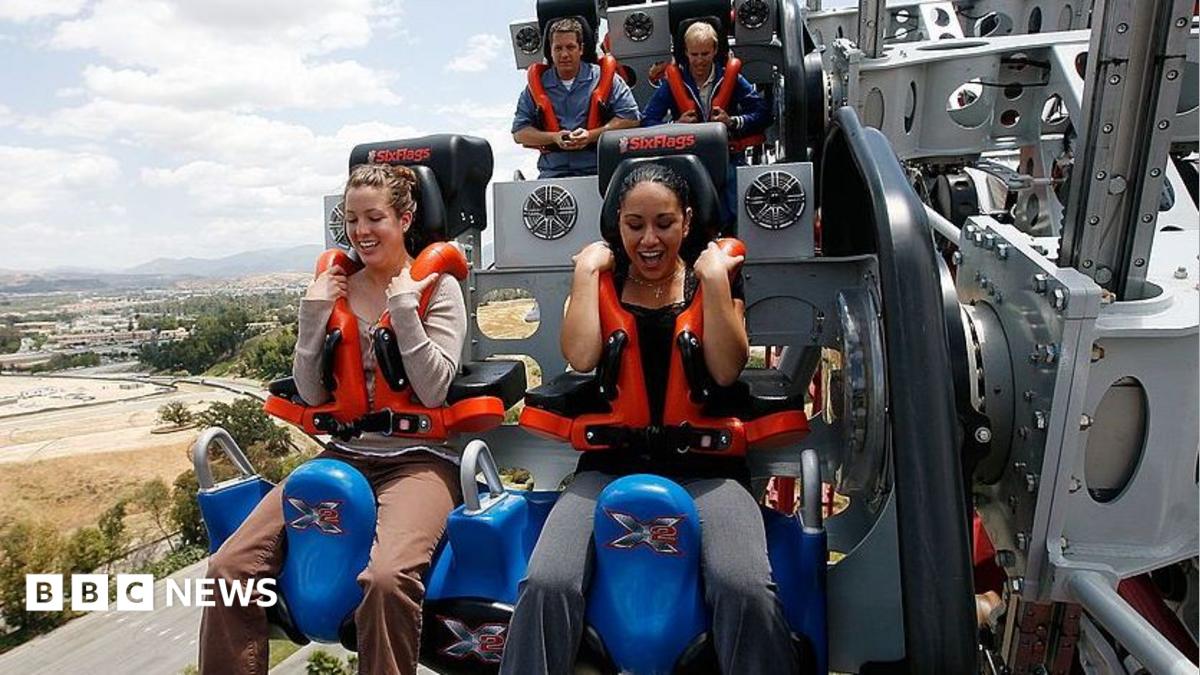
Six Flags Magic Mountain, the amusement park outside Los Angeles in Valencia, California, has confirmed it will permanently retire its X2 rollercoaster — a decision that comes more than two decades after the ride first opened and follows years of lawsuits and news reports in which hundreds of riders said they suffered brain injuries.
The ride, one of the park's signature attractions, is known for seats that spin riders through 360 degrees and for queues that routinely stretched far into the park. It has already been out of service since July, and Tuesday's announcement effectively made that shutdown permanent.
Speaking to announce the closure, Six Flags Magic Mountain Park President Brian Oerding said guest confidence in the park's safety standards was the deciding factor. "Ride safety is a cornerstone of our business, and when we see guest confidence affected, we take it seriously," he said.
The company also insisted that the X2 had cleared a range of safety tests. Six Flags maintained that the decision was a voluntary one, taken because retiring the coaster was "the right thing to do" — a framing the park's critics dispute, arguing that the closure arrived years after the ride should have been examined.
The backdrop to the announcement is a body of litigation and media reporting alleging that hundreds of people who rode the X2 suffered traumatic brain injuries. Dordick Law Corporation, which has filed civil lawsuits against the park, said it had been contacted by hundreds of individuals who believed their injuries were caused by the ride.
In a statement, the firm said: "They got on X2 expecting a thrill. Instead, they left with catastrophic brain injuries." According to Dordick, some of its clients required emergency brain surgery, and others "are still fighting to get their lives back."
The firm said it welcomed the closure as a protection for future visitors but stressed that it does nothing for those already injured. The closure, it said, had come "too late" for its clients — a position that echoes a broader argument running through the litigation: that a ride's retirement cannot address harms alleged to have been suffered over many years of operation.
The X2's history is unusually long and troubled. Originally called simply the X, it opened in 2002 and was shut down only months later for repairs to design flaws, according to the Los Angeles Times. It reopened, then closed again in 2007 while its trains were replaced with lighter versions. It returned to the park the following year under the X2 name.
Since that reopening, Six Flags said, more than 16 million people have ridden the coaster. That figure has become a central point of contention: the park points to the ride's safety-test record and its enormous ridership, while plaintiffs' lawyers point to the volume of injury claims generated by the same ride.
One of the most serious cases involved Christopher Hawley, a 22-year-old who died after riding the X2 in 2022. The family filed a wrongful death suit against the theme park, which was settled in August. Attorney Brent Wisner of Wisner Baum LLP, who represented the family, said this week that the closure does not go far enough.
While the Hawley family is "relieved to hear that Six Flags is finally closing the X2," Wisner said, "it does not change the fact that Christopher Hawley was killed by a dangerous roller coaster that was allowed to operate for nearly two decades." He described the death as a tragedy that "cannot be undone."
Wisner used the occasion to call for wider change, arguing for legal reform, more proactive regulation and proper governmental oversight of extreme rides. In his view, the industry should not depend on operators to act voluntarily only after a sufficient number of people have been hurt.
"We cannot rely on profit-centered corporations to do the right thing only after enough people have been hurt," he added. "We hope that whatever replaces the X2 is safe."
The closure leaves several questions open for the park and for the thousands of people who have ridden the coaster over the years. Six Flags has not set out details of what might take the X2's place, and it has not addressed the individual claims brought by alleged injury victims, some of whom required surgery and long-term medical care.
It also does not settle the central scientific and legal questions at the heart of the litigation: whether the coaster's design and operation can be linked to the neurological injuries alleged by hundreds of riders, and how responsibility for such harm should be apportioned when a ride has passed official testing regimes yet remains the subject of mass personal-injury claims.
For the park, the immediate reputational problem is that the decision to close came after the fact rather than before — a sequence the company itself implicitly acknowledged by citing affected guest confidence rather than a single new failure. For the lawyers and families involved, however, the announcement changes little: the litigation continues, and the questions they raise about oversight of extreme amusement rides are likely to outlast the X2 itself.
What's Your Reaction?
 Like
0
 Dislike
0
 Love
0
 Funny
0
 Wow
0
 Sad
0
 Angry
0

Fact-Check Editor. Verifikator bersertifikasi IFCN. Memeriksa klaim viral dan disinformasi.




Comments (0)