

Nor'easter Pummels Northeast With Coastal Flooding as New York and New Jersey Declare Emergencies
A powerful nor'easter storm is bearing down on the north-eastern United States this weekend, placing tens of millions of people in its path and already triggering coastal flooding,
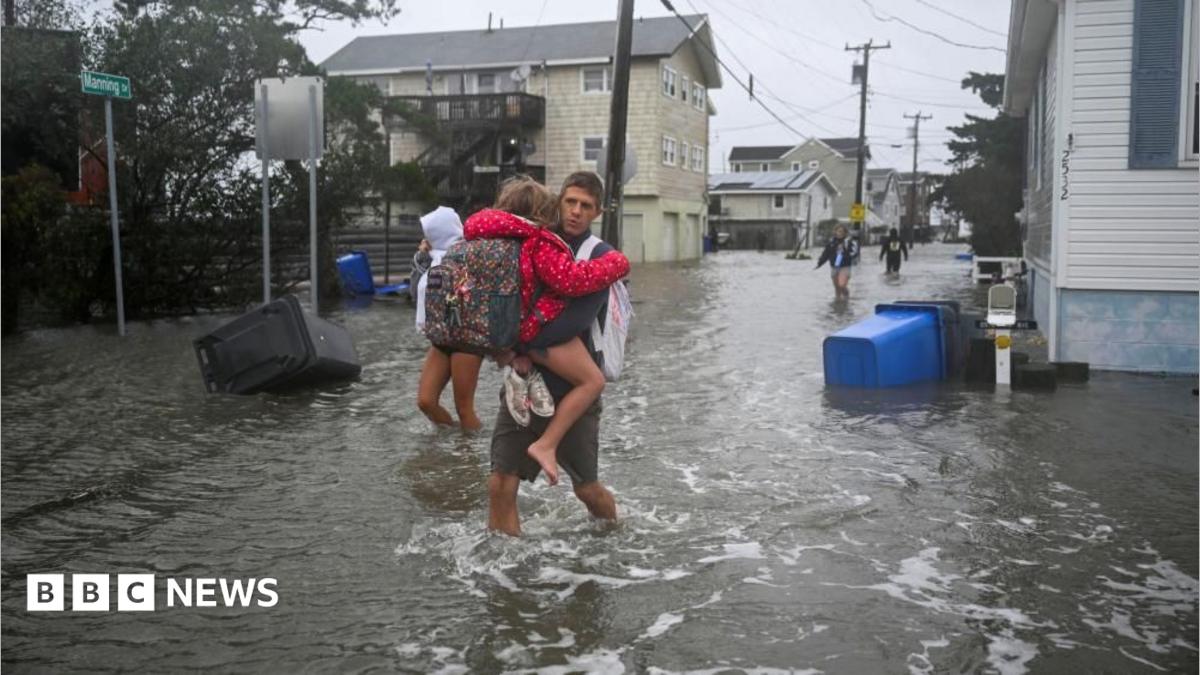
A powerful nor'easter storm is bearing down on the north-eastern United States this weekend, placing tens of millions of people in its path and already triggering coastal flooding, mass power cuts, air travel chaos and the cancellation of major sporting and music events. The storm, which is forecast to peak on Saturday, has prompted declarations of emergency in both New York and New Jersey, where some coastal communities are already enduring a deluge.
The US National Weather Service (NWS) warned that the storm would "bring dangerous coastal flooding and beach conditions, strong winds, and heavy rainfall" to areas including New York City and Boston. Rain and strong winds are forecast over a vast swathe of the region, from Virginia all the way to Maine, a span that covers the most densely populated corridor in the country.
A nor'easter is a powerful low-pressure system that develops off the coast of North America and typically intensifies as it turns northward, dragging cold air over warm Atlantic waters. The result is a storm whose winds blow from the northeast — hence the name — and whose slow, grinding movement can pile water onto the shoreline for days at a time. The current system is behaving in exactly that fashion, with its worst effects concentrated along the New Jersey and New England coasts.
In New Jersey, the effects arrived early. Streets and homes were flooded on Saturday in the coastal communities of Surf City and Manasquan, while residents in the Beach Haven West neighbourhood were pictured taking to kayaks to move along submerged roads. Governor Mikie Sherrill urged residents to take the storm seriously. "I urge all New Jerseyans to take this storm seriously, stay alert, and follow local guidance," she said, as the state confronted what officials described as a coastal deluge in some areas.
Astronomical timing is adding to the danger. Saturday's full moon is projected to worsen coastal inundations, raising high tides and, with them, the volume of water pushed onto already-saturated shorelines. The NWS issued a stark instruction to residents in the path of the storm: "Prepare immediately for significant inundation in low-lying areas near the shore, including roads underwater and impacts to homes and businesses." The warning underlined that the threat extends beyond the water's edge, to homes, commercial properties and the roads that connect coastal communities.
New York City officials are bracing for a different but equally serious set of hazards, warning of wind gusts of up to 55mph (86km/h) throughout the weekend. The forecast gusts are expected to bring downed trees and further power outages. Mayor Zohran Mamdani delivered a direct appeal to residents in a video message. "Don't travel if you don't have to," he told the city, adding: "Do not drive or walk through floodwater." The dual message reflects the city's vulnerability: lower Manhattan and its shoreline neighbourhoods face storm surge, while the wider urban tree canopy is vulnerable to high winds.
The storm is already causing widespread power outages, with nearly 150,000 households losing electricity so far, according to the poweroutage.us tracking service. Utility providers across the region face the double challenge of restoring supply while crews are themselves unable to safely access downed lines in flooded or wind-damaged areas — a pattern that typically prolongs outages well beyond the storm's passing.
Travel has been badly disrupted. The Federal Aviation Administration recommended that travellers check with their airlines about the status of their flights, as the storm triggered a large-scale aviation shutdown. According to FlightAware, more than 1,100 flights have been delayed and another 400 grounded. Cancellations were displayed on information boards at Boston Logan International Airport, where flights were already being called off, and the disruption is expected to ripple through connecting networks far beyond the affected airports.
The economic and cultural impact is equally significant. Ed Sheeran's much-awaited Boston concert at Gillette Stadium was cancelled, with the venue confirming the decision was taken for safety reasons. Elsewhere in the city, the Red Sox moved their weekend baseball series against the Chicago Cubs from the scheduled Sunday afternoon game to the following Friday. A professional football match between Red Bull New York and St Louis City SC was also cancelled, as the venue worked through the implications of the forecast.
New York's festival calendar was similarly affected. The Global Citizen Festival, due to take place in Central Park and headlined by Lauryn Hill, Wyclef Jean and John Legend, is not going ahead. The cancellation of an event of that scale — an outdoor gathering in one of the city's most exposed public spaces — illustrates how organisers weighed public safety against the impracticality of moving tens of thousands of people through a city facing flooding, wind damage and travel chaos.
For residents, the immediate priority remains sheltering in place and heeding official advice. The combination of a slow-moving storm, a full-moon spring tide and already saturated ground means flooding can persist between high tides, complicating cleanup and recovery. Emergency declarations in New York and New Jersey typically unlock additional state resources, coordinating evacuations where necessary, positioning emergency personnel and opening shelters.
Forecasters said the storm would peak on Saturday, with conditions extending into Sunday across much of the region. With rain and strong winds forecast from Virginia to Maine, officials in states beyond the immediate impact zone — including Massachusetts, where waves were seen pounding the coast at Scituate — are also monitoring the system. The NWS advice remains that residents in low-lying coastal areas prepare immediately, and that travel is avoided unless essential, until conditions improve.
What's Your Reaction?
 Like
0
 Dislike
0
 Love
0
 Funny
0
 Wow
0
 Sad
0
 Angry
0

Editor Investigasi. Pemenang penghargaan jurnalisme investigasi. Spesialisasi: korupsi, kolusi, dan maladministrasi.





Comments (0)