 ramadiansyah
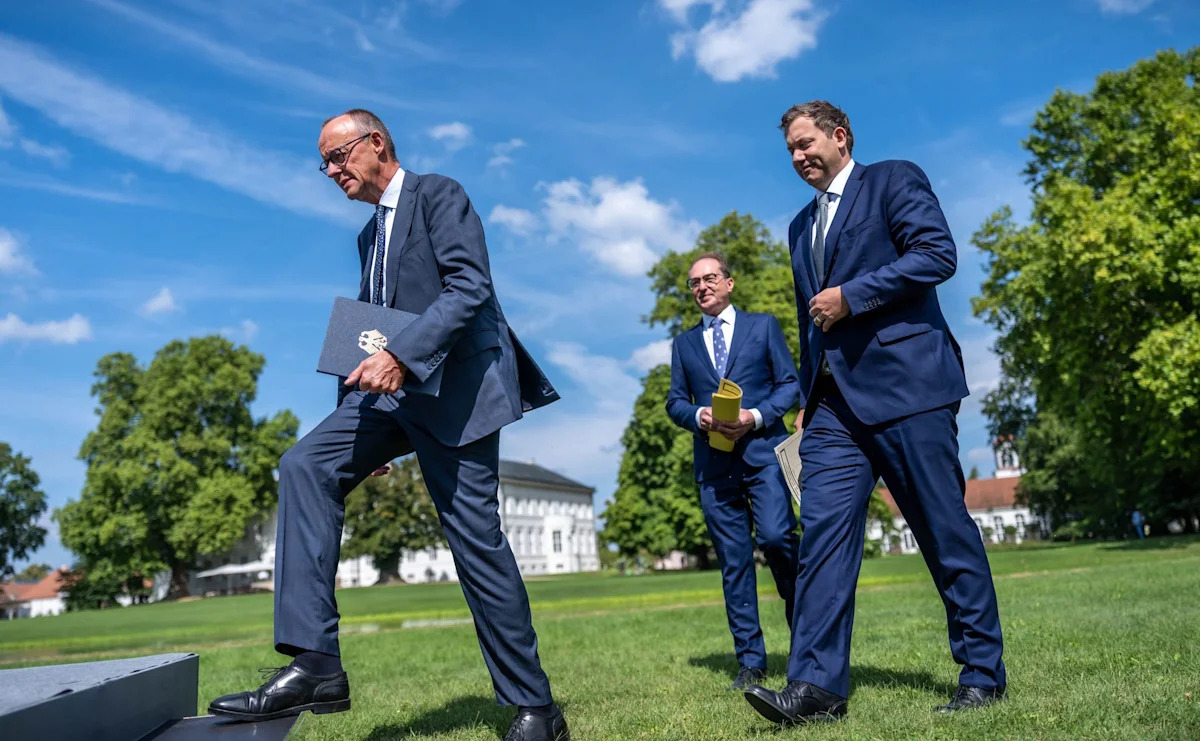
Chancellor Friedrich Merz has declared that Germany's economy is growing again, bringing to a close a painful stretch that he characterized as a three-year recession. The statement amounts to a symbolic turning point for Europe's largest economy, which has spent recent years contracting while much of the rest of the world expanded.
The country's downturn has been unusually persistent by modern standards. Germany recorded successive annual contractions in 2023 and 2024, the first back-to-back declines in more than two decades, and momentum remained sluggish into the following year. For an economy long regarded as the industrial engine of the eurozone, the prolonged weakness dragged on growth across the entire currency bloc and fueled talk of a structural crisis rather than a passing cyclical dip.
The roots of the slump are well documented. Soaring energy prices following the loss of cheap Russian natural gas hit Germany's energy-intensive industries hard, from chemicals to metals. At the same time, the critical automotive sector faced intensifying competition from Chinese manufacturers and a turbulent transition toward electric vehicles. Weak foreign demand, elevated interest rates, chronic underinvestment in infrastructure, and a famously heavy bureaucratic burden compounded the pressure on manufacturers already struggling to adapt.
Against that backdrop, Merz has presented the return to growth as evidence that his government's economic program is beginning to bear fruit. Since taking office last year at the head of a coalition between his center-right bloc and the Social Democrats, the chancellor has staked his political credibility on restoring Germany's competitiveness. His argument, in essence, is that the worst is now behind the country and that conditions for a durable upswing are finally in place.
The coalition has moved on several fronts during its first months in power. Lawmakers loosened the constitutionally enshrined debt brake to allow unlimited borrowing for defense spending and created a special fund worth hundreds of billions of euros for infrastructure renewal, spanning railways, roads, bridges, and the digital and energy networks. Additional legislation introduced accelerated depreciation allowances and staged corporate tax cuts designed to spur private investment. Merz and his ministers have argued that these measures are now filtering through to orders, production, and hiring.
Business groups have responded cautiously, welcoming the shift in tone and the investment incentives while urging the government to press ahead with deeper reforms. Industry federations continue to call for faster planning and permitting procedures, lower electricity costs, and greater flexibility in labor regulation. Many executives remain convinced that without structural change, any cyclical recovery will fade quickly.
Economists share much of that caution. Even optimists note that the anticipated expansion is modest compared with the scale of the preceding contraction, and that Germany faces demographic headwinds, a shortage of skilled workers, and the long-term challenge of decarbonizing its industrial base. External risks also loom large, particularly United States tariff policy and continued Chinese competition, both of which could blunt an export-led recovery at short notice.
The political stakes for Merz are considerable. His party rode to victory on promises of economic renewal, and voters in regions dependent on manufacturing have grown impatient with years of declining living standards. The alternative for Germany has polled strongly among workers frustrated by plant closures and job losses, giving the chancellor every incentive to advertise signs of improvement. A self-sustaining recovery would strengthen his hand in future budget negotiations and quiet internal critics who argue his government has moved too slowly.
A German rebound would also carry weight well beyond its borders. Neighboring economies supply components to German factories, and a stronger German demand typically lifts exports from France, Italy, Poland, and Central Europe. For the European Central Bank, firmer growth in the bloc's anchor economy complicates expectations for further interest rate cuts, while investors watching bond markets will parse each new data release for confirmation that the turnaround is genuine.
For now, the chancellor's message is one of guarded confidence: the recession is over, the foundations for growth are being laid, and the task ahead is to ensure the recovery endures. Whether Germany's return to expansion proves to be the start of a lasting renaissance or a brief pause in a longer malaise will be decided by investment, reforms, and the volatile global environment in the months to come.
--- END ---





Comments (0)