

CNN left off Air Force One media manifest for Trump's Tennessee trip
The White House has blocked CNN from joining President Donald Trump on Air Force One for a weekend journey to Tennessee, according to the US broadcaster, in a fresh escalation of t
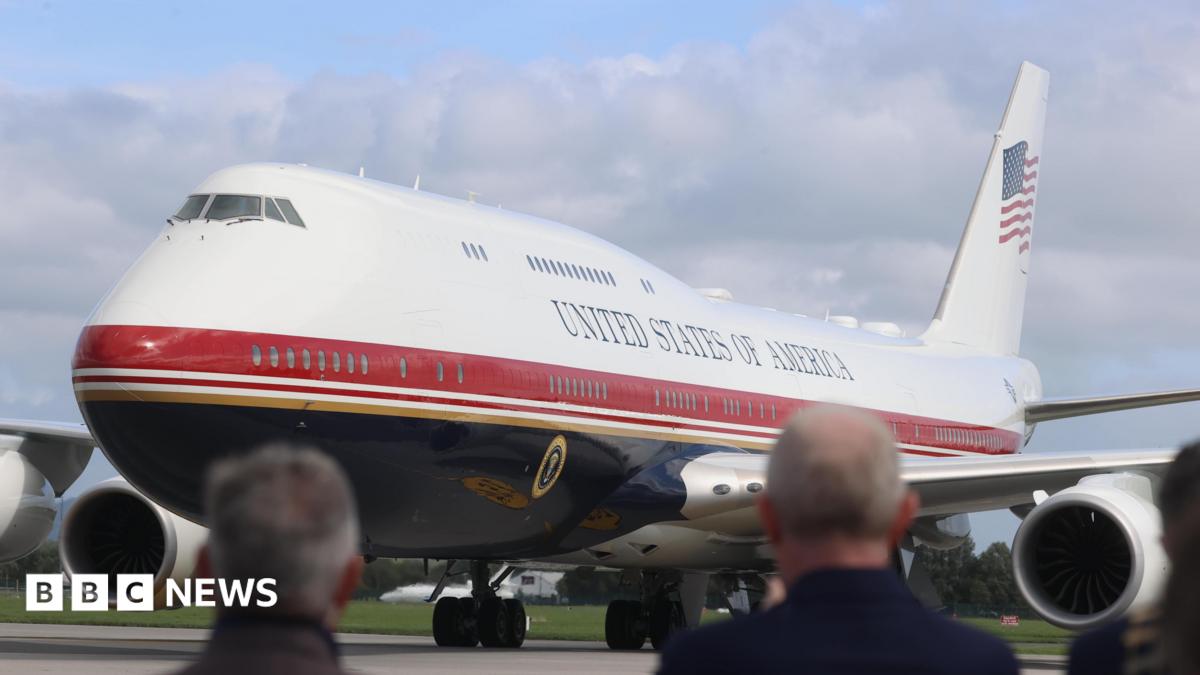
The White House has blocked CNN from joining President Donald Trump on Air Force One for a weekend journey to Tennessee, according to the US broadcaster, in a fresh escalation of the administration's running dispute with the press. CNN had been scheduled to travel with the president to cover a college American football game, only to find its name absent from a media schedule issued late on Friday night.
The omission, rather than an explicit statement of exclusion, is what made the decision visible. The White House's note listing those travelling with the president did not include the cable news channel, and CNN reported that no other outlet was named as a replacement on the president's tentative itinerary. The BBC has asked the White House for comment on the exclusion.
The trip takes place on Saturday, when Trump is due to attend a game between the University of Tennessee and the University of Texas College at Neyland Stadium in Knoxville, with a scheduled midday local start time. Air Force One journeys of this kind typically carry a small travelling press group, and access to those flights is a long-standing privilege for major US newsrooms as well as smaller outlets, making the disappearance of a network from the list a pointed signal rather than a routine scheduling change.
The decision comes after a turbulent fortnight in US media access. Trump banned journalists from CNN, Politico and MS NOW from the White House last week, accusing the outlets of writing "fiction or lies" about his administration. All three said they were pursuing legal action and accused the president of infringing their constitutional rights to freedom of speech and a free press.
The boycott that followed was unusually broad. Four of the television networks that share a daily rotation of White House coverage alongside CNN — ABC, CBS, Fox News and NBC — suspended their live programming to carry the president's remarks in solidarity with the banned organisations. The pause produced hours of news coverage about the absence of news coverage, and put pressure on the White House to reconsider a policy that appeared to target individual outlets on the basis of their reporting.
Part of that pressure came from the courts. A federal judge subsequently ruled that barring news outlets from the White House was likely unconstitutional and ordered the administration to allow them back in, at least for the time being. Regular US television coverage resumed on Friday after White House officials permitted reporters to re-enter, a development that appeared to settle the question of physical access to the building.
Access to the president's travel, however, sits on different legal and practical ground. Reporters covering Air Force One fly at the president's convenience rather than on a fixed schedule, and the White House retains broad discretion over who is invited aboard. That discretion now looks like the sharpest remaining instrument available to the administration after the judicial ruling loosened its grip on the briefing room and the press corps' physical presence at 1600 Pennsylvania Avenue.
Even after the judge intervened, the administration continued to find ways to restrict individual reporters. Some CNN and MS NOW journalists assigned to cover the arrivals of Chinese leader Xi Jinping at a state dinner on Thursday were still denied entry, showing that the return of "access" did not amount to universal access. A White House communications account posted on X that "contrary to what the Fake News wants you to believe, they don't just get to have free rein into every part of the White House, every event and every press call", a defence that couples a general claim about security and event management with specific denials of entry to individual outlets.
The administration has also built its own channel for distributing the president's message. Ahead of the UN General Assembly in New York, the White House launched Trump TV, a streaming service that gives the president a direct route to viewers and bypasses the gatekeeping role of accredited news organisations. Critics see the launch and the travel exclusion as two ends of the same strategy: reducing reliance on independent reporting while extending the administration's own.
The immediate consequence for Saturday's flight is a small but telling loss of scrutiny. Without CNN on board, one of the four networks in the rotation loses a peer from the trip, and the questions the president is asked in transit — on policy, on the lawsuits he is facing, on the unresolved status of access to the White House itself — will be put by a smaller group of reporters. White House officials may be relying on the argument that a tentative schedule remains open to change, and that any final decision will be made on security and logistical grounds.
Analysts of the long-running pattern of presidential travel restrictions note that the practical effect of excluding selected outlets often outlasts the announcement. Even if access is quietly restored later, the immediate message is delivered: the administration decides who witnesses the president and who does not. The coming week offers an obvious test of whether the Tennessee exclusion is a one-off or a new standard applied to presidential trips.
For now, the football game provides the occasion. A stadium in Knoxville, a president in attendance, and an empty seat on the press manifest — the clearest image yet of an argument that began over briefing-room access and has migrated, stage by stage, into the air.
What's Your Reaction?
 Like
0
 Dislike
0
 Love
0
 Funny
0
 Wow
0
 Sad
0
 Angry
0

Data Journalist. Mengungkap fakta melalui data. Spesialisasi: analisis forensik digital.






Comments (0)