

Lula's gambling ban sets up Brazil's election week with football and betting money at stake
Brazil's President Luiz Inácio Lula da Silva has signed a provisional order prohibiting all sports betting and online casinos, moving to shut down a fast-growing legal industry bar
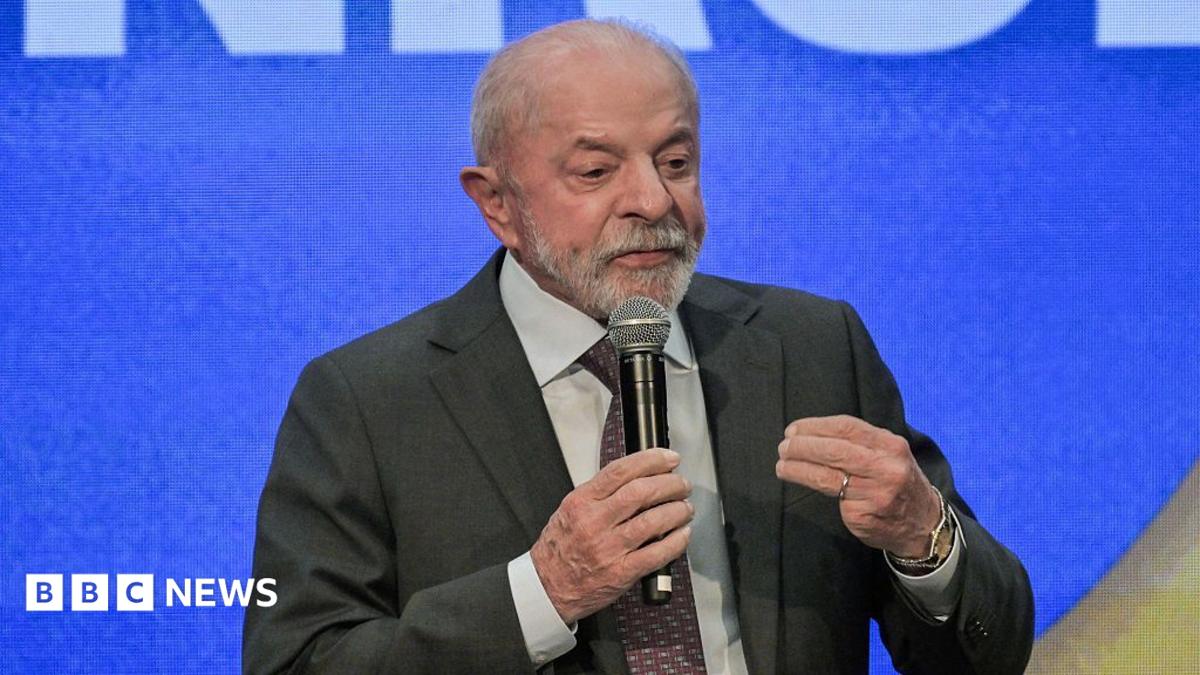
Brazil's President Luiz Inácio Lula da Silva has signed a provisional order prohibiting all sports betting and online casinos, moving to shut down a fast-growing legal industry barely a week before Brazilians go to the polls. The left-wing leader, 80, is seeking a fourth term and is widely reported in recent polls to be running close to his main rival, Flávio Bolsonaro, the son of the incarcerated former president Jair Bolsonaro.
The measure was signed on Friday and takes effect as a temporary decree, meaning it must be approved by Congress within 120 days if it is to remain in force. Operationally, the ban is immediate in several respects: new deposits into betting accounts have already been barred, and punters and operators have until 5 October to withdraw any balances they still hold.
Online betting was legalised in Brazil in 2018 under the government of Michel Temer, and it has expanded rapidly since. By 2025 the sector took in an estimated 62.5bn Brazilian reais in revenue, according to broadcaster Globo, even though casinos and slot machines — most other forms of gambling — remain illegal in the country. Lula said the industry had been permitted to grow "without regulation under Bolsonaro's management" during his opponent's tenure, and that there were "no restrictions" in place to stop children and teenagers from accessing betting sites.
The president has framed the crackdown in stark medical terms, describing the industry as a "cancer" and warning that "either we remove the tumour, or it kills us". In a statement posted on X, he said: "We won't allow betting companies to profit at the expense of Brazilian families' income and lives." He also said he had spoken to families who had been forced to sell everything in their homes because of gambling addiction. Lula had made a similar point at the UN General Assembly earlier in the week, accusing the industry of "transforming addiction into profit".
Separately from the decree, Lula signed a bill creating criminal offences connected to fixed-odds betting, the form of wagering that dominates online sports betting. The two steps together amount to the most sweeping attack on the sector since it was legalised, and they land at a politically charged moment, with the first round of the presidential election just over a week away.
Flávio Bolsonaro immediately dismissed the move as electioneering. Speaking at a campaign rally in Rio de Janeiro on Friday, according to Reuters, he called the crackdown "populist, hypocritical and politically motivated" and accused his rival of playing politics with the issue.
Football clubs have also objected, warning of severe financial consequences. Grêmio, one of the country's leading "big twelve" clubs, said ahead of the announcement that betting companies had become "one of the main sources of revenue for sports" since they were legalised. The club warned that a change in the law "will not only be an open door for illegal betting, but a fatal blow to Brazilian football, leading many clubs to insolvency".
The sums involved help explain the alarm. Globo reports that the major clubs collectively received 1.1bn reais from sports betting firms in 2025 — around $212m (£160m) — a figure that represents a small share of the industry's overall takings but a meaningful boost to club finances at a time when many are under pressure.
The industry's main trade association has pushed back. The Brazilian Institute for Responsible Gaming, which represents roughly 75% of the domestic betting sector, said a total ban on fixed-odds betting jeopardised the whole industry, putting as much as 58bn to 73bn reais in revenue at risk. It questioned whether prohibition would work, arguing that the ban "doesn't eliminate existing demand" and that punters who turn to illegal operators would lose the "protection mechanisms provided in the regulated environment". Instead, the IBJR urged the federal government to tighten the rules rather than outlaw online and fixed-odds betting altogether.
Public opinion appears to favour Lula's approach, at least on its surface. A survey by Atlas and Bloomberg published this week found that about 59.9% of Brazilian adults support a ban on internet betting — a striking level of backing for a policy that reaches deep into the domestic economy and into the funding of professional football.
The immediate questions are practical as well as political. Whether Congress endorses the decree within 120 days will determine if the ban becomes permanent, and how strictly the withdrawal deadline is enforced will shape the scale of any shift to unregulated operators. Meanwhile, the dispute has added a new and unusually emotive plank to a campaign already focused on poverty and household finances, with both candidates now claiming the gambling industry for their own political narratives just days before voting begins.
What's Your Reaction?
 Like
0
 Dislike
0
 Love
0
 Funny
0
 Wow
0
 Sad
0
 Angry
0

Editor Investigasi. Pemenang penghargaan jurnalisme investigasi. Spesialisasi: korupsi, kolusi, dan maladministrasi.




Comments (0)