

Bangkok Declares Flood Disaster as Canals Burst Banks and All 50 Districts Become Emergency Zones
Bangkok has declared a flood emergency disaster after two days of torrential rain left large parts of the Thai capital under water, with roads submerged across districts that are a
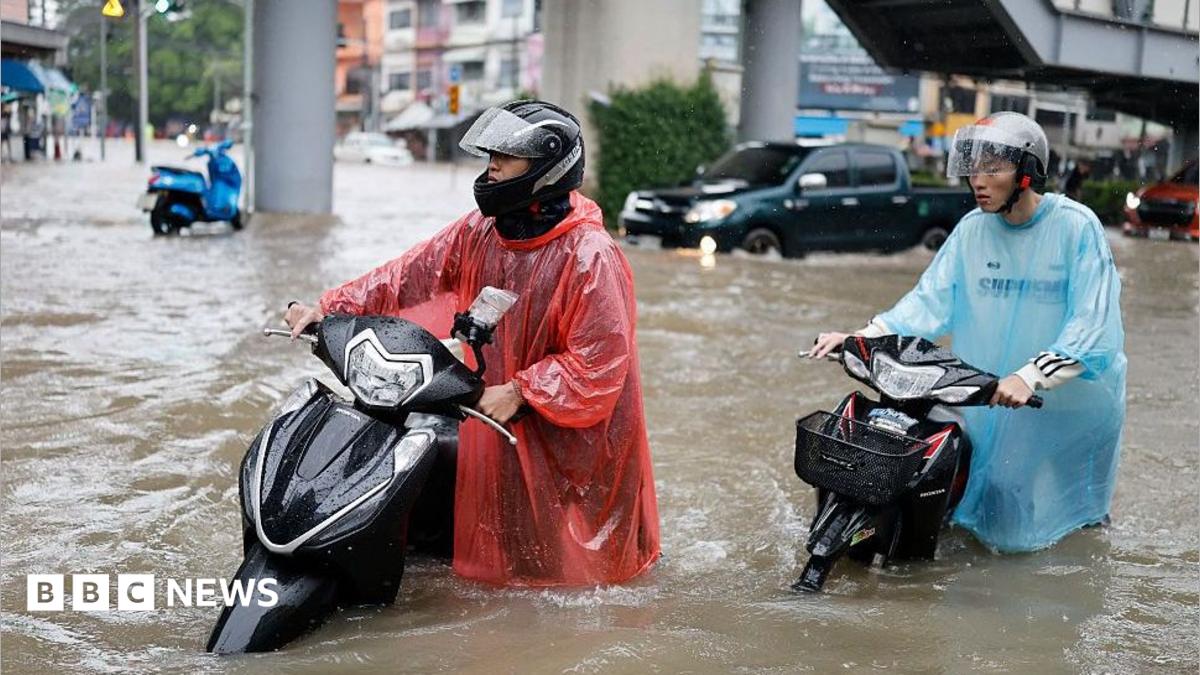
Bangkok has declared a flood emergency disaster after two days of torrential rain left large parts of the Thai capital under water, with roads submerged across districts that are already notoriously congested. The declaration, announced after 48 hours of relentless downpours, signals that authorities now regard the flooding as a full-scale disaster rather than an ordinary seasonal inconvenience.
Residents have been urged to stay at home, and those living near the city's network of canals have been advised to move their belongings to upper floors in case water continues to rise. The warning reflects the direction the crisis has taken: the flooding is no longer confined to isolated low-lying streets but has spread into a citywide emergency, with all 50 of Bangkok's districts declared emergency zones.
Thunderstorms are common in Thailand at this time of year, and seasonal rain is a familiar feature of life in the capital. But the weather in recent days has been exceptional, inundating Bangkok's drainage system and turning roads into rivers. Even before the worst of the flooding, the city's streets were famously congested; now, standing water has brought traffic to a standstill across large areas, with commuters facing a transport network that is effectively impassable in several parts of the city.
Images from the scene show the scale of the disruption, with men pushing scooters through waterlogged roads and pedestrians moving down narrow flooded streets under umbrellas. Canals across the Thai capital have burst their banks, and with water spilling out of a canal network that is interwoven with the city, the consequences are being felt far beyond the immediate bankside neighbourhoods.
One resident, Somkid Pheuk-ngam, 67, who lives near a canal just north of central Bangkok, told the AFP news agency that the water keeps coming in. "It's hard to go out now. It's like at my waist level now," she said. "I cannot go anywhere. I have been closing my shop for two days now." Her account captures the experience of many residents in the affected areas: businesses shut, movement limited, and a steadily rising water level that shows no sign of receding.
She said water levels in the city appeared to be worse than in 2011, when Bangkok was hit by nationwide flooding that lasted three months and killed hundreds of people across Thailand. That comparison is striking, given that the current event is only in its second day and remains concentrated in the capital, whereas the 2011 catastrophe spread across much of the country and unfolded over months.
Despite the severity of the flooding, no casualties have been reported in Bangkok so far. Emergency officials will be counting on that holding as the rain persists, with the absence of deaths a significant achievement given the depth of water affecting residential and commercial areas.
The Thai Meteorological Service has forecast more heavy rain through the week, though the area of low pressure driving the downpours of recent days is expected to move towards central Thailand. Rain is expected to continue into Sunday, raising fears that more canals could burst their banks and that the current emergency could deepen rather than ease.
The flooding is driven in large part by the condition of the canal system, which is integral to the city's layout and drainage. Bangkok has long been defined by its canals, which thread between neighbourhoods and channels water through a low-lying urban plain. When the water inside those canals is already full, pumping becomes far less effective: there is nowhere for the water to be discharged. Every canal, according to the governor, is now filled, leaving low-lying streets with no outlets and no natural way to drain.
Bangkok governor Chadchart Sittipunt said the east of the city had been hardest hit, AFP reported. He added: "The rain keeps falling and we are doing our best. We are trying to pump the water out, but the water in canals are full... The risk areas are those who live near canals. Every canal is now filled." His comments underline the central problem facing officials: the response is already stretched, but the physical constraints of the city's drainage network limit what crews can achieve until the rain eases and the canals begin to fall.
The declaration of all 50 districts as emergency zones gives authorities wider powers to organise evacuations, restrict access to flooded roads and coordinate relief. For residents, it also formalises the advice already issued — stay indoors, move possessions and valuables upstairs, and avoid the roads entirely where possible. For the hundreds of thousands who work in the capital, the practical effect is a shutdown of ordinary life, with shops closed, schools and workplaces inaccessible, and journeys impossible.
Comparisons to 2011 will likely intensify in the coming days, particularly if the current rainfall persists through the weekend and into the week ahead. In 2011, flooding worsened steadily over weeks and months; the immediate question for Bangkok now is whether a short, intense burst of weather can be brought under control, or whether it develops into a longer, more destructive event.
For the moment, officials are balancing grim warnings with a degree of reassurance. The capital has not reported any deaths, the worst-affected areas are concentrated in the east of the city, and the weather system at the centre of the crisis is forecast to shift. But with every canal full, more rain expected into Sunday and residents reporting water at waist level, the city's flood disaster is only likely to deepen before it begins to recede.
What's Your Reaction?
 Like
0
 Dislike
0
 Love
0
 Funny
0
 Wow
0
 Sad
0
 Angry
0

Data Journalist. Mengungkap fakta melalui data. Spesialisasi: analisis forensik digital.


Comments (0)