

Australia Unveils Sweeping Visa Overhaul Targeting Students and Backpackers to Lower Migration Numbers
The Australian government has introduced a major package of immigration reforms designed to rein in national arrival numbers, directly targeting international students, so-called "
The Australian government has introduced a major package of immigration reforms designed to rein in national arrival numbers, directly targeting international students, so-called "visa hoppers," and working holidaymakers. The stricter regulations represent a concerted effort by federal authorities to regain tighter control over the country's border programs and curb temporary migration flows.
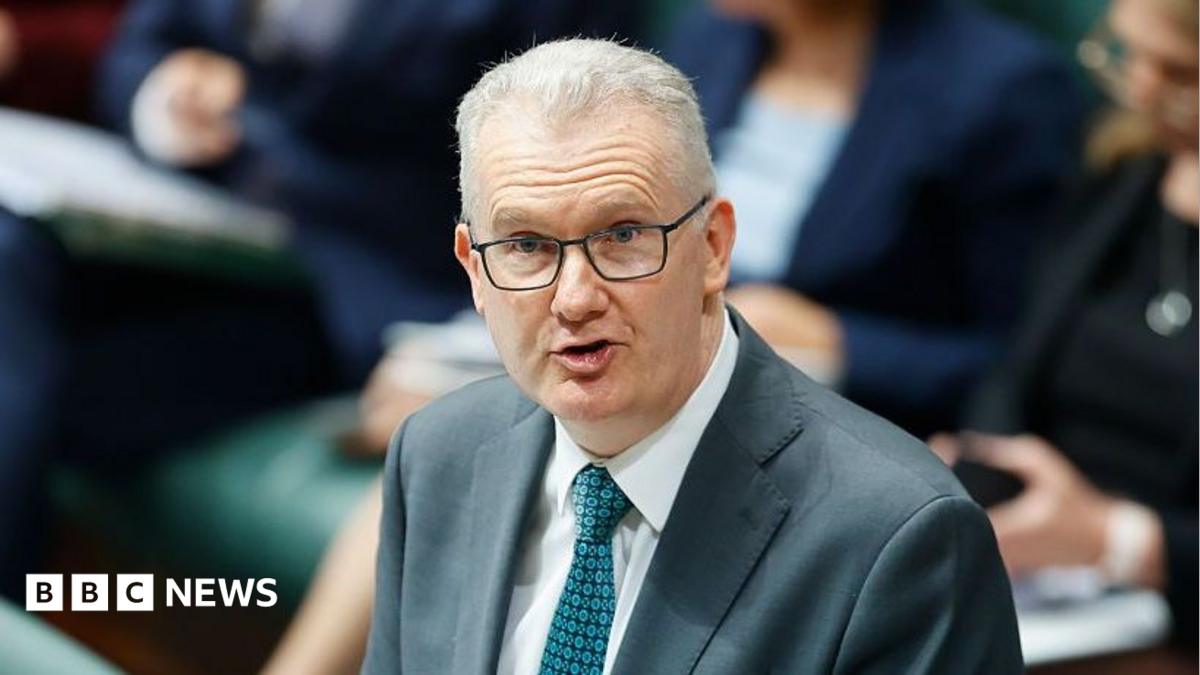
The comprehensive measures were formally outlined by Home Affairs Minister Tony Burke during a policy address titled "The work of managing the migration program: who arrives, who stays, who leaves." In his speech, Burke emphasised that while immigration remains a historical strength of the nation, maintaining a high level of regulatory control is essential. Under the newly announced roadmap, the government aims to lower net overseas migration to 225,000 people by 2028.
A central pillar of the policy shift targets the higher education sector by severely restricting foreign students and graduate visa holders from bringing family members into the country. Burke made clear that the government will cease automatically expanding the volume of temporary residents through accompanying family visas attached to student arrivals.
Specific exemptions will apply to certain cohorts under the revised family rules. Overseas students who are currently residing in Australia will not be subject to the immediate restrictions, and applicants originating from South East Asian nations and the Pacific will also remain exempt. Furthermore, PhD candidates will retain the right to bring their families, with Burke noting that their life circumstances differ significantly from those of undergraduate students.
The government is also taking direct aim at the practice known as "visa hopping," wherein individuals remain in Australia indefinitely by repeatedly applying for consecutive study visas. Under the current system, students frequently complete an initial qualification and subsequently enroll in a lower-level course, occasionally through questionable educational providers.
To stamp out this loophole, the new framework will mandate that students seeking to extend their stay must pursue advanced qualifications. Under the updated criteria, applicants will only be permitted to move "up the scale" academically, such as an individual transitioning from a completed bachelor’s degree to a master's program.
Significant structural revisions have also been established for working holiday visas, which cater to travelers aged 18 to 30 and serve as a vital source of seasonal labour for Australia's agricultural industry. Under existing regulations, participants are granted an initial 12-month stay, with the option to earn a second-year extension by completing three months of regional work, followed by a third-year extension after completing six months of regional employment.
Under the new policy, the uncapped renewal pathway will be replaced by a stringent ballot system. The quota for those qualifying for a second-year visa will be reduced to a cap of 45,000, representing a noticeable decrease from the 57,000 individuals who secured qualification in the previous year.
The contraction is even more pronounced for third-year applicants, where the ballot cap will be restricted to just 5,000 participants. This marks a sharp drop from the 31,000 working holidaymakers who qualified for a third-year stay during the prior year, significantly reducing long-term backpacker numbers across the nation.
British working holidaymakers will be completely exempt from the new ballot limits and restrictions. Their existing working holiday arrangements will remain unaffected as a direct result of provisions negotiated under the bilateral free trade agreement between the United Kingdom and Australia.
The announcement coincides with newly published demographic statistics from the Australian Bureau of Statistics, which revealed that the nation's total population expanded by 1.4% during the 12 months leading to March 2026, reaching 27.9 million residents. That overall increase incorporated natural changes through births and deaths, alongside a net overseas migration figure of 292,100 people.
Migration policy has become a central and contentious political battleground in Australia, driven by widespread domestic debates over surging living expenses, escalating housing affordability crises, and mounting pressure on public infrastructure and social services.
The political landscape has seen increased pressure from populist right-wing parties, notably One Nation, which recently secured its first lower house seat and unveiled a platform advocating for temporary migrant visas to be slashed by 750,000 over three years. One Nation also called for a hard cap of 130,000 on net overseas arrivals, a figure that Burke publicly dismissed by warning it would severely damage core sectors of the national economy.
The latest crackdown builds upon earlier restrictive immigration policies rolled out by the government in July. Those prior changes prioritised onshore family visa applications—filed by individuals already present within the country—over applications submitted offshore, while similarly prioritising onshore skilled migrants seeking permanent residency.
Additionally, the mid-year policy adjustments included an outright pause on working holiday visa applications originating from 24 separate countries, an administrative freeze that did not apply to the United Kingdom.
The aggressive policy shifts have sparked criticism from migrant advocacy and settlement groups. Violet Roumeliotis, representing Settlement Services International, argued that the national immigration discourse is increasingly being dictated by short-term political motives rather than long-term national interest.
Roumeliotis specifically cautioned that restricting family visas for international students would ultimately backfire on Australia's global standing, warning that such measures threaten the country's capacity to remain competitive in attracting top-tier global talent.
What's Your Reaction?
 Like
0
 Dislike
0
 Love
0
 Funny
0
 Wow
0
 Sad
0
 Angry
0

Data Journalist. Mengungkap fakta melalui data. Spesialisasi: analisis forensik digital.



Comments (0)