

Twin Mass Shootings Hours Apart Kill 27 in South Africa as Gun Violence Crisis Deepens
Twenty-seven people are dead after two mass shootings in South Africa barely hours apart, with gunmen killing 17 people at a bar near Johannesburg on Saturday evening and 10 more o
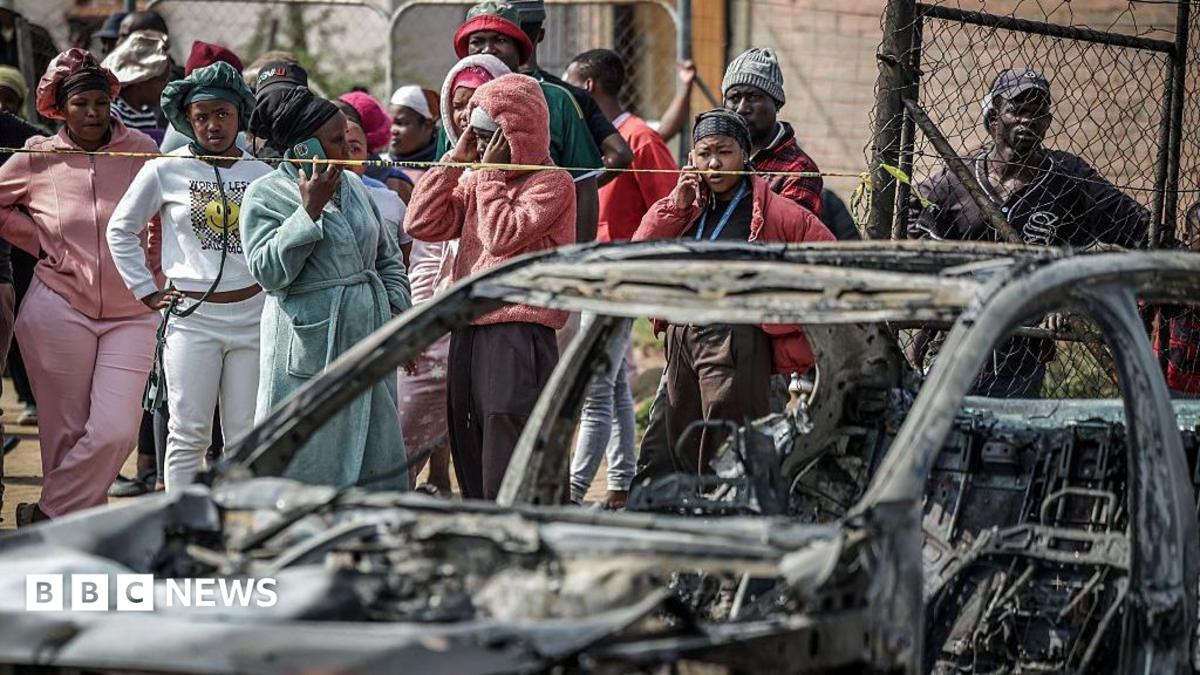
Twenty-seven people are dead after two mass shootings in South Africa barely hours apart, with gunmen killing 17 people at a bar near Johannesburg on Saturday evening and 10 more outside an entertainment venue in a township near Cape Town in the early hours of Sunday. Together, the attacks left a further 26 people wounded and prompted fresh fears that the country's long-running gun violence problem is worsening.
In the first attack, eight gunmen stormed a bar close to Johannesburg, opening fire on customers gathered outside before pushing their way inside. As they fled the scene, the attackers set fire to two vehicles. Police said 13 men and four women were killed at the bar, and stressed that the motive for the attack was not clear. Fifteen other people were treated for injuries sustained in the shooting.
The second attack came in the early hours of Sunday morning, when 10 people were shot dead outside an entertainment venue in a township on the outskirts of Cape Town. Five victims died at the scene, while a further five died in hospital after being taken for treatment, according to the reporting. Another 11 people were injured. Armed security forces were deployed to the scene as police began their investigation, and images of security personnel patrolling behind cordon tape underscore how seriously the authorities are treating the latest violence.
No arrests had been made in either case as of Sunday morning. Police have not indicated a motive for either attack, and the decision by the Johannesburg gunmen to torch vehicles as they escaped is a detail that investigators will likely return to: it suggests a level of planning and an intention to destroy evidence or deny their targets any means of identification.
The double tragedy came just days after another mass shooting in the country, in which 11 people were killed in Durban after gunmen stormed a house in the KwaMakhutha township. That attack, like the two most recent incidents, took place in a single location and in a short window of time — a pattern that has become alarmingly familiar in recent months.
The backdrop to Sunday's killings is a country with one of the highest murder rates in the world. South Africa, home to a population of about 62 million, records roughly 60 murders every day, and illegal firearms remain readily available on the streets. Gun violence has been a persistent feature of South African life for decades, concentrated in particular in townships and informal settlements where organised criminal groups hold local territory.
Analysts and campaigners have long pointed to a small number of heavily armed gangs as the engine of much of this violence, and the concern now is not only about the number of firearms in circulation but about how killings are changing in character. A recent spate of mass shootings has raised fears that the problem is deepening, with violence frequently tied to turf wars between criminal groups involved in drug trafficking and illegal mining. When such groups contest territory, shootings tend to occur in crowded public places — bars, entertainment venues, township streets — rather than in targeted killings away from the public eye.
That reading of events has been echoed at the highest levels of government. In February, President Cyril Ramaphosa described organised crime as "the most immediate threat to our democracy, our society and our economic development", a framing that reflects the extent to which the violence has moved from a policing problem to a matter of national stability. His comments suggested that pressure on gangs and the illegal markets that supply them would become a central government priority rather than a matter for local policing alone.
The government has already taken a more militarised approach. Earlier this year, the military was deployed alongside police in areas with the highest murder rates, in an effort to reduce armed violence. Those deployments bring additional firepower and personnel to some of the worst-affected communities, but they have not prevented Sunday's killings, and critics question whether a security response alone can address the underlying drivers of gang violence.
The human cost is also being tallied in the country's hospitals and morgues, with the Cape Town attack leaving families to learn the fate of relatives in the most painful circumstances, five of the victims dying only after reaching hospital. Survivors, meanwhile, face the long task of physical recovery and the trauma of witnessing such violence in public spaces that are meant to be social centres.
The BBC has been following other investigations into killings in South Africa as well, including a separate police inquiry in which a tenth woman's body was found, adding to a picture of a country struggling to contain violence in multiple places at once.
Attention now turns to the investigations. With no arrests and no stated motive, police face the difficult task of tracing firearms, identifying those who arrived at and left the scene, and establishing whether the two attacks are connected or part of a wider criminal dispute. What is clear after Sunday is that the scale of the killings — 27 dead in under a day, on top of 11 in Durban days earlier — has once again placed the question of gun violence at the centre of South African public life, and pressure on the authorities to produce arrests and answers will be intense.
What's Your Reaction?
 Like
0
 Dislike
0
 Love
0
 Funny
0
 Wow
0
 Sad
0
 Angry
0

Editor Investigasi. Pemenang penghargaan jurnalisme investigasi. Spesialisasi: korupsi, kolusi, dan maladministrasi.





Comments (0)