

Pope Leo Urges French Bishops to Eradicate 'Scourge' of Abuse During Lourdes Pilgrimage
Pope Leo has issued a powerful call to French bishops to confront and eliminate the "scourge" of sexual abuse within the Roman Catholic Church, delivering his message during a priv
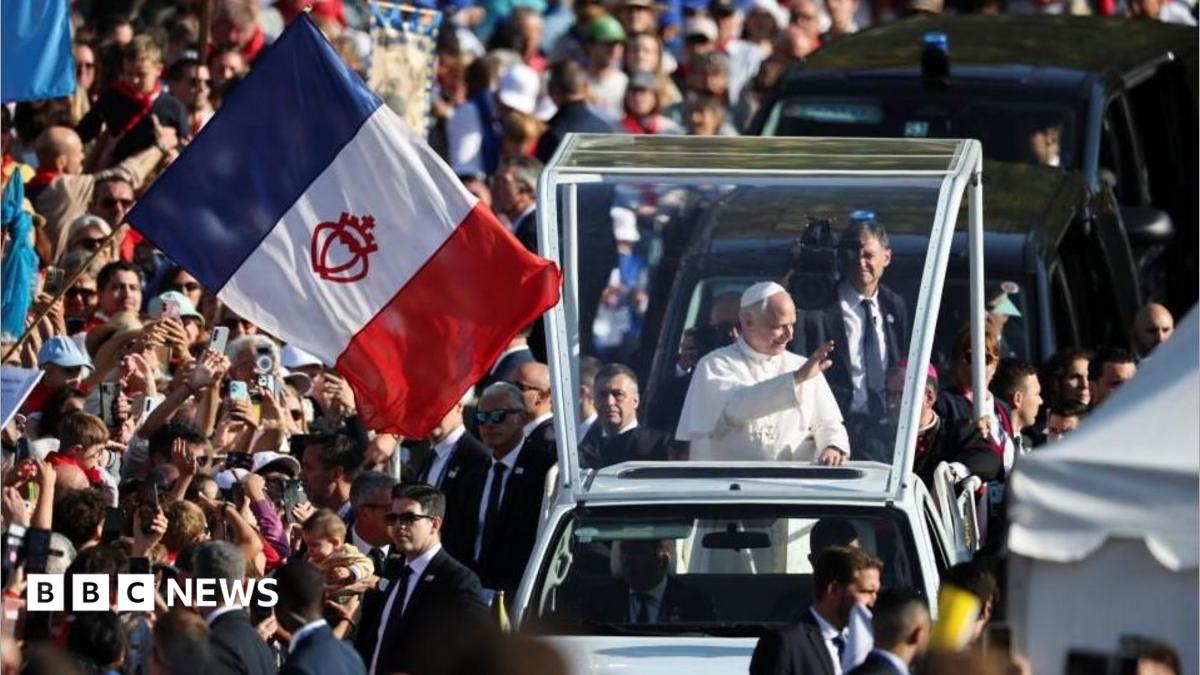
Pope Leo has issued a powerful call to French bishops to confront and eliminate the "scourge" of sexual abuse within the Roman Catholic Church, delivering his message during a private gathering at the Sanctuary of Our Holy Lady of Lourdes in southern France on the third day of his four-day apostolic visit. The pontiff's remarks, made behind closed doors before being released to journalists, underscored the gravity with which he views the ongoing crisis that has shaken the Church's credibility across the globe.
Addressing the assembled bishops at the revered pilgrimage site nestled in the foothills of the Pyrenees, the Pope acknowledged the determined efforts already undertaken by French church leaders to address the painful legacy of abuse committed by clergy and lay church members. He emphasized that these efforts must not wane, instructing the bishops to "maintain the greatest vigilance" as they continue along the path of reform and accountability. The private meeting preceded a scheduled encounter between the Pope and survivors of abuse, a meeting that carries profound symbolic weight for victims and their advocates.
The context of the Pope's message is stark. A comprehensive inquiry conducted in 2021 revealed that approximately 330,000 individuals had been abused as children by clergy or lay members of the Church in France over a span of 70 years. The staggering figure represents one of the most extensive documented patterns of institutional abuse in any country, and it has prompted a reckoning within the French Catholic community that continues to unfold. The report's findings sent shockwaves through both the Church and French society, leading to calls for systemic reforms, compensation for survivors, and a fundamental reexamination of how authority is exercised within religious institutions.
Following his private meeting with the bishops, the Pope celebrated Mass before thousands of worshippers gathered at the Meadow of the Shrine of Our Lady of Lourdes, one of the most visited Catholic pilgrimage destinations in the world. The sanctuary holds particular significance for Catholics, who believe that the Virgin Mary appeared to a young peasant girl, Bernadette Soubirous, in 1858. The site's spring waters are believed by many faithful to possess healing properties, drawing millions of pilgrims annually seeking physical and spiritual restoration. The Pope's presence at this sacred location lent additional solemnity to his message of accountability and healing.
The Lourdes gathering followed a remarkable day in Paris, where an estimated 700,000 people flooded the Place de la Concorde to hear the pontiff speak. The sheer scale of the crowds demonstrated the enduring capacity of the papacy to draw massive gatherings, even in a nation where regular religious observance has declined dramatically over the past six decades. Earlier in the day, the Pope had traveled down the Champs-Élysées Avenue in his open-topped popemobile, greeting enthusiastic followers who cheered and waved as he passed. The scenes evoked memories of previous papal visits that have drawn enormous crowds to the French capital.
On Friday, the Pope met with French President Emmanuel Macron, a leader whose political career has been marked by a commitment to secular governance in a country with deeply ingrained Catholic roots. The meeting highlighted the complex relationship between the French state and the Catholic Church, a relationship shaped by centuries of sometimes contentious interaction. France's modern political identity is built upon the principle of laïcité, a strict form of secularism that separates religious institutions from the state, yet the nation's cultural and historical fabric remains profoundly influenced by its Catholic heritage.
During the Mass in Paris, the Pope delivered a message encouraging Catholics to share their faith openly rather than keeping it private. He told worshippers that their faith should "overflow so that those you meet may be refreshed," suggesting that the Church's vitality depends on the active engagement of believers with the wider society. The message seemed designed to inspire a renewed commitment to evangelization in a country where the Church's influence has waned considerably over recent generations. The Pope also addressed young people specifically, describing them as "today's Church" and praising their enthusiasm, energy, and commitment.
The demographic challenges facing the Catholic Church in France are significant. The proportion of regular worshippers has plummeted from 35 percent of the population in 1960 to less than 5 percent today. The number of priests has declined precipitously, shrinking by two-thirds from 25,000 in 1990 to fewer than 9,000 currently. These statistics paint a picture of an institution struggling to maintain its presence and influence in an increasingly secular society. The decline in vocations to the priesthood has forced parishes to consolidate and has raised questions about the future sustainability of traditional church structures.
However, alongside these challenges, there are signs of renewed interest in religious tradition, particularly among younger generations. The number of adult baptisms has more than doubled over five years, reaching 10,000 in 2025. This trend suggests that while institutional affiliation may be declining, a spiritual hunger persists among certain segments of the French population. The Pope's emphasis on youth and his decision to address young people directly may reflect an awareness of this emerging dynamic and a strategic focus on nurturing the seeds of renewal.
Later on Sunday, the Pope was scheduled to meet with staff and residents at the health facility in Lourdes, continuing a tradition of papal engagement with the sick and vulnerable that has characterized visits to the sanctuary. The Lourdes health facility, known as the Accueil Notre-Dame, provides accommodation and care for pilgrims who are ill or disabled, enabling them to participate in the sanctuary's spiritual activities. The Pope's visit to this facility underscores the Church's commitment to pastoral care for those suffering from illness and aligns with the message of compassion that has defined his ministry.
In the evening, the Pope was set to participate in a torchlight procession, a signature ritual at Lourdes in which pilgrims carry candles in a moving display of faith and solidarity. The procession typically winds through the sanctuary grounds, with participants reciting prayers and singing hymns as darkness falls. The visual spectacle of thousands of flickering flames against the night sky creates a powerful sense of community and devotion, and the Pope's participation was expected to be a highlight of the visit for many pilgrims who had traveled from across France and beyond.
This marks the Pope's first official visit to France since his election to lead the Roman Catholic Church in May 2025. His itinerary has combined gestures of pastoral care with direct engagement on the abuse crisis, reflecting an understanding that the Church's moral authority depends in part on its willingness to confront its failures transparently. The decision to meet privately with abuse survivors during the Lourdes visit sends a signal that the Vatican regards the issue as a priority that demands personal attention from the highest levels of church leadership.
Throughout history, popes have regularly visited France, a nation that presents a paradox for the Catholic Church. While France's modern political history is avowedly secular, with laïcité enshrined as a foundational principle, the country's deep Catholic roots are evident in its architecture, cultural traditions, and the enduring presence of its religious communities. The tension between these two aspects of French identity has shaped the context for papal visits for generations, and Pope Leo's current journey continues this tradition of engagement with a nation that remains central to European Catholicism.
The Pope's four-day visit encompasses both the grandeur of public Masses in Paris and the intimate setting of Lourdes, a place associated with healing and hope. His words to the bishops about rooting out abuse, delivered in the shadow of one of Catholicism's most beloved shrines, carry a symbolic resonance that resonates beyond the immediate audience. For survivors and their advocates, the challenge will be translating the Pope's rhetoric into concrete actions that bring accountability, healing, and systemic change. The Church's credibility in France and beyond may ultimately depend on whether these words bear fruit in meaningful reforms.
What's Your Reaction?
 Like
0
 Dislike
0
 Love
0
 Funny
0
 Wow
0
 Sad
0
 Angry
0

Editor Investigasi. Pemenang penghargaan jurnalisme investigasi. Spesialisasi: korupsi, kolusi, dan maladministrasi.





Comments (0)