

Avalanche at Himlung Himal Base Camp Leaves Ten Nepali Guides Missing as Rescue Efforts Stall
At least ten Nepali climbers are unaccounted for after an avalanche tore through a staging camp beneath Himlung Himal in Nepal's Manang district on Sunday, according to the expedit
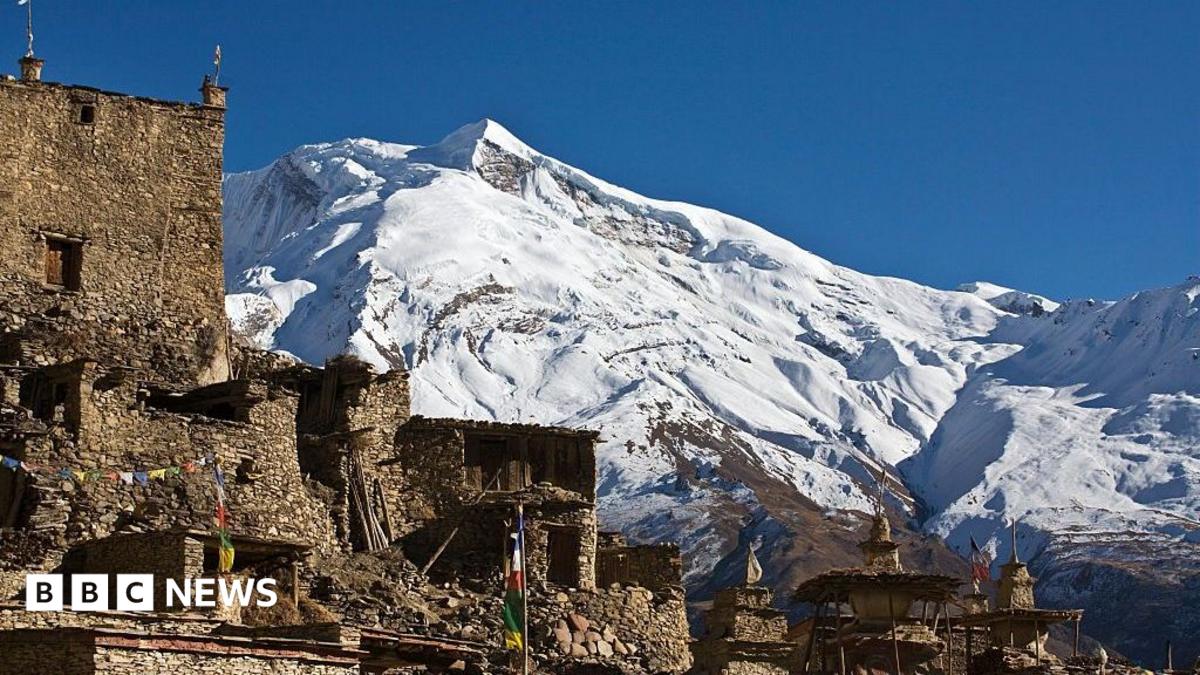
At least ten Nepali climbers are unaccounted for after an avalanche tore through a staging camp beneath Himlung Himal in Nepal's Manang district on Sunday, according to the expedition company that employed most of the missing men. The group had been dispatched ahead of paying foreign clients to prepare the route, establish camps and fix ropes on the 7,126-metre (23,380-foot) peak, which sits on Nepal's northern frontier with Tibet.
Bibhuti Chand Thakur, a representative of Himalaya Holidays Trekking, confirmed the scale of the disappearance to AFP, stating that eight members of his company's expedition team and two guides working for a separate operator had been reported missing. The workers were stationed at a staging point close to the mountain when the snowslide struck during the morning hours.
The missing men belong to a specialised cadre of high-altitude workers who perform the most dangerous preparatory labour on commercial expeditions. Known locally as climbing Sherpas and high-altitude guides, they typically move onto the mountain days or weeks before their foreign clients arrive, carrying loads, carving out tent platforms and securing the fixed lines that paying climbers later follow toward the summit.
Weather data indicated that heavy snowfall had accumulated around Himlung Himal over the preceding days, loading the slopes with unstable snow. That build-up is widely regarded as a principal trigger for the kind of slab avalanche that appears to have swept the camp. The peak lies in a remote corner of the Annapurna region, close to the Tibetan border, where forecasting and communications infrastructure is limited compared with the more heavily trafficked Everest and Annapurna circuits.
Rescue operations have been severely constrained by the same poor conditions that produced the disaster. Helicopters have been unable to reach the site, and ground teams have likewise been blocked from accessing the area, leaving the fate of the ten men unresolved more than a day after the avalanche. In high-altitude rescue, the first hours are considered the most critical for locating survivors, and every delay caused by cloud cover, wind or continued snowfall reduces the already slim margins for survival.
The incident follows an unusually punishing stretch of weather across Nepal's mountain districts, where persistent rain and snow have destabilised slopes throughout the region. Earlier in the week, climbers were compelled to abandon Mount Manaslu, the eighth-highest mountain in the world, because of a mounting avalanche risk. The pattern points to a season in which snowpack instability, rather than individual misjudgement, has become the dominant hazard.
Nepal's climbing and trekking industry is a central pillar of the national economy, generating revenue from permit fees, guiding services, logistics, accommodation and transport, and sustaining livelihoods in some of the country's poorest districts. The reliance on foreign expeditions has also created a professional class of Nepali guides whose expertise is exported worldwide, and whose deaths resonate far beyond the villages they come from.
That toll has already been heavy this year. Less than two months ago, six climbers died on Broad Peak in Pakistan, among them the renowned British-Nepali mountaineer Nirmal Purja, whose career had helped elevate the global profile of Nepali high-altitude workers. The Broad Peak tragedy and the current disappearance at Himlung Himal together underscore the risks carried by the guides who make commercial summits possible for others.
The avalanche also lands amid a broader season of catastrophe in the Himalayan region. Officials in the neighbouring Indian state of Uttar Pradesh reported that extreme weather further south had killed more than fifty people. The convergence of deadly rainfall, flooding and snow-related accidents across the same mountain system has strained the resources of local administrations and raised questions about how effectively risks are being communicated to communities and expedition operators alike.
In Nepal itself, recovery teams continue to work along the Nepal-Tibet border, where more than 6,000 people remain missing following a massive flood and landslide in August. That disaster, triggered by a glacial collapse in the Himalayas, sent enormous volumes of water and debris surging down the Trishuli River valley, wiping out settlements and infrastructure. More than 1,400 deaths have been confirmed in connection with the event, making it one of the deadliest natural disasters in the country's recent history.
The cumulative effect of these events has sharpened scrutiny of how Nepal manages the hazards associated with a warming, increasingly volatile mountain environment. Glacial retreat, erratic snowfall and heavier precipitation are altering the conditions on which both climbers and the communities below them depend. Scientists and disaster specialists have long warned that the Himalayas are among the regions most exposed to climate-driven instability, with consequences that extend from high camps to downstream river valleys.
For the families of the ten missing guides, the immediate concern is the rescue effort. Expedition operators say helicopters and ground parties will be deployed as soon as conditions permit, though no firm timeline has been given. The remote location of Himlung Himal, its distance from major rescue hubs and the ongoing snowfall all combine to complicate any operation, and officials have acknowledged that access remains the central obstacle.
The incident also raises familiar questions about the commercial pressures that shape expedition schedules. Guides are often sent ahead to meet contractual obligations and client expectations, even when weather windows are marginal. While no evidence has emerged that safety protocols were breached at Himlung Himal, the disaster will likely renew debate over whether the industry's reliance on Nepali workers to absorb the greatest risk is adequately reflected in the protections, insurance and decision-making authority those workers receive.
As of Sunday evening, no confirmed injuries or fatalities had been announced, and the ten men remained classified as missing. Search coordinators were monitoring conditions hour by hour, hoping for a break in the weather that would allow aircraft to lift off and ground teams to move upward. Until then, the mountain holds the answer, and the families of the missing wait on word from a camp that no one has yet been able to reach.
What's Your Reaction?
 Like
0
 Dislike
0
 Love
0
 Funny
0
 Wow
0
 Sad
0
 Angry
0

Editor Investigasi. Pemenang penghargaan jurnalisme investigasi. Spesialisasi: korupsi, kolusi, dan maladministrasi.






Comments (0)