

The Indian Bureaucrat Who Acts: Why Enforcement Drives Turn Some Officials into Folk Heroes
In a country where millions of people queue for documents, permits and public services every day, the image of the upright civil servant is both deeply familiar and strangely rare.
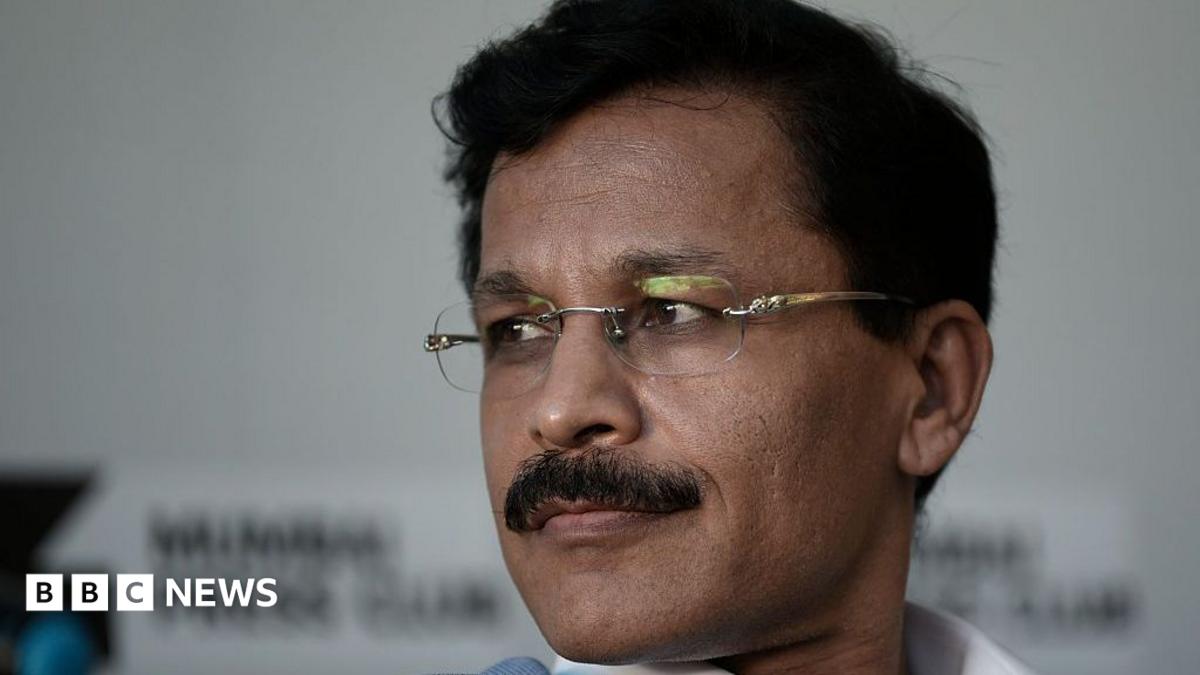
In a country where millions of people queue for documents, permits and public services every day, the image of the upright civil servant is both deeply familiar and strangely rare. Against that backdrop, a small handful of officials have captured public imagination in recent years simply by appearing to do their jobs with unusual energy — and the contrast explains much about how governance is perceived in India.
Among them is Tukaram Mundhe, 51, commissioner of Maharashtra's Food and Drug Administration, who has led a series of enforcement drives since taking charge in May. His inspectors have visited restaurants and other food businesses, uncovering pest infestations, poor hygiene and stocks of expired food. He has also drawn attention to wide gaps between what hospitals pay for everyday medical supplies and what patients are ultimately charged, a discrepancy that has fuelled public anger over healthcare costs.
Mundhe's actions have made him a social-media celebrity. Clips and photographs from his inspections have been widely shared online, and hundreds of users have commented that officials of his calibre ought to be posted to deal with food safety in their own states. The reaction is telling: the demand is not for a new policy, but for accountability closer to home.
He is not the only official drawing such attention. In Gurugram, a suburb of Delhi, district town planner RS Batth has earned praise for acting against illegal construction and encroachments. Together, their cases illustrate a recurring pattern in which enforcement, rather than announcement, generates public goodwill.
The reason is not hard to grasp. In India, civil servants oversee a wide range of services that households depend on daily — from issuing documents to policing, food safety and public health. The same officials, however, are routinely accused of needless delay, solicitation of bribes and forcing ordinary citizens to make repeated trips from office to office. So when someone within the system appears to cut through the red tape, the response can be disproportionately warm.
"What ought to be routine has become exceptional," says Kamal Kant Jaswal, a retired civil servant who has studied the way government is experienced by the public. For many citizens, he argues, bureaucratic hurdles and indifferent treatment have grown so familiar that competent administration now registers as an aberration rather than the norm.
That perception is sharpened by personal experience. Rajesh Singh, 43, who works for a finance company in Delhi, describes long waits to get routine work processed and even longer processes for resolving complaints. He says he has personally watched a task that should have been finished in a day stretch to six months, with no assurance of a satisfactory result even then. Against that baseline, a visible inspection or a swift action on an illegal encroachment looks like a dramatic break with the norm.
The idea is not new. One of the most prominent examples is TN Seshan, who became a household name as chief election commissioner in the 1990s by enforcing rules without fear or favour. Kiran Bedi, the first woman to join the ranks of the Indian Police Service, was nicknamed "Crane Bedi" in the early 1980s after an illegally parked car belonging to then prime minister Indira Gandhi was towed away. The car was removed by a sub-inspector reporting to her, and she has said in later years that she backed his decision, even though the episode made her reputation.
More recent cases include Ashok Khemka, who became nationally known after intervening in a controversial land transaction in 2012, and police officer Neeraj Jadaun, who was praised for confronting a mob during deadly religious violence in Delhi in 2020. Each story reinforces a public shorthand: the honest, no-nonsense bureaucrat is available, but rarely found.
Hero status, however, comes with its own risks. Officials admired for enforcing rules can equally be faulted for applying them rigidly, without weighing the circumstances on the ground. Mundhe has been criticised by sections of India's food and hospitality industry, which have accused him of overreach. He has rejected allegations that his actions are selective or unlawful, saying inspections are driven by evidence and that licences are suspended only in serious cases.
Batth has faced similar flak over his action against unauthorised structures, with critics alleging that his enforcement is selective and falls disproportionately on vulnerable people. In several widely circulated videos, he has said his actions follow town-planning rules strictly. The dispute is difficult to resolve because the law and the local economy frequently point in different directions.
Jaswal notes that a street vendor's stall may count as an unauthorised structure in legal terms while remaining a family's only source of income. In a country where millions migrate to cities in search of work, informal housing can be the only accommodation a newcomer is able to find. That tension — between what the law permits and what people can afford — helps explain how the same action can be described simultaneously as lawful and as harsh.
Visibility also plays a role, and it is unevenly distributed. Jaswal stresses that thousands of civil servants in India carry out their duties without attracting any public notice, because their work may involve little direct contact with citizens or may simply be less visible. The attention that follows a Mundhe or a Batth is a form of good fortune as much as a measure of merit.
Bureaucrats themselves face pressures beyond public scrutiny, including the political, administrative and personal strains of office — a subject that Pushpa Sundar, who briefly served as a civil servant and has written about the experience, has explored. But for ordinary Indians, the measure of the system is the encounter at a counter or in a queue, and it is there that the gap between expectation and reality is felt most sharply.
The larger implication is uncomfortable for those who run India's administrative machinery: heroism in public eyes often attaches to routine enforcement rather than to institution-building. A single viral clip of a shut-down kitchen or a demolished shed travels further than any annual report, and it rewards a kind of visible, personal decisiveness that the system as a whole rarely provides.
That is why Mundhe and Batth matter beyond their own jurisdictions. They have become proof, endlessly repeated on phones and screens, that government can act — and in doing so have exposed how far everyday administration has drifted from the standard citizens assume it should meet.
What's Your Reaction?
 Like
0
 Dislike
0
 Love
0
 Funny
0
 Wow
0
 Sad
0
 Angry
0

Fact-Check Editor. Verifikator bersertifikasi IFCN. Memeriksa klaim viral dan disinformasi.






Comments (0)