

Somali Pirates Killed Five Hostages Before Puntland Forces Retook Tanker, Official Says
Five members of an oil tanker's crew were killed by Somali pirates before regional security forces stormed the vessel and regained control of it, a senior official in Somalia's sem
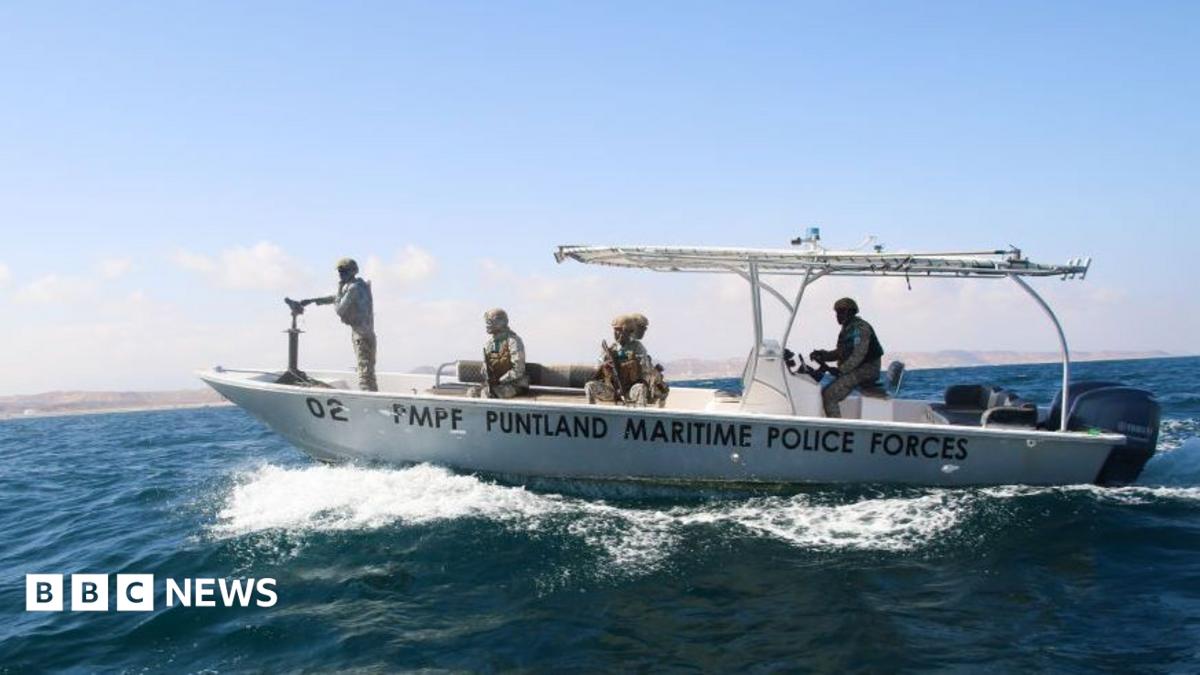
Five members of an oil tanker's crew were killed by Somali pirates before regional security forces stormed the vessel and regained control of it, a senior official in Somalia's semi-autonomous Puntland region has told the BBC.
Bile Qabowsade, the deputy information minister of Puntland, said the five captives were shot dead by their abductors in the period before Puntland maritime personnel boarded the MT Hoarner 25. He identified the dead as three citizens of Pakistan, one Indian national and one person from Myanmar.
The disclosure adds a grim new dimension to a hijacking that had already drawn attention as a sign of the renewed threat posed by piracy in the waters off the Horn of Africa. According to the official account, four other crew members survived the ordeal with injuries — three Pakistanis and one Indian — and are now receiving medical treatment.
The tanker was transporting roughly 18,500 barrels of oil when it was attacked earlier in April, according to the source account. The cargo was bound for Mogadishu, Somalia's capital, a route that passes through some of the most heavily trafficked and least protected shipping lanes in the region.
Six armed men are said to have carried out the initial seizure of the vessel, overwhelming the crew while it was underway. The hijacked ship was subsequently moved and anchored near the Somali shoreline, in the stretch of coast between the fishing settlements of Xaafun and Bander Beyla.
The nationalities of those on board reflect the deeply international character of commercial shipping in the region. At the time of the hijacking, officials said 17 crew members were aboard the tanker, drawn from five countries: ten Pakistanis, four Indonesians, one Indian, one Sri Lankan and one Myanmar national.
The scale of the loss — five dead out of a crew of seventeen — makes this one of the deadliest episodes in the recent resurgence of Somali piracy, which had been largely suppressed for more than a decade. The fact that hostages were killed rather than held for ransom also marks a departure from the pattern that characterized most hijackings during the earlier peak of the crisis.
After the vessel was retaken, authorities announced that sixteen suspected pirates had been taken into custody. Officials said other suspects managed to flee the scene and were being hunted by security personnel along the coast and inland.
Qabowsade pushed back against claims that Puntland's forces had deliberately allowed some of the attackers to slip away. The accusation, which he rejected outright, points to the sensitivity surrounding the operation and to longstanding questions about how effectively regional authorities can control their own coastlines.
The Puntland deputy information minister's account leaves several important questions unanswered. Authorities have not explained precisely how the pirates managed to seize the tanker in the first place, nor have they described the sequence of events that led to the deaths of the five crew members before the rescue.
Piracy off Somalia's coast declined dramatically after 2011, when an international coalition of naval forces mounted sustained counter-piracy patrols in the Gulf of Aden and the Indian Ocean. Warships from multiple countries escorted merchant vessels through a designated transit corridor, and the number of successful hijackings fell to near zero for several years.
That progress has eroded in recent years. Analysts have linked the resurgence to a combination of factors, including the redeployment of international naval assets toward other crises, instability onshore in Somalia, and the financial incentive that ransom payments continue to provide for armed groups operating from coastal communities.
The broader regional security environment has also played a role. Reporting by the BBC has noted that piracy has surged as the fallout from tensions between the United States and Iran ripples outward, disrupting the patterns of naval presence that once kept the Somali coastline in check. A separate hijacking in July saw suspected Somali pirates seize a tanker off the coast of Yemen — the second such incident in a three-month span.
The Puntland authorities have responded to the growing threat by stepping up maritime patrols. Security personnel from the region, which operates with substantial autonomy from the federal government in Mogadishu, have been visible in the waters off Somalia's northeastern coast, though their capacity remains limited relative to the expanse of ocean they are expected to monitor.
For shipping companies, the killing of hostages raises difficult questions about how to protect crews sailing through the region. The use of armed guards, razor wire and hardened bridge areas has become standard practice for many vessels in high-risk zones, but such measures cannot guarantee safety when attackers are determined and well-armed.
For the families of the five dead men, the confirmation of the deaths closes a period of uncertainty that began when the tanker was seized. The injured survivors, meanwhile, face a long recovery, both physically and psychologically, after their capture and the violent rescue operation that ended it.
The arrests of sixteen suspects open the possibility of prosecutions, though legal accountability for piracy in the region has historically been inconsistent. Many captured suspects have been released without trial, and questions persist about whether Puntland's judicial system has the resources and jurisdiction to handle cases that involve victims, evidence and suspects from multiple countries.
The wider message may be that Somali piracy is no longer a fading footnote in maritime history. With international naval attention stretched thin and coastal communities still economically dependent on the sea, experts warn that the conditions that produced the hijackings of the past decade remain largely intact — and that unless they are addressed, the waters off Somalia will continue to claim lives.
What's Your Reaction?
 Like
0
 Dislike
0
 Love
0
 Funny
0
 Wow
0
 Sad
0
 Angry
0

Editor Investigasi. Pemenang penghargaan jurnalisme investigasi. Spesialisasi: korupsi, kolusi, dan maladministrasi.






Comments (0)