

Flydubai Jet Bound for Tel Aviv Diverts to Saudi Arabia After Mid-Air Altercation Between Pilots
A Flydubai passenger flight traveling from Dubai to Tel Aviv was forced to divert to Saudi Arabia on Wednesday morning after a physical confrontation broke out between the aircraft
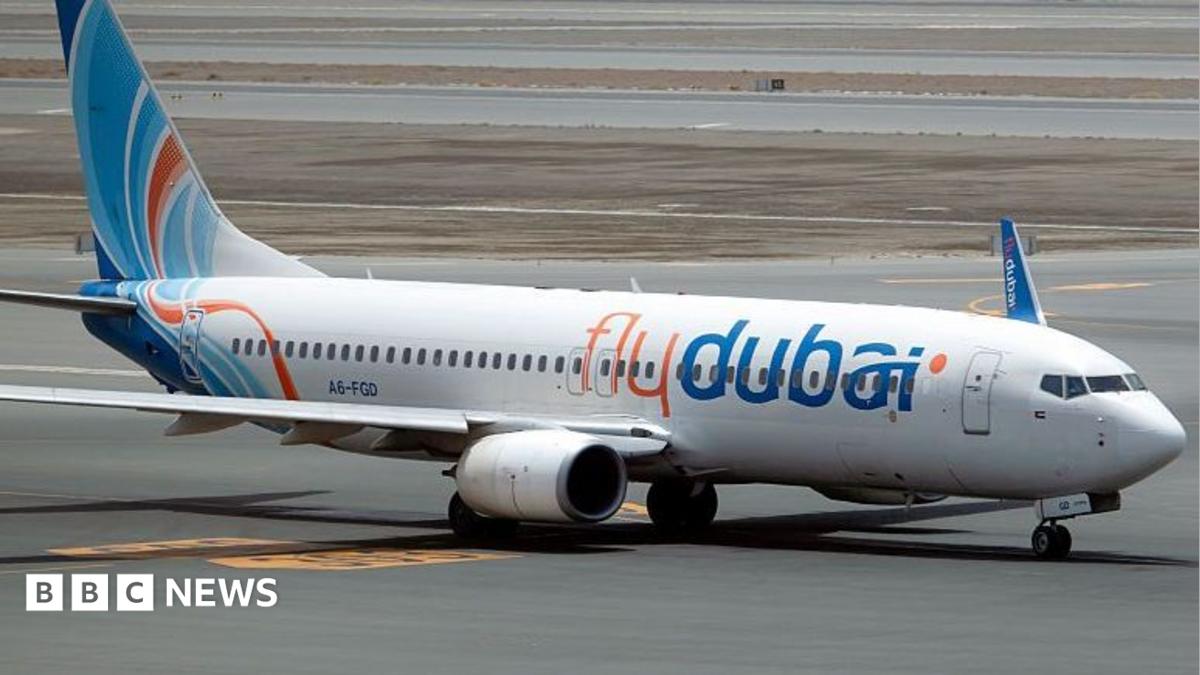
A Flydubai passenger flight traveling from Dubai to Tel Aviv was forced to divert to Saudi Arabia on Wednesday morning after a physical confrontation broke out between the aircraft's pilot and co-pilot, according to Israeli officials cited by local media. The incident, which unfolded at cruising altitude roughly two hours into the journey, prompted the crew to transmit a series of emergency signals that briefly raised fears of a hijacking before authorities determined the situation stemmed from an internal dispute in the cockpit.
The aircraft, which departed Dubai International Airport in the United Arab Emirates in the early hours of Wednesday, was carrying approximately 150 people, the majority of them Israeli citizens. It had been scheduled to land at Ben-Gurion Airport near Tel Aviv, but instead was rerouted to Tabuk Airport in northeastern Saudi Arabia, where it ultimately touched down.
Flight tracking data from Flightradar24 showed that the plane squawked an emergency code approximately two hours after takeoff. Minutes later, the transponder switched to a code reserved for reporting a hijacking, a development that would normally trigger an immediate and aggressive international response. According to the tracking website, the signal was subsequently changed back to the general emergency code, suggesting that the crew quickly reassessed the nature of the threat.
The Israeli prime minister's office stated that the incident was not believed to have been a hijacking. Instead, local media outlets, citing Israeli defence officials, reported that the emergency signal was likely triggered as a result of an altercation between the pilot and the co-pilot. The precise circumstances of the fight, including what precipitated it and whether either crew member was injured, have not been publicly disclosed.
The seriousness with which Israeli authorities treated the episode was evident in the immediate response. The Israeli Air Force dispatched fighter jets in response to the unfolding situation, and Prime Minister Benjamin Netanyahu held urgent consultations regarding the incident. While the diversion ultimately proved to be the result of an onboard dispute rather than a security threat, the rapid mobilization reflected the heightened sensitivity surrounding commercial aviation in the region, particularly on routes connecting the Gulf states with Israel.
Tabuk Airport, located in northwestern Saudi Arabia near the Jordanian border, is a regional facility that has increasingly been used as a diversion point for civilian aircraft. The decision to land there rather than continue to Israel suggests that the flight crew determined the situation warranted an immediate landing, and that Saudi authorities were in a position to receive the aircraft and its passengers.
The incident highlights the critical importance of cockpit resource management and crew coordination in commercial aviation. Modern airliners are operated by at least two pilots who are expected to work in close collaboration throughout a flight, cross-checking each other's actions and making joint decisions on matters ranging from navigation to emergency handling. When that working relationship breaks down, the consequences can be severe, potentially compromising the safety of everyone on board.
Aviation safety experts have long emphasized that professional disagreements between pilots are not uncommon, particularly in high-stress environments or when crews are fatigued, but that robust training programs and standardized procedures are designed to prevent such disagreements from escalating. Airlines typically require pilots to undergo regular simulator training that includes scenarios involving crew conflict, with the goal of ensuring that any dispute is resolved without compromising the operation of the aircraft.
The fact that the confrontation occurred on a flight departing Dubai, a major international hub, and bound for Israel, a destination with significant security considerations, adds further complexity to the situation. Flights between the UAE and Israel have become more commonplace in recent years following the normalization of diplomatic relations between the two countries, and they carry a mix of business travelers, tourists, and family members visiting relatives.
For passengers aboard the flight, the experience would have been alarming. An unexpected diversion, the presence of emergency signals, and reports of fighter jets being scrambled would have created considerable anxiety, even if the crew and authorities worked to manage the situation. Passengers were reportedly kept informed as circumstances allowed, though the full details of the cockpit altercation may not have been immediately relayed to those in the cabin.
Flydubai, a state-owned carrier based in Dubai, operates an extensive network of short- and medium-haul routes across the Middle East, Africa, Europe, and Asia. The airline has not yet issued a detailed public statement regarding the incident, and it remains unclear whether the pilots involved will face disciplinary action or whether the airline will review its crew pairing and scheduling procedures in the wake of the event.
The involvement of Saudi Arabian authorities in receiving the diverted aircraft also carries diplomatic undertones. Saudi Arabia and Israel do not have formal diplomatic relations, though ties have quietly expanded in recent years. The willingness of Saudi air traffic and airport authorities to accommodate the flight demonstrates the pragmatic cooperation that exists in regional civil aviation, where safety considerations typically transcend political differences.
As of Wednesday, it was not immediately clear when the passengers would be able to continue their journey to Israel. Alternative arrangements, including the possibility of transferring passengers to another aircraft or arranging ground transportation, would depend on coordination between Flydubai, Saudi authorities, and Israeli officials. The aircraft itself would also need to be inspected and cleared before returning to service.
The incident serves as a reminder that, despite the highly regulated and technologically advanced nature of modern commercial aviation, human factors remain an irreducible element of flight safety. The ability of two professionals to work together under pressure, communicate clearly, and maintain discipline in the cockpit is as essential to a safe flight as any piece of avionics or engineering system. Investigators will likely examine the airline's training protocols, the duty schedules of the pilots involved, and any personal or professional factors that may have contributed to the confrontation.
Further details are expected to emerge in the coming days as Israeli, Emirati, and Saudi authorities coordinate their inquiries and Flydubai conducts its own internal review. For now, the safe landing of the aircraft and its passengers at Tabuk Airport means that the most serious potential consequences of the incident were avoided, even as questions remain about how a routine flight descended into a cockpit confrontation that triggered an international emergency response.
What's Your Reaction?
 Like
0
 Dislike
0
 Love
0
 Funny
0
 Wow
0
 Sad
0
 Angry
0

Editor Investigasi. Pemenang penghargaan jurnalisme investigasi. Spesialisasi: korupsi, kolusi, dan maladministrasi.






Comments (0)