

Lindsay Clancy Returns to Court as Defence Seeks Dismissal of Murder Charges in Massachusetts
Lindsay Clancy, the Massachusetts woman accused of killing her three young children, made her first court appearance on Tuesday since her murder trial collapsed earlier this month,
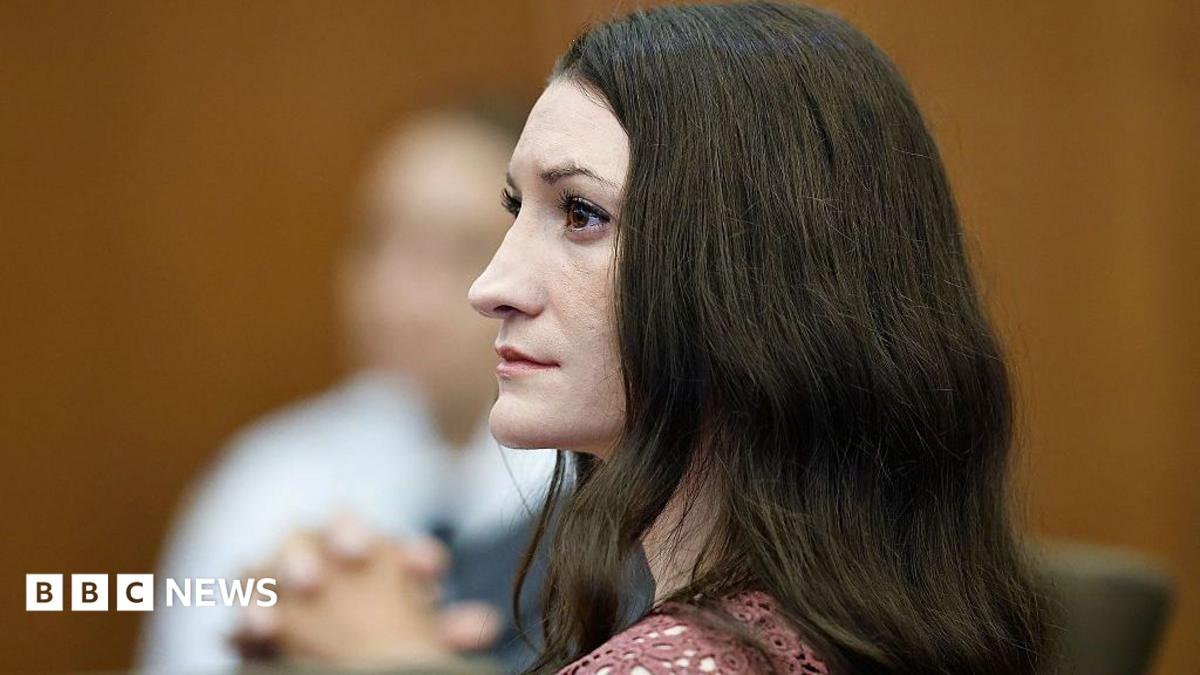
Lindsay Clancy, the Massachusetts woman accused of killing her three young children, made her first court appearance on Tuesday since her murder trial collapsed earlier this month, setting the stage for a fresh legal battle over whether she will ever face a jury again.
The 36-year-old has been receiving treatment at a psychiatric facility since the killings in 2023, and she did not deny causing the deaths of her children during her earlier trial. Her defence has consistently maintained that she was experiencing severe postpartum psychosis at the time, a condition that they argue left her unable to appreciate the wrongfulness of her actions. Prosecutors, by contrast, have insisted the killings were deliberate and that Clancy understood exactly what she was doing.
Tuesday's hearing in Judge William Sullivan's courtroom focused on a series of motions, most notably a request from Clancy's lawyer, Kevin Reddington, that the case be dismissed outright. Reddington invoked Rule 25, a Massachusetts procedural mechanism that permits a judge to enter a not-guilty finding when the prosecution has failed to present a legally sufficient case. In practice, such motions are rarely granted, but they give defence attorneys an opportunity to argue that the state's evidence, even when viewed in the light most favourable to prosecutors, cannot sustain a conviction.
Reddington paired that request with an unfamiliar argument for this case: that there was simply not enough evidence to prove Clancy killed her children at all. "This entire case is based on speculation," he told the court, according to the BBC. The assertion marks a notable shift from the defence strategy deployed during the trial, when Reddington focused almost entirely on his client's mental state and urged jurors to find her not criminally responsible rather than disputing the underlying facts.
That earlier approach reflected a well-established legal pathway in Massachusetts, where a defendant can be found not guilty by reason of insanity if a mental disease or defect prevented them from understanding the criminality of their conduct. Postpartum psychosis, while rare, has increasingly featured in high-profile cases as a mitigating factor, and Clancy's team leaned heavily on medical testimony describing her deteriorating mental health in the weeks before the deaths.
Prosecutor Shanan Buckingham wasted little time in pushing back on Tuesday, describing Reddington's argument as "laughable." She told the court that the state had presented abundant evidence showing Clancy was in a sound mental state at the time of the killings. "The Commonwealth met its burden," Buckingham said, maintaining that Clancy knew what she was doing when she killed Cora, five, Dawson, three, and eight-month-old Callan inside the family's Massachusetts home.
The underlying facts of the case have never seriously been in dispute. What remains contested is the question of intent and mental capacity, the very issue that caused the jury to deadlock earlier this month. After a week of deliberations, jurors informed Judge Sullivan that they could not reach a unanimous verdict because of a single holdout, and a mistrial was declared on 4 September. The outcome stunned observers who had followed the emotionally charged proceedings closely.
Judge Sullivan appeared intent on preventing the case from drifting. When neither Reddington nor Buckingham would commit to a possible retrial date during Tuesday's hearing, the judge pushed back, saying he wanted to "get this thing moving." He instructed both sides to come prepared to discuss potential trial dates at a hearing scheduled for 2 November, where the dismissal motion and other outstanding requests will also be addressed.
Reddington indicated that if the case is retried, he would not be ready to proceed until at least June, citing the volume of material and the complexity of the psychiatric evidence involved. The timeline suggests that any second trial would not begin until well into next year, prolonging a legal saga that has already stretched more than two years since the children's deaths.
Speaking to reporters outside the courthouse, District Attorney Timothy Cruz said prosecutors have not yet decided whether to pursue a retrial on murder charges. "We're doing our due diligence, we're going to continue doing that," he said. "We're going to do what we can for the children. That's what this case is about." His remarks underscored the delicate balance prosecutors face: mounting a second trial carries significant emotional and financial costs, but abandoning the case could be perceived as a failure to secure accountability.
Legal analysts note that retrials following a deadlocked jury are common, but they are far from automatic. Prosecutors must weigh the strength of their evidence, the likelihood of securing a unanimous verdict the second time around, and the toll that another trial would take on witnesses and family members. In cases involving mental health defences, jury outcomes can be unpredictable, since jurors often grapple with duelling expert testimonies and emotionally fraught facts.
The case has drawn national attention, in part because of the harrowing nature of the allegations and in part because of the broader conversation it has sparked about postpartum psychosis. The condition, which is far more severe than the "baby blues" or standard postpartum depression, can involve hallucinations, delusions, and a complete break from reality. Advocates say it remains widely misunderstood, and they argue that cases like Clancy's highlight the need for better screening and support for new mothers.
For now, Clancy remains in psychiatric care, and her legal future hangs in the balance. The 2 November hearing will be pivotal, as Judge Sullivan weighs whether the case should be dismissed and, if not, when a retrial might begin. Whatever the outcome, the proceedings are likely to reignite debate over how the criminal justice system handles defendants whose actions may be rooted in severe mental illness.
What's Your Reaction?
 Like
0
 Dislike
0
 Love
0
 Funny
0
 Wow
0
 Sad
0
 Angry
0

Editor Investigasi. Pemenang penghargaan jurnalisme investigasi. Spesialisasi: korupsi, kolusi, dan maladministrasi.






Comments (0)