

Kenya Quarantines Ten Contacts as First Ebola Case Exposes Gaps in Border Screening
Kenyan health authorities have placed ten people under quarantine after they came into contact with the country's first confirmed Ebola patient, a man who died in a Nairobi hospita
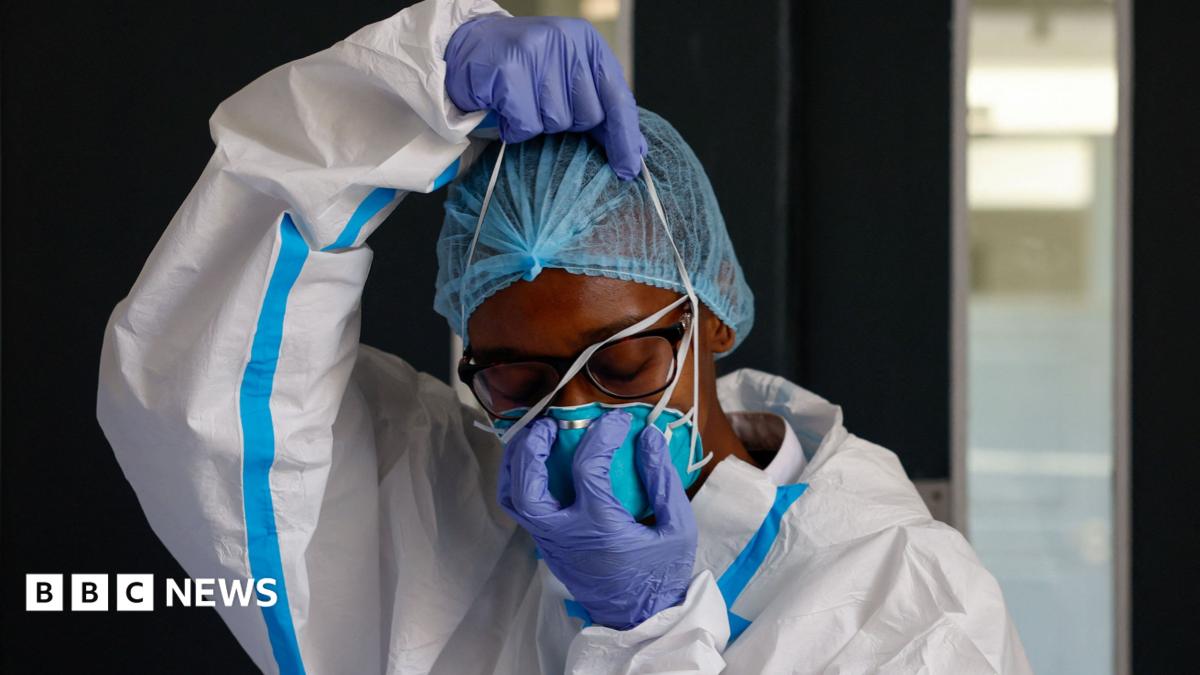
Kenyan health authorities have placed ten people under quarantine after they came into contact with the country's first confirmed Ebola patient, a man who died in a Nairobi hospital on Monday. Officials are simultaneously tracking down another 57 individuals who may have crossed paths with the victim, as questions mount over how an infectious traveller evaded detection across multiple countries despite being ill for nearly a month.
The patient's journey began in Buta, a city in northern Democratic Republic of Congo, according to Dr Jean Kaseya, director-general of the Africa Centres for Disease Control and Prevention. From there, the man drove to Kisangani before boarding a flight to Beni. He then travelled by road into Uganda and finally flew from Uganda to Nairobi, Kenya's capital. At no point during this multi-country odyssey was his condition flagged by health screening systems.
Kaseya told the BBC's Focus on Africa programme that the case has raised troubling questions about why the man's symptoms went unnoticed for so long. "What are symptoms he was presenting? Why was he not detected?" he asked, noting that the Africa CDC is investigating the matter alongside Congolese authorities. A team from the organisation was also scheduled to meet Kenyan health officials.
The Ebola virus is transmitted through direct contact with the bodily fluids of an infected person, including blood, vomit, and other secretions. The current outbreak in DR Congo, which was declared in May, is caused by the Bundibugyo species of the virus — a relatively rare strain for which no approved vaccine or treatment currently exists, though clinical trials are ongoing.
Kenyan health ministry official Patrick Amoth suggested that the patient may have taken medications that masked his symptoms, allowing him to pass through screening undetected. After arriving at Nairobi's airport, the man was transported by a relative to a city hospital, where he later died. He was buried on Tuesday in accordance with health safety protocols.
The case has not come as a complete shock to some in Kenya's medical community. Dr Dennis Miskellah, a representative of the country's main doctors' union, told the BBC's Newsday programme that he and many health workers had anticipated such a scenario. He described witnessing "lapses" at various border points, including crossings with neighbouring Uganda and Tanzania, as well as at Kenya's principal airport.
"How could you have been sick for almost a month plus in DR Congo, come all the way to the country through not just any small border point, but the main entry point, the main gateway into the country and pass unnoticed?" Miskellah asked, echoing a question that he said many Kenyans are now posing. "That's the question that most Kenyans are asking."
In response to the crisis, Kenya's health ministry says it has ramped up containment measures through a joint effort involving county administrations, humanitarian partners, and other stakeholders. President William Ruto has stated that surveillance and rapid response teams are deployed on the ground, building on systems the country put in place following the DR Congo outbreak declaration in May.
A presidential spokesman added that Kenya possesses the capacity to detect, isolate, and manage suspected Ebola cases. To date, more than 650,000 travellers have been screened and 267 samples tested, according to official figures. Isolation facilities have been established at four major hospitals, including the Nairobi Hospital where the first patient died. Those quarantined are being kept under constant observation at an Ebola isolation unit.
The outbreak has also revived a contentious debate in Kenya about a proposed Ebola treatment facility. In June, a US plan to establish such a centre at a military base in the central town of Nanyuki provoked public anger over the potential risks of cross-border infection. The plan was ultimately halted by the courts. On Wednesday, Health Minister Aden Duale told local broadcaster NTV that, pending the outcome of the legal case, the government is considering converting the facility into the region's first infectious disease hospital to address outbreaks like Ebola.
The scale of the ongoing epidemic in DR Congo underscores the gravity of the situation. More than 4,000 people have died from Ebola in the country this year, making it the second most deadly outbreak of the disease on record. Shortly after DR Congo declared the outbreak in May, Uganda also reported cases, with two fatalities. However, the World Health Organization declared Uganda free of the disease in August.
On Tuesday, Uganda's health ministry reiterated that the country remains Ebola-free and is maintaining robust surveillance measures to protect public health. It noted that the Kenyan patient had transited through Uganda for less than 24 hours and that screening teams had observed he had a normal temperature at the time of departure.
Kaseya said the Africa CDC is working with countries across the region to strengthen response mechanisms. He described Kenya as "well prepared" and therefore able to receive the case immediately, but cautioned that "it is not the case for all other countries." He stressed that a regional approach is now more critical than ever to stop the outbreak. However, he also acknowledged that no rapid testing is currently available at border points, and that temperature checks alone — the primary screening tool — can miss infected individuals who are not yet febrile or who have taken medication to suppress fever.
The coming days will be crucial as Kenyan authorities race to trace all remaining contacts and determine whether the virus has already begun to spread within the country. The incident has laid bare the challenges of containing a highly lethal pathogen in a region where porous borders, limited screening infrastructure, and the long incubation period of Ebola create ideal conditions for cross-border transmission. For now, health officials are urging the public not to panic, while acknowledging that the case has exposed weaknesses that must be addressed.
What's Your Reaction?
 Like
0
 Dislike
0
 Love
0
 Funny
0
 Wow
0
 Sad
0
 Angry
0

Editor Investigasi. Pemenang penghargaan jurnalisme investigasi. Spesialisasi: korupsi, kolusi, dan maladministrasi.






Comments (0)