

Jurgen Klopp Urges Unity and Reclaims National Pride Following Far-Right Electoral Gains
Germany’s newly appointed head coach, Jurgen Klopp, has voiced a powerful plea for unity and open-mindedness, stating that his national side can play a vital role in preventing Ger
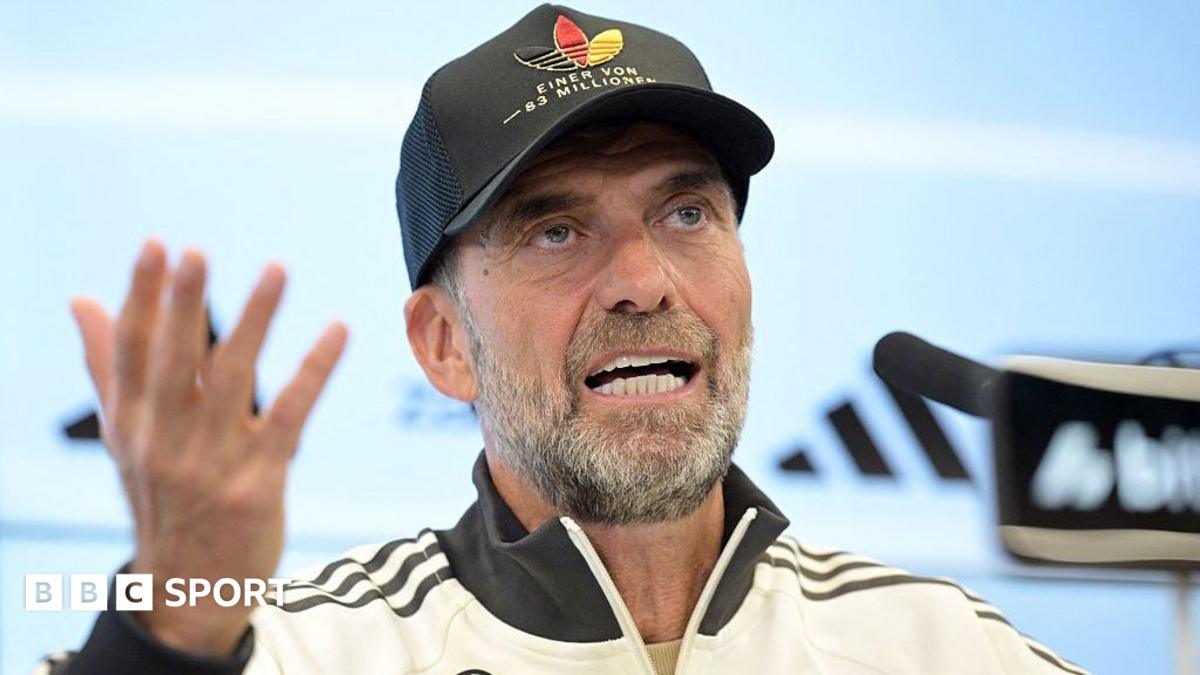
Germany’s newly appointed head coach, Jurgen Klopp, has voiced a powerful plea for unity and open-mindedness, stating that his national side can play a vital role in preventing German pride from falling into the wrong hands. Addressing the media during the unveiling of his inaugural squad, the manager reflected on the country’s evolving social climate and insisted that sporting success should serve as a unifying force for all members of the public rather than a symbol of political division.
Klopp’s comments arrive in the wake of substantial political shifts within Germany, punctuated by the Alternative for Germany (AfD) securing a significant victory in the eastern state of Saxony-Anhalt. The anti-immigration party garnered 43.8% of the total vote in the regional parliamentary election, narrowly missing an outright absolute majority. The political landscape faces further tests as the same party anticipates strong turnouts in upcoming regional ballots scheduled in both Berlin and Mecklenburg-Western Pomerania.
The recent electoral success of the far right carries heavy historical resonance for the nation. Germany has not experienced far-right governance at the state level since the conclusion of the Second World War, during which the ruling Nazi regime orchestrated the Holocaust. This historical backdrop has elevated the significance of public figures addressing matters of social harmony and national representation.
While speaking at his introductory squad announcement, Klopp acknowledged his position as a sports professional rather than a trained political commentator. Nevertheless, he openly addressed the deep societal divide exposed by the recent voting results, noting how the election provoked sharply contrasting emotions across the population, leaving some citizens unbothered while leaving others deeply troubled by the direction of the country.
Viewing the situation through the lens of sport, the former Liverpool manager expressed a resolute ambition to reclaim the national flag for the entire country. He detailed his hope for a culture where displaying the German colours is universally perceived with positivity and appreciation, rather than meeting immediate skepticism or concern from onlookers who might question the motives behind the gesture.
Klopp highlighted that waving the flag ought to represent genuine happiness and a shared appreciation for the fortune of being born in Germany, growing up within its borders, or relocating there from elsewhere. In making this distinction, he underlined the importance of including immigrants within the collective national identity, framing the country as a welcoming haven for diverse backgrounds.
The coach also took care to differentiate his personal philosophy from conventional nationalism, explicitly stating his preference for the term "positive patriotism" over standard phrases of national pride. He cautioned that traditional notions of pride could easily be misinterpreted or misused, choosing instead to define his own patriotism through the values of hospitality, diversity, kindness, and open-mindedness.
At the same time, Klopp maintained a grounded perspective regarding the broader limitations of football within society. He openly acknowledged that the country faces far more essential priorities than sporting fixtures, specifically highlighting the critical need for sufficient medical professionals and caregivers. However, he maintained that football still wields unique influence to cultivate a communal spirit and demonstrate the power of sport.
Turning his focus to on-field matters, Klopp revealed an unconventional and expansive 44-man selection for Germany's four upcoming UEFA Nations League fixtures scheduled across a congested two-week international period. Demonstrating a clear willingness to revamp the national team setup, the newly appointed manager included 16 uncapped players across the wider group.
The logistical plan for the upcoming international window will see the roster divided into two separate playing groups. The initial contingent of 24 players has been assembled to tackle Germany’s first two matches, starting with an away fixture against the Netherlands in Amsterdam on 24 September, followed by a home encounter against Greece in Augsburg three days later.
Following the conclusion of those initial fixtures, most of the first group will return to their respective domestic clubs to make room for a refreshed 20-man group. This second group will convene to prepare for a home clash against Serbia in Munich on 1 October, before concluding the international sequence with an away match against Greece in Thessaloniki on 4 October.
The initial 24-man group contains notable Premier League talent, including Arsenal’s Kai Havertz, Brentford attacker Kevin Schade, and Leeds midfielder Anton Stach. Bayern Munich playmaker Jamal Musiala has also earned selection in this opening contingent, receiving the call-up despite having suffered two separate collapses during his club's pre-season preparations.
The subsequent 20-man roster introduces fresh faces and elite talent alike, headlined by Brentford midfielder Vitaly Janelt, who has earned his first senior international call-up. Joining Janelt in the second phase of fixtures will be Liverpool playmaker Florian Wirtz and Newcastle defender Malick Thiaw, providing Klopp with an extensive look at the depth of German football.
This dramatic squad overhaul marks the start of a new chapter for German football following a turbulent period for the national side. The team experienced a disappointing second-round elimination against Paraguay at the recent summer World Cup, an outcome that prompted the international retirements of veteran stalwarts Manuel Neuer and Antonio Rudiger.
The World Cup exit also brought an end to Julian Nagelsmann’s tenure as national coach, paving the way for Klopp's arrival. Klopp, who concluded a celebrated nine-year managerial stint at Liverpool between 2015 and 2024, stepped away from his role as global head of soccer for Red Bull to accept the national team post, beginning his mission to rebuild both the squad and its connection to the German public.
What's Your Reaction?
 Like
0
 Dislike
0
 Love
0
 Funny
0
 Wow
0
 Sad
0
 Angry
0

Editor Investigasi. Pemenang penghargaan jurnalisme investigasi. Spesialisasi: korupsi, kolusi, dan maladministrasi.





Comments (0)