

Ireland's squad backs Nations League clash with Israel after tense four-hour player vote
Republic of Ireland footballers will take the field against Israel in Debrecen on Sunday wearing black armbands, having decided by a substantial margin to go ahead with a Nations L
Republic of Ireland footballers will take the field against Israel in Debrecen on Sunday wearing black armbands, having decided by a substantial margin to go ahead with a Nations League fixture that had appeared on the verge of collapse following the withdrawal of one player in protest over the war in Gaza. The announcement came late on Saturday evening, more than five hours after the pre-match press conference was originally due to begin, and confirmed the most difficult sporting question the Football Association of Ireland has faced in recent memory will end with the match being played.
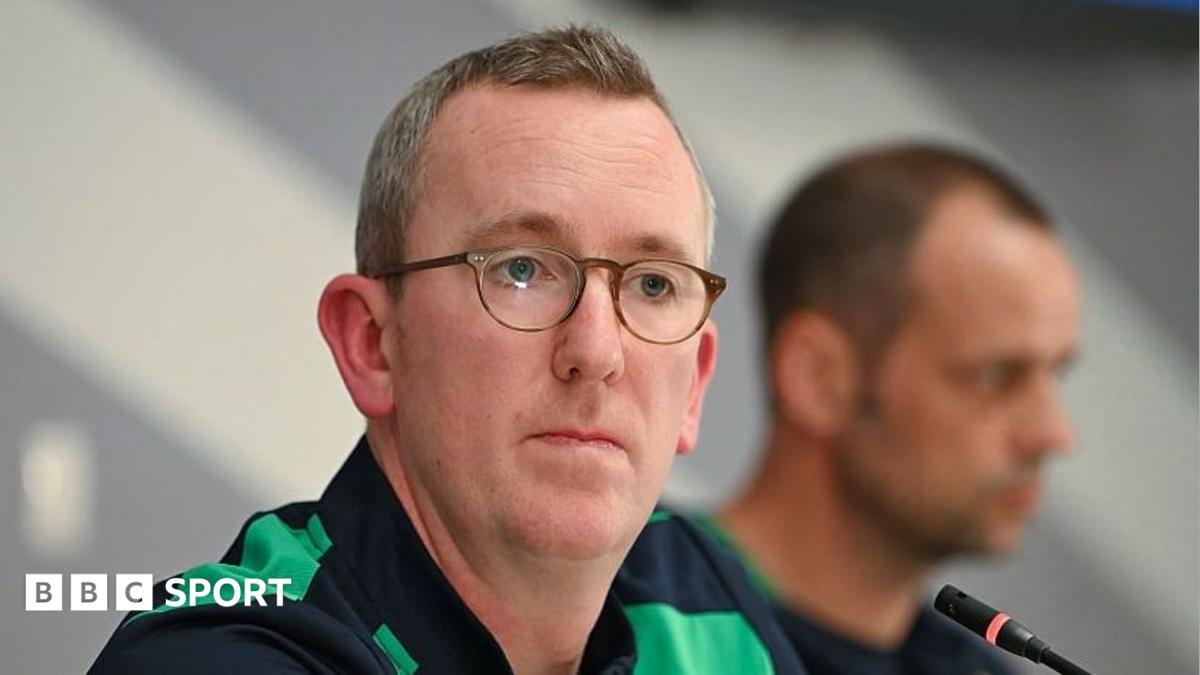
FAI chief executive David Courell, flanked by manager Heimir Hallgrimsson and the association's director of football John Martin, said a vote among the players had passed by a "significant majority" in favour of competing. The vote followed a day of consultations that stretched from a scheduled mid-morning media call through to mid-afternoon, and Courell described the process as another four hours of conversation conducted predominantly by the players themselves, but at times also involving the coaching staff and the FAI executive. He stressed that a wide range of views had been aired during those discussions and that the association fully respected everyone's right to hold a different opinion.
The flashpoint came early in the day, when goalkeeper Gavin Bazunu informed team officials that he did not wish to be considered for the fixture. Several other members of the squad made clear their own concerns about being asked to play, and the squad was subsequently holed up in a hotel meeting for several hours to deliberate. Courell confirmed on Saturday that a player had expressed discomfort with the fixture and signalled an intention to withdraw — a development he said introduced a new variable requiring the rest of the group to think again about its position. Courell and Hallgrimsson have repeatedly said the squad faces a situation in which there is no ideal outcome, regardless of what is decided.
Bazunu published his reasoning on social media later in the evening, saying the decision had not been taken lightly. Explaining that he is a man of strong faith who tries to be a person of character and principle, he said it would be wrong for him to take part in the two fixtures against Israel. He stressed that his reasoning rests entirely on a personal conviction that the killing of innocent people is wrong, and was careful to make clear his stance is not directed at the Israeli people or at Jewish communities, but at what he described as the atrocities in the region. He also acknowledged that opportunities to take a stand for something larger than oneself are rare, and that he believes this was one of them.
The match itself was already controversial before the squad debate began. The two nations were drawn together in Group B3 of the Nations League, and the assignment of neutral venues — with the Republic of Ireland's home fixture being staged in Serbia rather than Dublin, and Israel playing without 'away' support — was heavily criticised. A "Stop The Game" campaign organised by the pressure group Irish Sport for Palestine gained considerable momentum, and players faced calls to refuse to participate in the double-header because of the ongoing Israel-Gaza conflict. The scheduling of both games in countries that do not border either side only deepened the sense among campaigners that players had been placed in an unmanageable position.
Courell acknowledged that a central plank of the pressure group's demands was that the players withdraw from the fixtures, but the association has not granted that request. Instead, the squad has attempted to find a form of participation that is expressive of its members' concerns while still honouring the competitive commitment. Alongside the black armbands — described by the FAI chief executive as a recognition of all lives lost in the conflict — the players intend to play the opening match, due to take place at the Nagyerdei Stadion, and then make further gestures during the return 'home' fixture a week on Sunday in Serbia.
The players have also indicated they will not take part in every element of the pre-match ceremony. In addition, Courell said the squad intends to make a significant financial contribution to charity by pooling both the appearance fees from the Israel matches and the money earned from the side's game against Austria at Dublin's Aviva Stadium, which was played on Thursday. Whether the national team — including Hallgrimsson and his staff — will appear on the touchline for the match remains less certain, and some figures within the game have suggested the manager's position is far from secure irrespective of the result on the pitch.
The manner in which Saturday unfolded suggests an organisation struggling to hold its own together under competing pressures. A press conference featuring Hallgrimsson and a senior player, originally scheduled for 09:15 BST, was delayed just a quarter of an hour before it was due to begin, with reporters told it would instead take place after training — a session that was itself postponed. Players began trickling out of the hotel meeting room at around 13:00, and only at 14:30, with the media gathering held at the stadium and training to follow, was the squad's decision made public.
For supporters, the episode is likely to be remembered as much for its process as for its outcome. A team that spent most of a day debating whether to take the field ultimately chose to play, to make a visible statement, and to donate its earnings — a compromise that satisfies few and angers some, but which at least avoids the scenario of a scheduled international fixture being cancelled at short notice. With kick-off approaching, the focus now shifts to whether the players' planned gestures can be delivered, and to how the Debrecen crowd, the Israel team and the wider international football community respond to them.
What's Your Reaction?
 Like
0
 Dislike
0
 Love
0
 Funny
0
 Wow
0
 Sad
0
 Angry
0

Editor Investigasi. Pemenang penghargaan jurnalisme investigasi. Spesialisasi: korupsi, kolusi, dan maladministrasi.





Comments (0)