

German State Premiers Unite Behind Chancellor Merz as Far-Right Surge Fuels Leadership Uncertainty
The leaders of eight German states have publicly rallied behind Chancellor Friedrich Merz, seeking to quell mounting speculation concerning his political future in the face of sign
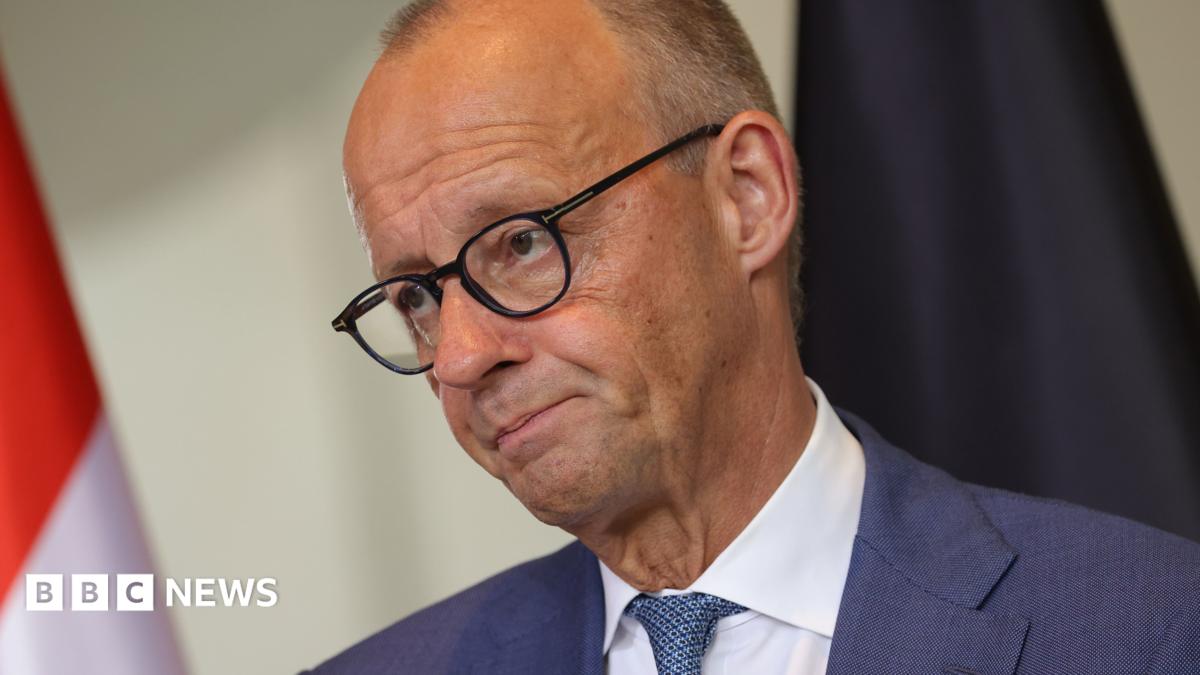
The leaders of eight German states have publicly rallied behind Chancellor Friedrich Merz, seeking to quell mounting speculation concerning his political future in the face of significant gains by the far-right Alternative for Germany (AfD).
The state premiers, all representing Merz's conservative Christian Democratic Union (CDU), released a joint declaration asserting that restoring public faith in their party depends on listening to citizens and taking decisive political action rather than engaging in internal debates over personnel. They emphasized that Germany's political landscape urgently requires stability, stressing that the country must maintain an effective and reliable federal government that commands its own working majority in the Bundestag.
The coordinated statement of support was signed by the premiers of eight federal states: North Rhine-Westphalia, Berlin, Hesse, Saxony, Saxony-Anhalt, Thuringia, Rhineland-Palatinate, and Schleswig-Holstein. Their intervention comes on the heels of similar backing provided by Markus Söder, the premier of Bavaria and leader of the Christian Social Union (CSU), the CDU's Bavarian sister organization.
Merz, who has occupied the chancellorship for just 16 months, has found his standing increasingly undermined by poor public approval figures and the rapid electoral rise of the anti-immigration AfD. Questions have intensified over whether the chancellor has become an electoral liability for his party, exacerbated by what critics characterize as an abrasive communication style. A recent poll conducted by the newspaper Bild indicated that only 14 percent of respondents believed Merz was the right person for the chancellorship.
Speculation regarding a potential "Kanzlertausch," or mid-term chancellor swap, has circulated within German political circles for months. However, these rumors gained substantial traction following a severe electoral defeat for the CDU in the eastern state of Saxony-Anhalt at the start of September.
In that state election, the AfD experienced a historic surge, capturing 43.8 percent of the vote, while the CDU plummeted to a distant second place with just 17.2 percent. The outcome represented the first time since the end of the Second World War that a far-right political party had come within reach of governing a German federal state. Although the AfD remains three seats short of an outright legislative majority and all mainstream parties refuse to enter into a coalition with it, the far right could still attempt to govern through a minority administration.
Following the Saxony-Anhalt defeat, Merz adopted an aggressive stance against the far right. He publicly denounced the AfD as a destructive force that seeks to re-establish close diplomatic ties with Russia, while arguing that its migration platform effectively amounts to an ethnic cleansing of skilled foreign workers needed by the German economy.
In response to those remarks, the AfD announced that it was submitting a formal defamation complaint against the chancellor. Party leaders strongly condemned Merz's statements, describing his accusations as disgusting and entirely baseless.
The chancellor's authority faces an immediate trial with upcoming state elections scheduled for Sunday in both the federal capital of Berlin and the northeastern state of Mecklenburg-West Pomerania. These regional votes are widely regarded as a pivotal test for Merz's leadership and the broader direction of the conservative party.
Electoral dynamics vary significantly between the two regions. In Berlin, the contest is tightly balanced, with the CDU and the left-wing Die Linke contending for the top spot, while the AfD and the Green Party trail closely behind. In Mecklenburg-West Pomerania, opinion polls place the AfD ahead of the center-left Social Democratic Party (SPD), though the far-right party is expected to fall short of securing an outright majority.
Political analysts have outlined a worst-case scenario for the chancellor on election night, in which the CDU could lose its position of power within Berlin while simultaneously failing to secure sufficient votes to maintain any representation in the state parliament of Mecklenburg-West Pomerania.
In anticipation of the election outcomes, senior CDU officials are scheduled to convene on Sunday to coordinate the party's official strategy and response to the results, according to an unnamed party source cited by the Reuters news agency.
Unlike the political conventions of the United Kingdom, Germany's political system does not routinely replace its heads of government during an active parliamentary term. Although a chancellor could theoretically be pressured into resigning or subjected to a formal vote of no confidence in the Bundestag, many political observers consider such a resolution highly improbable under current circumstances.
Even though no figure within the CDU has stepped forward to formally challenge Merz, the persistent rumors regarding his position have caused several prominent names to be floated as potential replacements. Among those frequently cited by commentators are Bavarian Premier Markus Söder, North Rhine-Westphalia Premier Hendrik Wüst, and German Interior Minister Alexander Dobrindt.
Prior to assuming the chancellorship, Merz had earned notable international praise for his direct communication style and his prioritization of European security, successfully mobilizing political backing for a massive €500 billion ($547 billion; £420 billion) defense infrastructure fund.
However, Merz's path to power was fraught with internal resistance. It required three separate campaigns before he secured the CDU party leadership, and he subsequently suffered an unprecedented defeat in his initial parliamentary confirmation vote for chancellor despite possessing a formal coalition agreement with the SPD. Having spent decades pursuing the country's highest political office, Merz has repeatedly vowed to continue leading both his party and the federal government.
What's Your Reaction?
 Like
0
 Dislike
0
 Love
0
 Funny
0
 Wow
0
 Sad
0
 Angry
0

Fact-Check Editor. Verifikator bersertifikasi IFCN. Memeriksa klaim viral dan disinformasi.





Comments (0)