

Dangote and Ruto to Break Ground on $16bn Lamu Refinery as Land Protests Persist
Nigerian industrialist Aliko Dangote and Kenyan President William Ruto are preparing to officially launch construction of a $16bn (£12bn) crude oil refinery on Kenya's northern coa
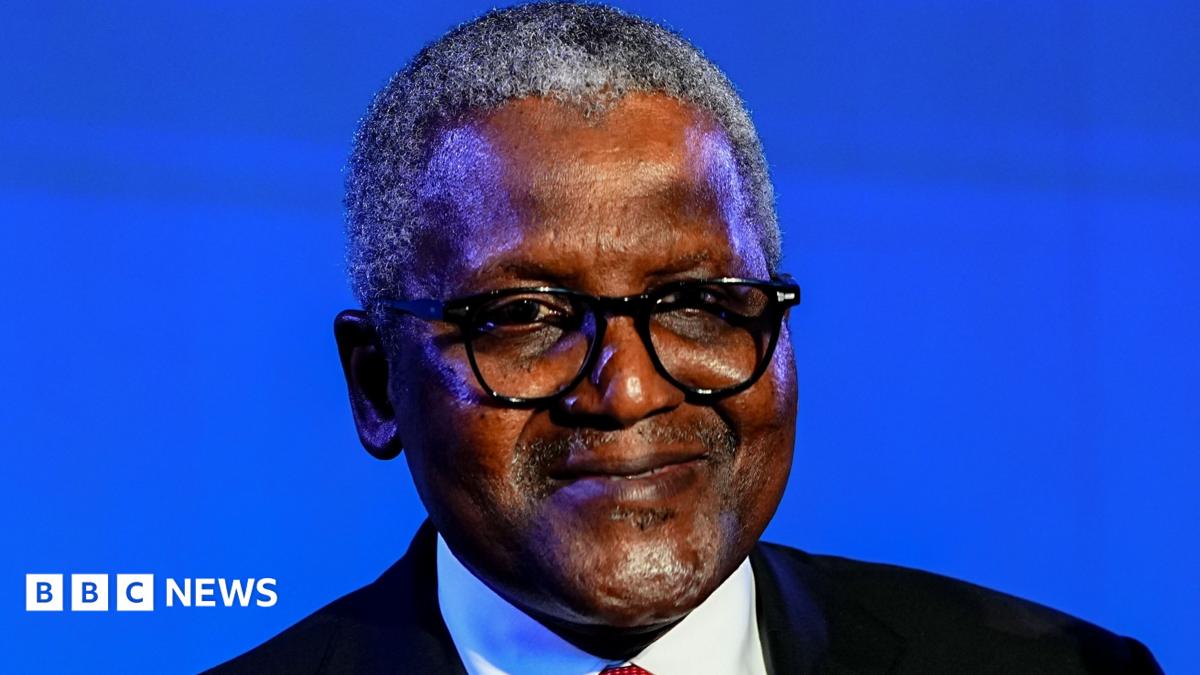
Nigerian industrialist Aliko Dangote and Kenyan President William Ruto are preparing to officially launch construction of a $16bn (£12bn) crude oil refinery on Kenya's northern coast, a project that would become East Africa's largest industrial undertaking by processing capacity once completed. The groundbreaking ceremony in Lamu marks the formal start of a development that has been billed as transformative for a region that currently possesses no operating oil refineries at all.
According to plans outlined by the promoters, the facility will be capable of handling 700,000 barrels of crude per day. That figure places it on par with Dangote's flagship refinery in Nigeria, which has the same nominal processing capacity. The Kenyan project is also expected to include an integrated 1,000-megawatt power plant, a component Dangote has described as essential to supporting both the refinery itself and the wider industrial cluster he hopes will emerge around it.
The scale of the investment dwarfs anything previously attempted in Kenya. At $16bn, it exceeds the $5.1bn (£3.9bn) Standard Gauge Railway, until now the country's biggest infrastructure project since independence. Dangote's proposed outlay in Lamu also represents his largest planned investment outside Nigeria, underlining the continental ambition of a businessman whose fortune was originally built in cement before he diversified into petroleum refining and fertiliser production.
The launch has not been without friction. Ahead of the ceremony, some residents took to the streets to press for greater compensation for land earmarked for the refinery. The dispute centres on how much the project's promoters owe communities whose land was made available by the government for the development.
Dangote, speaking to the BBC's Focus on Africa programme, rejected the complaints outright. He characterised the demonstrations as the work of local marketers and international competitors rather than a genuine grassroots grievance, and he insisted the project would proceed on schedule. In his account, the company took only the specific parcels of land it required from the larger area the government had placed at its disposal, meaning there was no basis for additional payments.
"To come and say some people are demonstrating, demonstrating about what?" he asked during the interview, suggesting he did not view the protests as a serious threat to the timeline. He added that the development would ultimately serve the very communities now objecting, arguing that opposition to a project of this kind runs against residents' own interests.
The question of local benefit is central to the case Dangote is making for the refinery. He estimates that at the peak of construction, the project will generate 60,000 jobs, with economic spillovers reaching far beyond the workers directly employed on site. Asked whether mechanisation might reduce the promised employment, he dismissed the suggestion. "Are we going to bring robots? Of course, the people will benefit," he said, framing the refinery as a labour-intensive undertaking rather than a highly automated one.
Yet critics have raised a more fundamental objection: Kenya does not produce crude oil in commercial quantities. The country's oil sector has struggled to translate exploration results into sustained production, and neighbours Tanzania and Uganda are both further along the path toward becoming oil exporters through the East African Crude Oil Pipeline. Building a 700,000-barrel-per-day refinery in a non-producing nation has therefore struck some analysts as a puzzling choice of location.
Kenya's Energy and Petroleum Minister, Opiyo Wandayi, pushed back against that criticism in comments to the BBC. He argued that the refinery's siting has no bearing on where its feedstock will come from, because refiners buy crude on the open international market rather than relying solely on domestic or regional supply. Refineries, he said, source crude from the market, and the market is open to any buyer able to pay prevailing prices.
Dangote reinforced the point by invoking Singapore, a country with no indigenous oil production that nonetheless hosts a major refining industry. "Singapore doesn't produce a single drop of oil, yet they have a lot of refineries," he said, implying that Lamu could serve as a processing and export hub in the same mould, importing crude and shipping out refined products.
For Kenyan consumers, the project raises expectations about fuel prices. Kenya currently has relatively high pump prices, and greater domestic refining capacity is often assumed to translate into cheaper fuel. The reality is more complicated: the price of crude oil is set by international markets, and that benchmark remains the dominant factor in what motorists pay at the pump, regardless of where the refining takes place. Refining margins, taxes and logistics also shape final retail prices.
Beyond the refinery itself, Dangote has set out a broader continental power strategy. He says he has roughly $50bn (£38bn) worth of projects in development, including a goal of building 10,000 megawatts of generating capacity across Africa by 2030, with the possibility of doubling that figure if demand justifies it. Reliable electricity, in his view, is the binding constraint on industrialisation, particularly in mineral-rich African countries that continue to export raw materials instead of processing them locally.
The Lamu power plant reflects that philosophy. It is designed to supply the refinery's own operations while also providing electricity to other industries expected to locate in the area. Dangote described the arrangement as "plug and play," meaning that once the power infrastructure is in place, manufacturers can connect and begin production without having to build their own generation capacity.
Construction is scheduled to begin on 1 November. In Nigeria, Dangote has moved to expand the capacity of his existing refinery by floating 4.1 million ordinary shares in an effort to raise as much as $2.1bn, funds that would support doubling the plant's throughput. If both the Nigerian expansion and the Kenyan project come to fruition, Dangote would control a substantial share of Africa's refining capacity.
For Kenya, the refinery represents a gamble on a future in which the country becomes an industrial and energy hub for East Africa rather than merely a consumer of imported fuel. For Dangote, it is the latest step in a strategy of vertically integrating across Africa's energy value chain. Whether Lamu delivers the jobs, power and industrial momentum its promoters promise will depend on execution, financing and, not least, how the land disputes now playing out on the ground are resolved.
What's Your Reaction?
 Like
0
 Dislike
0
 Love
0
 Funny
0
 Wow
0
 Sad
0
 Angry
0

Fact-Check Editor. Verifikator bersertifikasi IFCN. Memeriksa klaim viral dan disinformasi.






Comments (0)