

US Charges Five Operatives Linked to Russian Intelligence in Transnational Assassination Plots
Federal prosecutors in the United States have formally charged five men connected to Russian intelligence services for allegedly orchestrating lethal conspiracies targeting Ukraini
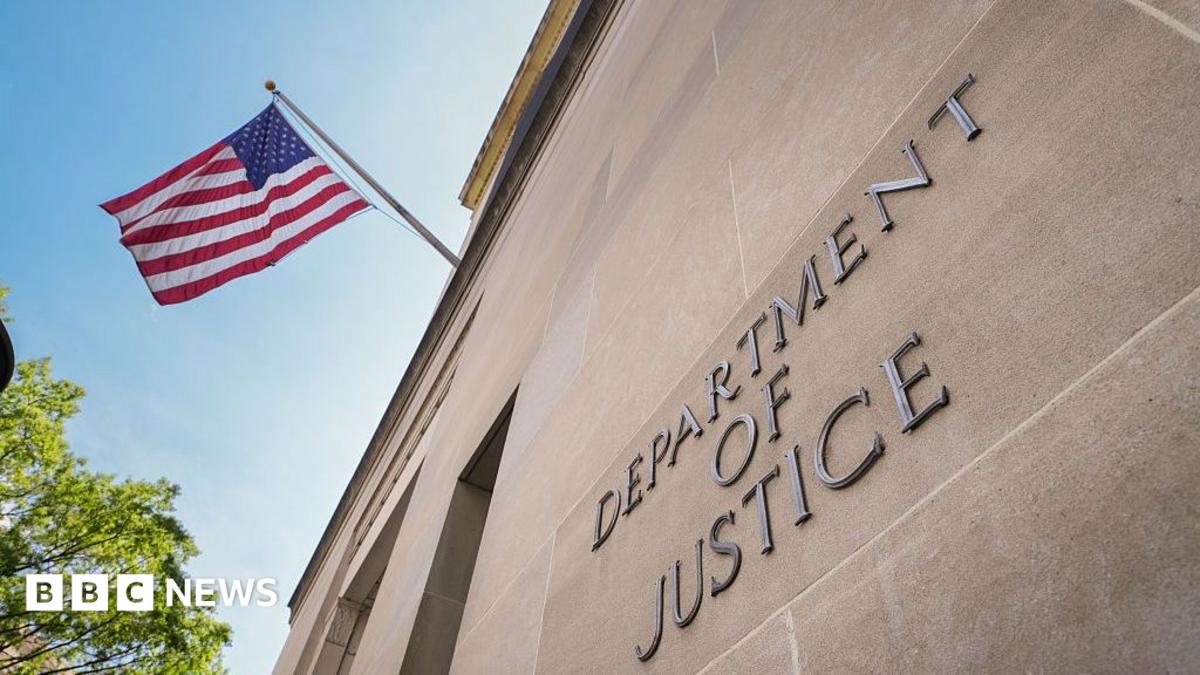
Federal prosecutors in the United States have formally charged five men connected to Russian intelligence services for allegedly orchestrating lethal conspiracies targeting Ukrainian allies, outspoken critics, and political dissidents across both North America and Europe. The legal actions, unveiled by the U.S. Department of Justice, expose a clandestine effort to recruit domestic operatives and channel funds to violently silence figures opposed to the Kremlin's geopolitical agenda.
According to official filings, the defendants are accused of distributing financial incentives and attempting to hire individuals in the United States and abroad to carry out surveillance and assassinations against people aligned with or supportive of Ukraine. All five individuals have been charged with participating in a conspiracy to finance terrorism, a federal offense that carries a maximum statutory penalty of 20 years in prison upon conviction. Law enforcement authorities confirmed that all of the accused currently remain at large, with their precise whereabouts unknown.
United States Attorney General Todd Blanche underscored the gravity of the foreign threats, emphasizing the administration's resolve to counter hostile operations before they manifest in domestic bloodshed. Blanche stated that law enforcement is firmly tasked with preventing foreign adversaries from unleashing terror and violence on American soil, signaling that cross-border assassination schemes will be met with severe criminal repercussions regardless of where the conspirators are stationed.
In response to the newly unsealed indictment, the Russian government maintained a skeptical posture. Kremlin spokesperson Dmitry Peskov addressed reporters, stating that Moscow would refrain from offering substantive commentary until it is presented with concrete facts and verified, credible evidence regarding the Department of Justice's allegations.
Federal prosecutors identified three of the defendants as high-ranking figures within the Russian intelligence network. Among them are a father and son, 63-year-old Yuri Khrameev and 27-year-old Kirill Khrameev. The elder Khrameev previously served as a colonel within the Russian intelligence apparatus, while his son is identified as an active officer within the Federal Security Service of Russia, commonly known as the FSB.
The third senior operative named in the indictment is Oemis Romagoza Durruthy, a 35-year-old Cuban national. American investigators characterize Durruthy as an influential figure within the Cuban diaspora residing in Russia who has actively coordinated hostile operations on behalf of the Russian Intelligence Services network.
The remaining two defendants listed in the charging documents are 35-year-old Yaidel Delgado Suarez and 22-year-old Angel Eduardo Castro. Federal authorities allege that the pair played an instrumental operational role, focusing specifically on finding, contacting, and attempting to enlist individuals inside the United States to carry out illicit reconnaissance and execute violent attacks against Kremlin opponents.
James Barnacle, representing the Federal Bureau of Investigation, stated that the transnational network conspired to intimidate, threaten, or outright murder designated individuals on American soil and across various international jurisdictions. The FBI and partner agencies have increasingly tracked covert efforts to outsource surveillance and violent actions to local assets in target nations.
Court documents highlight an alleged plot taking place as recently as this past summer, where the intelligence network sought to eliminate a prominent Russian dissident residing in the United States. In that instance, Suarez reportedly directed an recruited asset to conduct surveillance on two specific properties connected to the target, providing detailed operational guidelines in exchange for payments ranging between $1,000 and $1,500.
The conspiracy escalated when Suarez and Castro allegedly promised a subsequent bounty of $40,000 if the recruit agreed to permanently eliminate the dissident. However, the plan unraveled when the recruit refused to execute the murder. Following that refusal, Suarez allegedly reached out to several other individuals within the United States, offering substantial cash rewards to pursue and target designated victims.
The Justice Department's filings also detail an overseas operation planned in 2025, in which Kirill Khrameev allegedly recruited an American citizen to conduct surveillance and assassinate an individual in Lithuania who was accused of spreading false narratives about Russia. Khrameev allegedly explained to the recruit that the wider campaign was intended to strike at individuals residing in any of the countries actively providing assistance to Ukraine.
Court records further implicate the elder Khrameev in the Lithuanian operation, alleging that the former intelligence colonel offered the American recruit $25,000 to carry out the contract killing. Yuri Khrameev reportedly justified the hit by claiming the target was actively distorting history and spreading negative statements about the Russian state.
Beyond the terrorism financing counts faced by all defendants, Yuri Khrameev, Suarez, and Castro have also been charged with participating in a conspiracy to commit murder for hire. This additional federal charge carries a statutory maximum penalty of up to 10 years of imprisonment, reflecting their direct involvement in soliciting and negotiating lethal contracts.
The unsealed charges fit into a wider pattern of thwarted plots targeting opponents of the Russian government throughout Europe. Just last month, Polish Prime Minister Donald Tusk disclosed that authorities in Warsaw had detained a suspect allegedly working on behalf of the Kremlin who was plotting to murder an American-Ukrainian national, warning that the Russian government continues to seek the physical elimination of figures it deems inconvenient.
A similar security scare occurred in 2024 when American intelligence agencies alerted German authorities to an alleged Russian conspiracy to assassinate Armin Papperger, the chief executive of Rheinmetall, Germany's largest arms manufacturer. The Kremlin dismissed those reports at the time, with Peskov characterizing the accusations as fabricated stories that could not be taken seriously.
These latest criminal indictments come amid an evolving diplomatic environment between Washington and Moscow following President Donald Trump's return to the presidency in 2025. The shifting bilateral landscape was recently highlighted by an unconventional visit to Moscow by Central Intelligence Agency Director John Ratcliffe for direct discussions with Russian intelligence officials, an engagement that President Trump subsequently characterized as semi-routine.
What's Your Reaction?
 Like
0
 Dislike
0
 Love
0
 Funny
0
 Wow
0
 Sad
0
 Angry
0

Editor Investigasi. Pemenang penghargaan jurnalisme investigasi. Spesialisasi: korupsi, kolusi, dan maladministrasi.






Comments (0)