

UN Fact-Finding Mission Finds Grounds for US War Crimes in Iran Strikes Alongside State Repression
United Nations human rights investigators have determined that reasonable grounds exist to conclude that the United States military committed war crimes during its armed confrontat
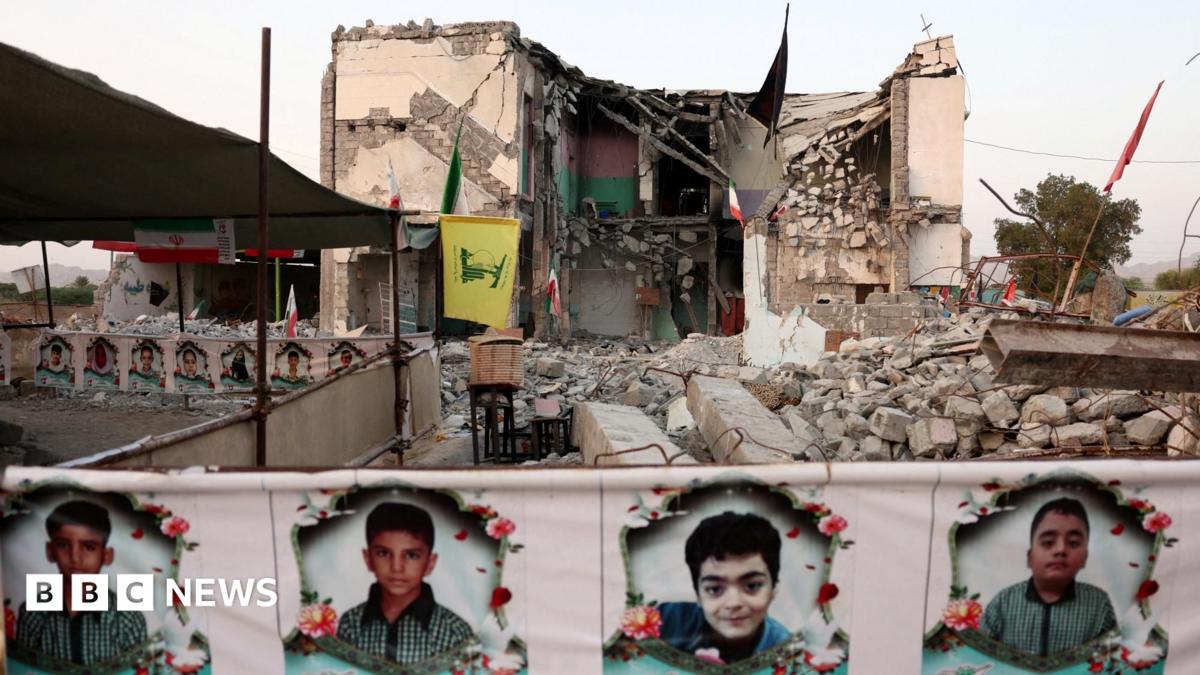
United Nations human rights investigators have determined that reasonable grounds exist to conclude that the United States military committed war crimes during its armed confrontation with Iran, citing two deadly bombardments that devastated civilian facilities. The findings, detailed in a comprehensive assessment presented to the UN Human Rights Council, focus on operations that claimed the lives of at least 177 non-combatants in two separate southern Iranian localities.
According to the Independent International Fact-Finding Mission on Iran, the strikes violated international humanitarian standards by mounting indiscriminate attacks against clearly identifiable non-military targets. The panel highlighted the catastrophic loss of life resulting from missile strikes directed at an educational institution in the town of Minab and a public sports complex in Lamerd, both of which suffered severe destruction during the conflict.
In their overarching assessment of the regional crisis, the three independent specialists warned that ordinary Iranians have been placed in an exceptionally perilous situation. They emphasized that the civilian population is caught between grave domestic human rights violations, including crimes against humanity committed by state security forces, and the lethal consequences of the deadly external conflict involving the United States and Israel.
The deadliest single incident scrutinized by the panel occurred on February 28, the date marking the start of military operations against Iran by the US and Israel. On that day, Tomahawk cruise missiles struck the Shajareh Tayyebeh Primary School located in the southern town of Minab. Local administrative officials confirmed that the bombardment resulted in the deaths of at least 156 people, a staggering toll that included 120 children who were present inside the facility.
Investigators noted that although the primary school was situated directly adjacent to an Islamic Revolutionary Guard Corps naval compound that was also targeted that day, the school itself was an easily identifiable civilian structure. The inquiry established that there was no credible intelligence or evidence indicating that the educational facility was being utilized for any military functions or sheltering combatants at the time of the bombardment.
In determining responsibility for the Minab strike, the UN mission pointed to the exclusive deployment of Tomahawk missiles, an ordnance type operated solely by the United States among the belligerents involved in the conflict. The report also referenced media disclosures concerning an initial internal US military inquiry that reportedly acknowledged American forces were responsible for launching the lethal munitions.
Furthermore, the UN experts dismissed the possibility that the destruction of the school was the product of an errant weapon or unintended collateral damage stemming from the assault on the neighboring naval base. Citing testimony gathered from survivors who experienced the attack, the report observed that the school building was struck on two separate occasions, leading the investigators to conclude that the civilian compound was the intended point of impact.
The Pentagon has yet to formally release the full conclusions of its official inquiry regarding the carnage in Minab. However, US Defence Secretary Pete Hegseth previously addressed allegations surrounding military conduct in the theatre, asserting firmly that American armed forces uphold strict targeting standards and would never deliberately aim at non-combatant civilian infrastructure.
The second incident highlighted in the UN dossier took place on the same day in the southern town of Lamerd, where a sports complex and adjacent residential dwellings were bombarded. The strike unleashed Precision Strike Missiles configured to scatter lethal clouds of tungsten pellets across the area. Local authorities recorded at least 21 civilian fatalities as a consequence of the blast, including seven children.
Parallel to their findings in Minab, the UN investigators concluded that the Lamerd sports facility was clearly recognizable as a civilian entity with no evidence of military involvement or presence. The mission found reasonable grounds to attribute the strike to US forces, emphasizing once more that the United States is the exclusive operator of the Precision Strike Missile system among the parties to the conflict.
American defense officials have consistently disputed accounts implicating US military forces in the Lamerd casualties. The military stated that it did not conduct any kinetic strikes against targets in Lamerd on February 28 and rejected forensic reports identifying the remnants of the munitions as American-manufactured Precision Strike Missiles.
Despite these official denials, the UN fact-finding panel reaffirmed its legal evaluation of both episodes, stating that the nature of the strikes constituted indiscriminate attacks that produced severe civilian casualties and extensive destruction to public infrastructure. Such actions, the report stated, fulfill the threshold for war crimes under established international legal frameworks governing armed conflicts.
Beyond its investigation into foreign military bombardments, the UN report delivered a severe indictment of the Iranian government's internal security operations. The fact-finding mission concluded that Iranian authorities committed crimes against humanity during their violent suppression of nationwide anti-government demonstrations that erupted across the country in December 2025 and continued into January 2026.
The report documented what investigators described as an unprecedented and staggering scale of lethal violence deployed by state security apparatuses across all 31 provinces of the nation. Testimonies compiled from eyewitnesses, medical personnel, and relatives of victims revealed that security agents deliberately established firing positions on rooftops and other elevated vantage points, discharging military-grade assault rifles directly into crowds of demonstrators.
While the Iranian leadership has not issued an immediate formal response to the newly released findings, Tehran has historically and consistently rejected accusations of systematic human rights abuses, characterizing such claims as unfounded. The UN panel's comprehensive report now stands before the UN Human Rights Council, underscoring the urgent imperative for international accountability amidst mounting civilian suffering inside Iran.
What's Your Reaction?
 Like
0
 Dislike
0
 Love
0
 Funny
0
 Wow
0
 Sad
0
 Angry
0

Editor Investigasi. Pemenang penghargaan jurnalisme investigasi. Spesialisasi: korupsi, kolusi, dan maladministrasi.


Comments (0)