

Trump-Xi Summit Yields Modest Trade Reprieve and New AI Channel, but Taiwan Silence Raises Questions
The first formal readout from Beijing following last week's summit between Chinese President Xi Jinping and US President Donald Trump has begun to fill in the blanks on what the tw
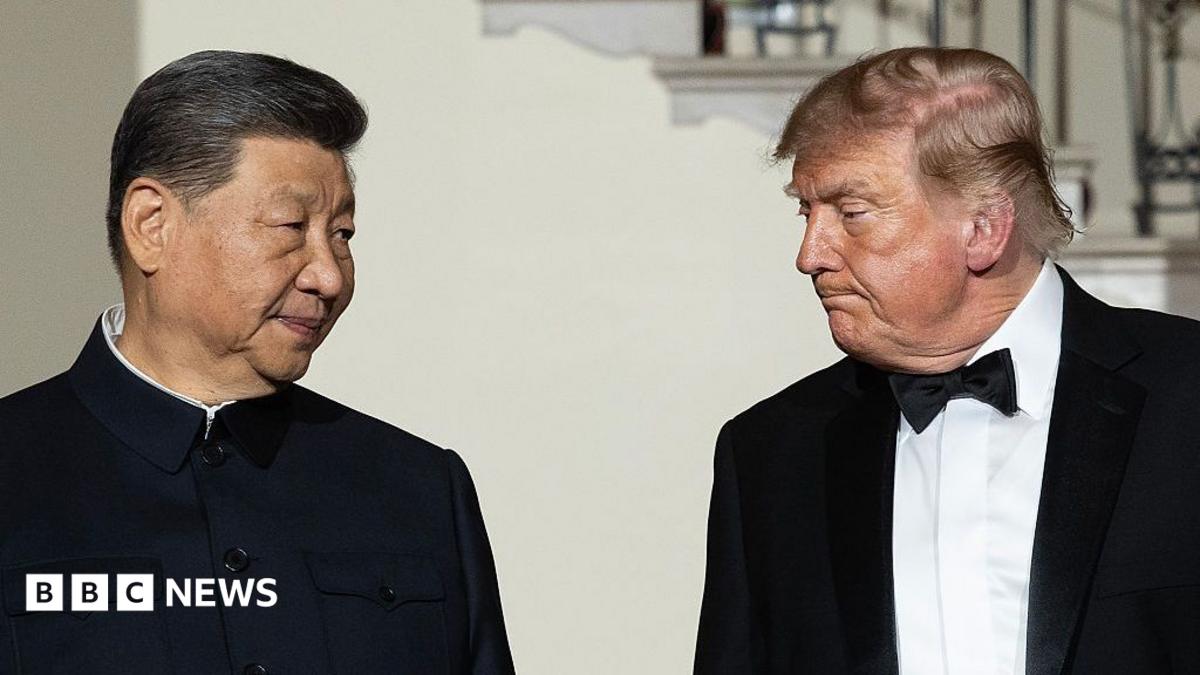
The first formal readout from Beijing following last week's summit between Chinese President Xi Jinping and US President Donald Trump has begun to fill in the blanks on what the two leaders actually agreed — and what they deliberately left unsaid. China released additional details on Monday, offering a handful of concrete outcomes. Yet the absence of any joint statement, and the fact that both governments issued separate accounts of the meeting, suggests that despite the ceremonial warmth and White House tours, Washington and Beijing remain deeply wary of one another.
Among the clearest deliverables is an agreement to open a new dialogue on artificial intelligence, with the next round of talks slated for the end of November. The two countries are currently locked in an intense race to develop advanced AI systems, and the decision to establish a dedicated channel indicates that both capitals recognise the need for at least some guardrails around a technology that is increasingly woven into commercial, civilian and military planning. The two sides also agreed to set up a communication mechanism specifically for AI-related incidents, aimed at stopping misunderstandings or unexpected developments from spiralling into a wider confrontation.
The AI component of the summit was always going to draw intense scrutiny. US technology firms such as Anthropic have publicly urged policymakers to slow the pace of development, while revelations that OpenAI gained unauthorised access to government websites in countries including Australia — and had "meddled" with multiple US government agency sites — have heightened anxiety about the risks of unmanaged competition. Against that backdrop, even a modest dialogue framework represents a small but meaningful step toward crisis management.
On trade, Chinese state media confirmed for the first time on Monday that the existing truce has been extended until 10 January. The short reprieve guarantees that both leaders will meet again at major international gatherings later this year. Trump is expected to attend the Asia Pacific Economic Cooperation summit in Shenzhen in November, while Xi is due to travel to Miami for the G20 summit in December. It is rare for the leaders of the world's two largest economies to meet so frequently, and the schedule effectively locks in a second and third round of face-to-face diplomacy within months.
Beijing had hoped for a much longer extension to the truce, which makes the two-month reprieve a modest gain rather than a major breakthrough. Still, China did secure lower tariffs on $30bn (£23bn) worth of goods entering the United States, with reciprocal reductions expected from Beijing. Chinese products destined for American store shelves — ranging from toys to small household appliances to Christmas decorations — will benefit from the reduced duties. The Trump administration also said Beijing would buy at least 10 million metric tons of coal annually in 2027 and 2028.
What is perhaps most striking is what was left out of the agreements. There was no mention of increasing exports of China's rare earth minerals to the United States, nor any indication that restrictions on advanced US semiconductors would be eased. Those two issues sit at the heart of the broader technological and strategic rivalry between the two powers, and their omission from the public accounting suggests that the most difficult structural questions remain unresolved. The tariff relief, while welcome to exporters on both sides, does not touch the core industrial and security disputes.
The contrast is even sharper on Taiwan. The White House factsheet made no mention of the self-governing island, but Beijing's account makes clear the issue was a priority for Xi. According to Chinese readouts, Xi urged Trump to formally oppose Taiwan independence and to handle the matter with caution. That direct appeal reflects a long-standing concern in Beijing that Washington's ambiguous position could encourage separatist sentiment on the island.
After their previous meeting in May, Trump revealed that Xi had directly asked him whether the US would defend Taiwan in the event of a Chinese attack. Trump told reporters at the time, "There's only one person that knows that, and it is me," and he questioned whether it made sense for US forces to "travel 9,500 miles to fight a war" over the issue. That candid remark fuelled speculation that the US commitment to Taiwan's defence might be treated as a bargaining chip.
This time, Trump disclosed far less. "We didn't talk about it too much," he told reporters over the weekend. "Right now, it's fine. It's just moving along," he said. "He understands very much how I feel." That silence may be significant. Trump has previously described a proposed $14bn US arms package for Taiwan as "a very good negotiating chip" in his dealings with Beijing, and the package has been on hold for months — a delay that has alarmed Taipei and reassured Beijing in equal measure.
Adding to the confusion, US Ambassador to China David Perdue told Fox News that Trump had offered to sell weapons to Xi during the summit. The State Department later clarified that US law prohibits arms sales to China and that there are no plans to do so. The episode underscored the patchy and sometimes contradictory messaging coming out of Washington, and it left allies and analysts scrambling to interpret the administration's true intentions.
Beijing views Taiwan as part of China, and most countries, including the United States, do not recognise the island as an independent state. However, Washington is opposed to any attempt to take Taiwan by force and remains committed to supplying it with defensive weapons. That policy of strategic ambiguity has long been the foundation of stability in the Taiwan Strait, and any perceived shift — whether toward explicit abandonment or explicit commitment — carries enormous consequences for regional security.
Taken together, the summit's outcomes point to a relationship that is being managed rather than transformed. The new AI dialogue and incident hotline offer modest but real crisis-management tools. The trade truce extension and tariff reductions provide temporary relief for businesses on both sides. Yet the unresolved questions — rare earths, semiconductors, and above all Taiwan — remain the true measure of how far the two powers are from a stable equilibrium.
For now, both sides appear content to keep talking. The back-to-back summits in Shenzhen and Miami later this year will test whether this fragile momentum can be sustained. But as the competing readouts from Washington and Beijing make clear, what was not said at this summit may matter just as much as what was.
What's Your Reaction?
 Like
0
 Dislike
0
 Love
0
 Funny
0
 Wow
0
 Sad
0
 Angry
0

Editor Investigasi. Pemenang penghargaan jurnalisme investigasi. Spesialisasi: korupsi, kolusi, dan maladministrasi.






Comments (0)