

South Korea Demands Apology from North Over DMZ Landmine Blasts That Injured Three Soldiers
South Korea's military has formally called on North Korea to issue an apology for landmine explosions along the two countries' shared border that left three South Korean personnel
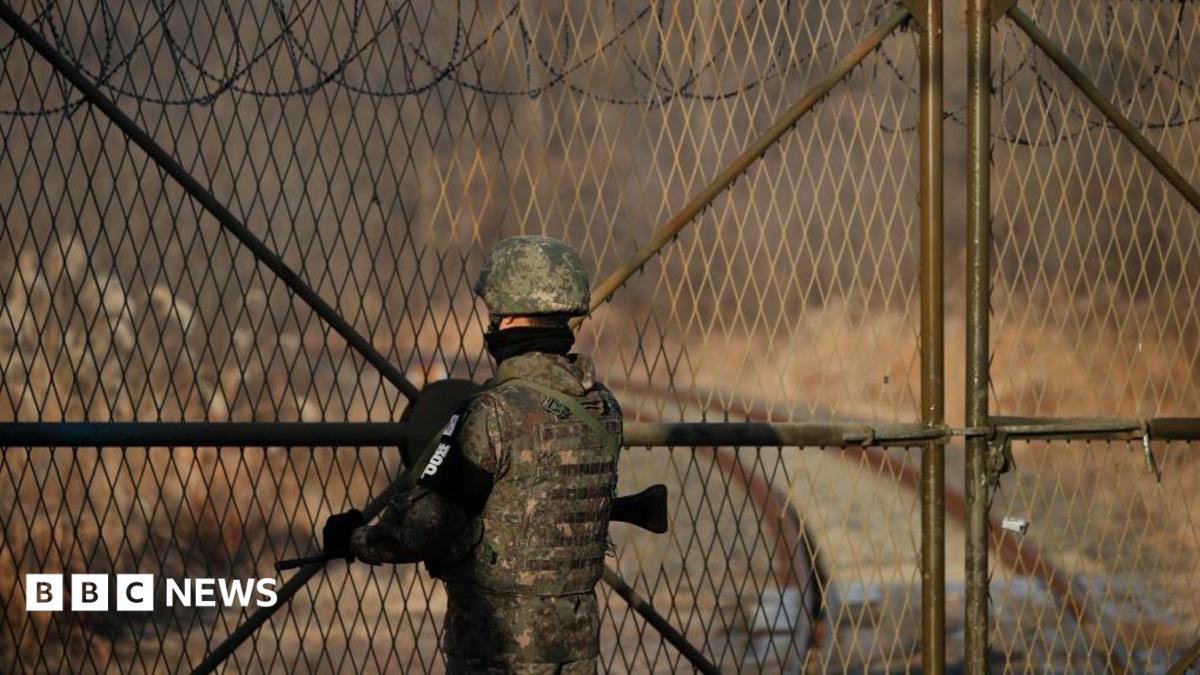
South Korea's military has formally called on North Korea to issue an apology for landmine explosions along the two countries' shared border that left three South Korean personnel wounded earlier this month, according to statements released this week. The demand marks the latest escalation in a rapidly deteriorating war of words between Seoul and Pyongyang over responsibility for the blasts.
The explosions occurred on 21 September inside the Demilitarised Zone (DMZ), the heavily fortified buffer strip that has separated the two Koreas since the Korean War ended in an uneasy truce more than seven decades ago. Three South Korean personnel sustained injuries in the incident, which South Korean officials say took place on their side of the dividing line.
On Tuesday, South Korea's military said the blasts were "highly likely" caused by mines laid by North Korea. Seoul vowed to take what it described as "corresponding measures" in response to what it characterised as a violation of the decades-old armistice agreement that halted active combat in the Korean War.
The armistice, signed in 1953, led to the creation of the DMZ, a buffer zone roughly 4km (2.5 miles) wide that straddles the Military Demarcation Line, the de facto land border between North and South. Because the two Koreas never signed a formal peace treaty, they remain technically at war, and the DMZ has long been the site of sporadic clashes, mine explosions and propaganda campaigns.
North Korea has rejected South Korea's account outright. Pyongyang described Seoul's claims as "groundless" and dismissed them as a "farce" designed to inflame tensions on the Korean peninsula. The denial was delivered through state media channels, which serve as the North's primary conduit for official messaging.
Kim Yo Jong, the influential sister of North Korean leader Kim Jong Un, accused South Korea of "cooking up" the allegations for what she called "political and military provocation." In a statement carried by state media on Wednesday, she rejected any suggestion that North Korean soldiers had crossed the border to plant the mines.
Kim further alleged that Seoul's assertions amounted to "a deliberate and planned strained assertion to shift the responsibility for escalating tension" onto the North. Her remarks also carried a blunt warning that the South should be "prepared for paying price for the farce of their own making," language typical of Pyongyang's increasingly combative public posture toward its southern neighbour.
South Korea's position is that the mines were likely installed by Pyongyang as part of an effort to fortify its side of the border. In a statement issued Wednesday, Seoul repeated its call for the North to apologise for the blasts and to immediately halt such fortification work along the frontier.
South Korean Defence Minister Kang Shin-chul had said a day earlier that the explosions represented a "clear" violation of the 1953 armistice. His assessment underscores how seriously Seoul views the incident, framing it not merely as an accident but as a breach of the legal architecture that has kept open conflict in check for generations.
The exchange is not the first of its kind. In 2015, two South Korean soldiers were maimed by landmines while patrolling the DMZ. At the time, South Korea said the devices had been secretly planted by North Korean soldiers near a South Korean guard post — an accusation Pyongyang denied, mirroring the current standoff almost exactly.
Kim Yo Jong referenced that 2015 episode in her Wednesday statement, arguing that South Korea had used it as a "pretext" to escalate tensions and was now repeating the same playbook. The parallel suggests both sides are drawing on a well-worn script, with each attempting to cast the other as the aggressor while positioning itself as the injured party.
The United Nations Command, which conducted on-site investigations into the blasts alongside the South Korean military, said it would address the alleged armistice violation "through established Armistice mechanisms." The UNC — the multinational force that oversees the terms of the 1953 agreement — retains a formal role in investigating and adjudicating disputes inside the DMZ.
The Command added that it "remains committed to maintaining and enforcing the Armistice Agreement and fulfilling its responsibilities to preserve stability and prevent escalation on the Korean Peninsula." That language signals the UNC's intent to keep the dispute within established diplomatic and military channels rather than allow it to spiral into direct confrontation.
The wounded personnel and the diplomatic fallout come at a moment of heightened friction between the two Koreas. Relations have soured considerably in recent years, with Pyongyang accelerating weapons tests, abandoning inter-Korean cooperation agreements, and physically severing road and rail links across the border.
For South Korea, the incident presents a delicate challenge. Seoul must respond firmly enough to deter further provocations and reassure its public, while avoiding steps that could trigger a larger military confrontation along one of the world's most heavily militarised frontiers, where millions of people live within range of North Korean artillery.
The demand for an apology is unlikely to be met. Pyongyang has rarely, if ever, acknowledged responsibility for similar incidents and has typically responded to accusations with defiance rather than contrition. That dynamic leaves the dispute likely to persist as a war of words, with the UNC's investigation serving as the primary mechanism for any formal accountability.
What happens next will depend heavily on whether the United Nations Command's inquiry produces findings that both sides can be pressed to accept, and whether Seoul follows through on its promise of "corresponding measures." For now, the DMZ — a strip of land originally meant to keep the two Koreas apart — remains a live fault line in one of the world's longest-running and most dangerous unresolved conflicts.
What's Your Reaction?
 Like
0
 Dislike
0
 Love
0
 Funny
0
 Wow
0
 Sad
0
 Angry
0

Editor Investigasi. Pemenang penghargaan jurnalisme investigasi. Spesialisasi: korupsi, kolusi, dan maladministrasi.



Comments (0)