

Serbia's President Vučić Resigns After Months of Protest, Setting Up Double Elections
Serbia's President Aleksandar Vučić has stepped down, ending a presidency that spanned nearly a decade and conceding to more than a year of sustained pressure from a protest moveme
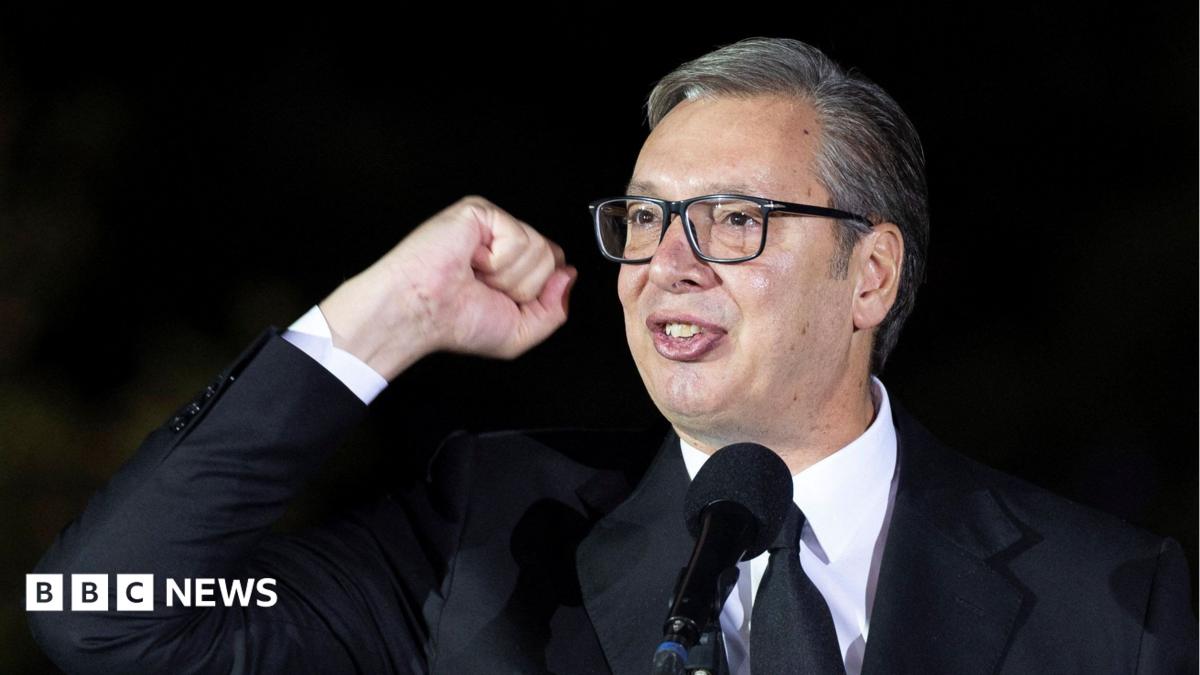
Serbia's President Aleksandar Vučić has stepped down, ending a presidency that spanned nearly a decade and conceding to more than a year of sustained pressure from a protest movement that began on university campuses and spread across the country's social spectrum.
Vučić announced the decision while addressing supporters outside the presidential building in Belgrade, framing his nine years in office as a period in which his administration had safeguarded peace and stability. The resignation formalises an intention he had signalled as early as June, when he first indicated he would leave the post.
His departure carries immediate constitutional consequences. Presidential elections must be scheduled within three months of a vacancy under Serbia's constitution, meaning voters will head to the polls twice before the year ends. A snap parliamentary election already set for late October will be followed roughly a month later by the presidential contest, according to Vučić's own account of the timetable.
Vučić is barred from seeking a third presidential term by the constitution, but his resignation does not mark a full exit from public life. He is standing as his party's candidate for prime minister in the parliamentary race and earlier declared his intention to lead the Serbian Progressive Party into that vote, leaving open the prospect that he could remain at the summit of Serbian politics in a different office.
Until a new president is chosen, parliamentary speaker Ana Brnabić, a fellow Progressive Party member, will serve as interim head of state.
The resignation follows a protest wave that first took shape in 2024 after the collapse of a canopy at Novi Sad's railway station killed 16 people. The deaths galvanised a broad coalition of demonstrators — students, teachers, workers and farmers among them — who saw the disaster as the product of a governing culture that had tolerated corner-cutting for more than a decade.
That perception was sharpened by Vučić's own association with the station's renovation, a project intended as a showcase of Serbian modernisation. Rather than defusing the anger, successive resignations by officials failed to satisfy the crowds, who kept up demonstrations through the summer and later shifted toward unrest amid accusations of police brutality.
The political crisis has also reshaped the electoral landscape. The parliamentary contest will pit Vučić's Progressive Party against a student-led anti-corruption movement operating under the banner Students Win, alongside a coalition of pro-Western opposition parties known as European Serbia.
In one of his final acts, Vučić used his constitutional pardoning power to release 49 people, among them 23 students and party loyalists suspected of offences tied to what he described as the "terrible events we have gone through over the past year and a half," according to the Serbian public broadcaster RTS.
The pardon has drawn attention because it reaches both protesters and supporters of the governing party, a move that may be read as an attempt to lower the temperature before voters cast their ballots. Critics of the outgoing president are likely to question whether clemency applied so broadly blurs responsibility for the violence that marked months of demonstrations.
Vučić's career has been a defining feature of Serbian politics for well over a decade. He became prime minister in 2014 and won his first presidential term in 2017, building a reputation as a pro-Russian populist who nonetheless pursued European Union membership as a stated goal while deepening ties with Moscow and welcoming Chinese investment.
That balancing act has long shaped his standing abroad as well as at home. Western capitals have viewed Serbia's EU aspirations as a potential anchor of regional stability, while Vučić's warmth toward Russia and his cultivation of Chinese economic partnerships have raised questions about the sincerity or durability of that European orientation.
For the student-led movement that forced the resignation, the next test is whether its momentum can be converted into parliamentary representation. Anti-corruption campaigners have framed their demands around accountability for the Novi Sad tragedy and for the broader system they say produced it, but translating street energy into legislative power is a familiar hurdle for protest-born parties.
The pro-Western opposition faces its own challenge: uniting disparate parties behind a single platform while competing for voters who may now be tempted by the new student movement. A fragmented opposition could hand Vučić's party an advantage in October even as his personal popularity has been eroded.
Should Vučić become prime minister, he would retain substantial influence over government policy, though in a role formally subordinate to the presidency. His opponents are likely to argue that this amounts to a continuation of his rule by other means, while his supporters will present it as a democratic response to a constitutional term limit.
The coming months will therefore decide more than the occupants of two offices. They will test whether Serbia's protest movement can institutionalise itself, whether the opposition can present a credible alternative, and whether a figure who has dominated the country's politics since 2014 can reinvent his hold on power in a new guise.
The parliamentary vote in late October and the presidential election that follows will together serve as a verdict on more than a year of unrest — and on whether the anger that began with a collapsed railway canopy has permanently altered Serbia's political arithmetic.
What's Your Reaction?
 Like
0
 Dislike
0
 Love
0
 Funny
0
 Wow
0
 Sad
0
 Angry
0

Editor Investigasi. Pemenang penghargaan jurnalisme investigasi. Spesialisasi: korupsi, kolusi, dan maladministrasi.





Comments (0)