

French PM Condemns Violence as School Protests Spread and 164 Arrested
French Prime Minister Sébastien Lecornu has issued a stark warning against further escalation of a growing wave of student protests that has swept across France, after authorities
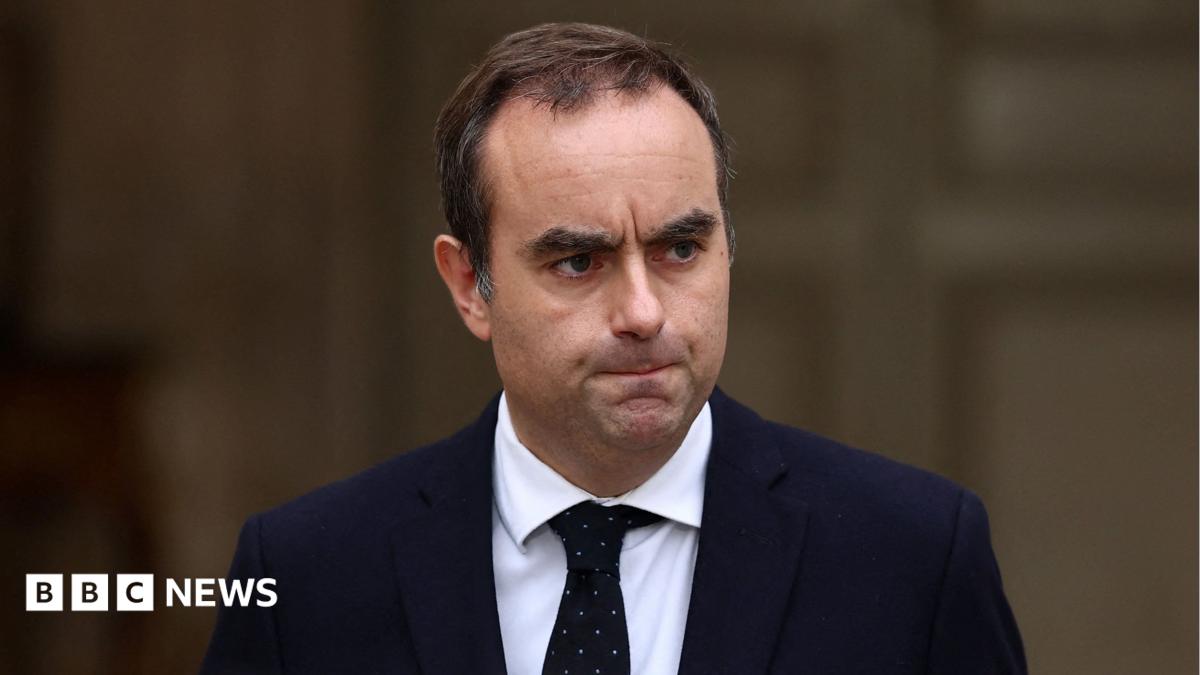
French Prime Minister Sébastien Lecornu has issued a stark warning against further escalation of a growing wave of student protests that has swept across France, after authorities arrested 164 people on Monday. The demonstrations, which began in the Paris region and have since spread to other parts of the country, have seen teenagers blockading their schools for days over grievances including overcrowded classrooms and a shortage of teachers.
In a message posted on X, Lecornu referenced reported incidents at the protests, stating that fireworks, fires and violence near high schools could not be justified under any circumstances, and that nothing excused putting students, staff or police officers at risk. His intervention came as the government sought to contain a movement that has grown rapidly since it first emerged last week in the Île-de-France region surrounding the capital.
Interior Minister Laurent Nuñez provided a detailed accounting of the day's disturbances, saying that 12 members of the security forces, 12 students and three school staff members were injured on Monday. He added that 180 schools across the country had been affected by the protests. Nuñez did not offer further details about the circumstances of those who had been taken into custody.
The protests at French lycées — the equivalent of sixth form colleges in the United Kingdom or high schools in the United States — have been marked by reports of vandalism and the targeting of police with fireworks. What began as a regional movement in and around Paris has now extended to other areas, with the AFP news agency reporting that four high schools were blockaded in the southern regions of Alpes-Maritimes and Var.
Demonstrations have also been reported in Marseille, the northern Lille area and Sedan in the north-eastern Ardennes, indicating the breadth of the unrest. The spread of the movement beyond the capital has raised concerns within the government that the protests could intensify further if they are not addressed through dialogue or concessions.
The Union Syndicale Lycéenne, a French union that defends the interests of high school students, pushed back against the government's characterisation of the protests, describing them as a legitimate response to the conditions students face. In a social media post, the union listed a lack of teachers and staff, dilapidated school buildings, overcrowded schedules and classes, and stress caused by Parcoursup — the online platform used for university applications — as the driving factors behind the unrest.
The union argued that these problems were not inevitable but rather the product of a decade of policies under President Emmanuel Macron and a lack of resources in the national education system. It called on students to blockade schools again on Tuesday in defence of what it described as their rights and against budget austerity, signalling that the movement intends to continue unless its demands are met.
The student action coincided with a broader day of industrial action, as unions representing teachers, hospital staff and civil servants also called for walkouts to protest against low wages and poor working conditions. The convergence of these movements across education, healthcare and the public sector has added to the pressure on a government already facing multiple challenges on the domestic front.
Lecornu sought to strike a balance in his response, acknowledging that the difficulties facing high schools must be heard and addressed. However, he insisted that violence had to be condemned unequivocally and that those responsible for it must be held accountable for their actions. He also accused the far-left France Unbowed party of encouraging students to expand the movement, a charge that reflects the political tensions surrounding the protests.
Jean-Luc Mélenchon, the leader of France Unbowed, hit back at the government, blaming Lecornu's administration for having ordered a crackdown on the protests. He described the high school students taking part as harmless, rejecting the government's narrative that the demonstrations had been hijacked by violent elements seeking confrontation with the authorities.
Interior Minister Nuñez offered a sharply different assessment, arguing that the demonstrations and blockades did not resemble typical protest movements. He said the situation was much more akin to urban violence, describing individuals who were masked, equipped with fireworks in tubes and armed with projectiles, and who clearly wanted to confront the internal security forces. He stated that the events were not about making demands but were instead violence in its purest form.
Since the protests began, several incidents involving clashes between students and police officers have been reported. According to the broadcaster BFMTV, one police officer fired a round from a grenade launcher used for crowd control, injuring a high school student. Investigations have been launched into these incidents, the broadcaster added, underscoring the seriousness of the confrontations that have taken place.
The unrest highlights long-standing structural challenges in France's education system, including class sizes, teacher recruitment and the condition of school facilities, issues that unions have raised for years. The involvement of hospital staff and civil servants in Tuesday's walkouts suggests that dissatisfaction extends well beyond the classroom and touches on broader questions about public sector funding and working conditions.
For the government, the coming days will be a test of whether it can de-escalate tensions without appearing to capitulate to disruptive tactics, while also addressing the underlying grievances that have mobilised students in such numbers. The arrest of 164 people and the injuries on both sides illustrate the stakes involved, as France watches to see whether the movement will subside or expand further in the weeks ahead.
What's Your Reaction?
 Like
0
 Dislike
0
 Love
0
 Funny
0
 Wow
0
 Sad
0
 Angry
0

Editor Investigasi. Pemenang penghargaan jurnalisme investigasi. Spesialisasi: korupsi, kolusi, dan maladministrasi.






Comments (0)