

Four Die as Helicopter Crashes and Burns Outside Montreal
A helicopter crash near Montreal has killed all four people aboard, according to Quebec's provincial police. The aircraft came down in the small community of Sainte-Brigide-d'Iberv
A helicopter crash near Montreal has killed all four people aboard, according to Quebec's provincial police. The aircraft came down in the small community of Sainte-Brigide-d'Iberville, roughly 50km (31 miles) from the city, where rescuers arrived to find the wreck burning and were able to declare the occupants dead at the scene.
Emergency services were dispatched shortly after 14:30 local time on Saturday afternoon — 19:30 BST — following an emergency call. In that call, according to the account given to the BBC, police were told that a helicopter was in distress and might have crashed and caught fire. The wording of the original call suggests the caller was reporting what they could see or had been told, rather than the confirmed outcome of an impact, an early sign that the situation on the ground was still developing when the first notifications were made.
Sergeant Audrey-Anne Bilodeau, speaking for the Sûreté du Québec, said the aircraft appeared to be a private helicopter rather than one operated by a commercial airline or an emergency-service crew. That distinction matters in the response that follows: air carriers and charter companies typically have their own flight-following and reporting obligations, while privately operated aircraft can be dispatched without the same degree of real-time tracking, meaning investigators may initially have a narrower set of records to work from when establishing who was flying and who was a passenger.
The crash site is near the Rang des Écossais road, accessed off Highway 10, a route that runs out of the Montreal area toward Quebec's Eastern Townships. The name of the road, which translates roughly as "the Scots' row" or "Scottish range", is typical of the older rural road patterns found in agricultural parts of the Montérégie region, where farmland and scattered properties sit close to major transport corridors. Witnesses in such areas often have line-of-sight views of the surrounding airspace, which appears to be what prompted the emergency call.
The fire at the site was brought under control about an hour after the call was made. Officials were still working at the crash scene shortly before 22:00 local time, or 03:00 GMT, more than seven hours after first responders arrived — a period consistent with the tasks involved at an aircraft destruction site, where hot debris, unstable wreckage and hazardous materials such as fuel or batteries can each complicate a safe search.
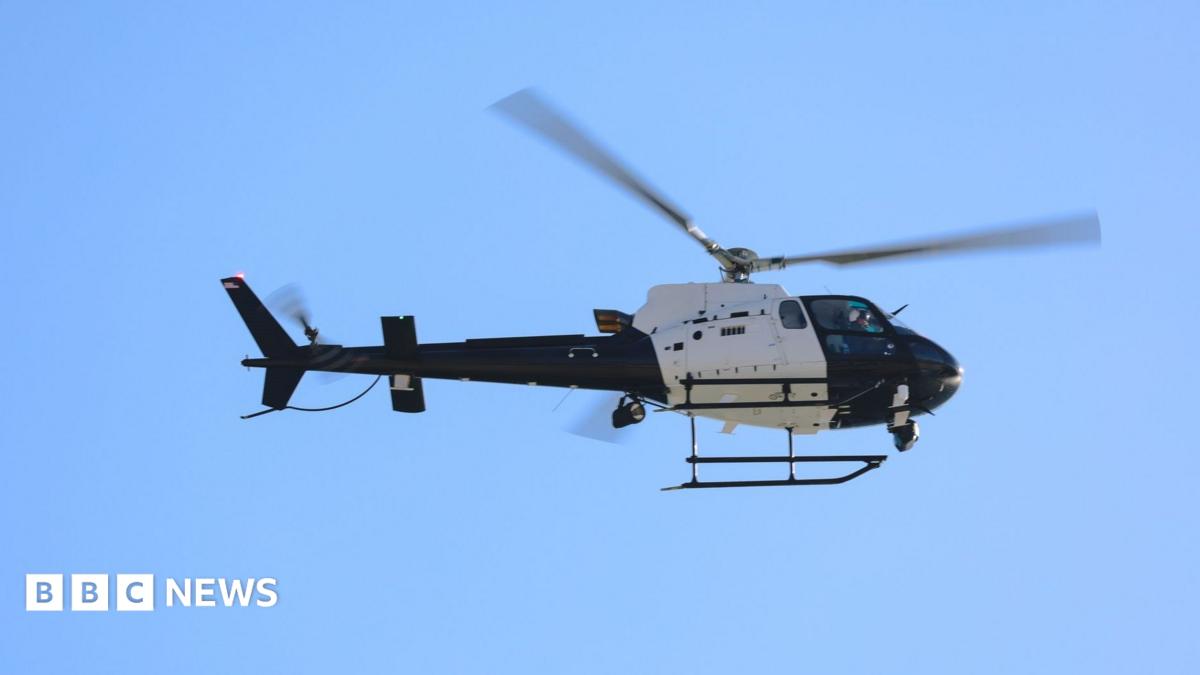
No images from the scene have been released. The picture accompanying this report is a file photograph of a black-and-white helicopter and is not related to the aircraft involved in Saturday's crash. Police and investigators frequently withhold images of fatal accident scenes, particularly where the cause of the crash remains unknown and where the wreckage could later form part of an inquiry.
The investigation is being led by the Major Crime Unit of the Sûreté du Québec, working alongside crime scene technicians as well as investigators from the Transportation Safety Board of Canada. The division of labour between the two organisations follows a familiar pattern in Canadian fatal accidents: the provincial police criminal unit takes the lead on questions of law enforcement and criminality, secures the scene and manages the remains, while the Transportation Safety Board — an independent federal agency — conducts the parallel safety investigation into how the accident happened and how it might be prevented. The involvement of a major crime unit rather than a routine patrol team reflects the death of multiple people.
The victims had not been identified as this report was published. Sergeant Bilodeau said the identification process may "take a few days", a timeline consistent with cases involving fatalities and fire damage, where investigators must often rely on dental records, medical history and next-of-kin information before names can be released. In the interim, authorities typically inform relatives before publishing any names publicly.
No cause has been established for the crash, and police have not indicated whether anyone on the ground was injured or whether the aircraft had been airborne locally or arrived from further away. Officials also gave no indication of whether the aircraft had been reported missing before the emergency call, though a distressed-aircraft call of this kind commonly precedes any such declaration by several hours.
Investigators will be looking at the wreckage itself, the aircraft's maintenance and operational records, fuel and weather conditions at the time, and any flight data preserved by the aircraft. Depending on what is recovered, a post-crash fire can destroy the flight-control and engine components that would otherwise help explain the sequence of events, which frequently delays conclusions. The Transportation Safety Board does not assign criminal blame; its findings address safety factors, and detailed reports are generally made public in the weeks and months after an investigation concludes rather than in the first days.
The crash will also be a matter of official record beyond the police and safety investigation, as deaths in such circumstances are typically referred for the provincial coroner's process to formally certify the identities and manner of death once the scene has been cleared.
For now, the family of the four people who died, the residents of Sainte-Brigide-d'Iberville and the wider Montreal area are left with the same central question: how a helicopter that was airborne came to hit the ground hard enough to destroy itself. The answers rest with the Sûreté du Québec and the Transportation Safety Board, and Sergeant Bilodeau's warning that identification alone may take days suggests the full picture will not emerge quickly.
What's Your Reaction?
 Like
0
 Dislike
0
 Love
0
 Funny
0
 Wow
0
 Sad
0
 Angry
0

Editor Investigasi. Pemenang penghargaan jurnalisme investigasi. Spesialisasi: korupsi, kolusi, dan maladministrasi.





Comments (0)