

Federal Reserve Lifts US Interest Rates to 4% in First Hike in Over Three Years
The United States Federal Reserve has raised its benchmark interest rate for the first time in more than three years, enacting a quarter-percentage-point increase in an effort to r
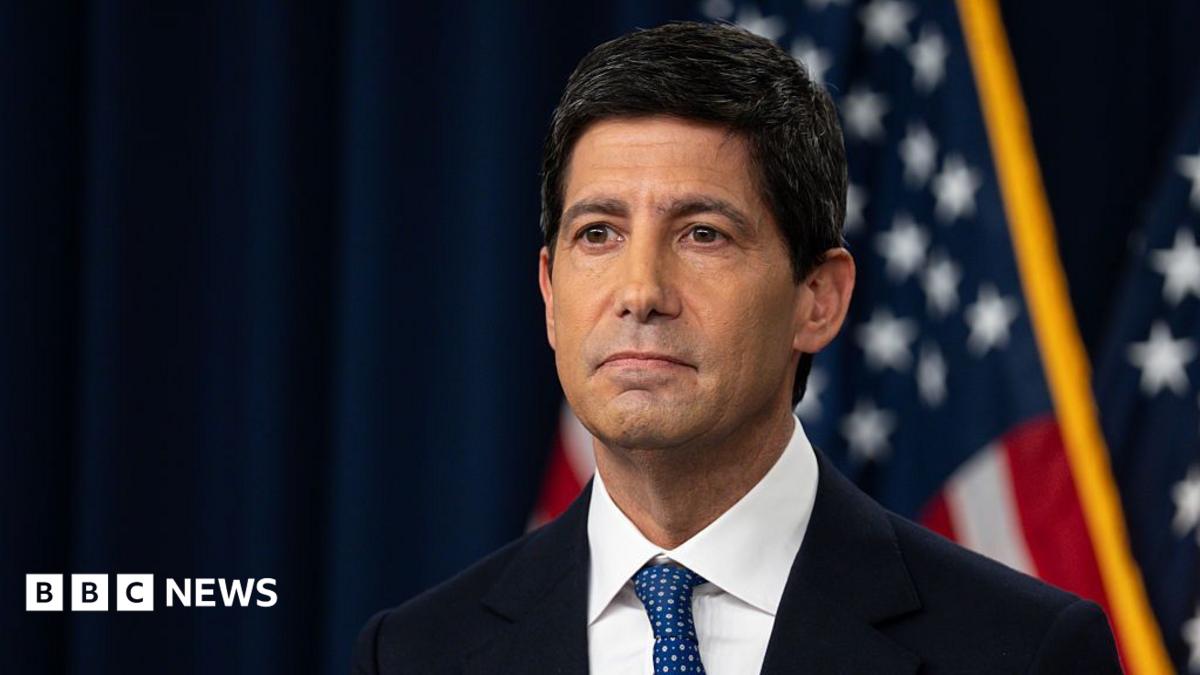
The United States Federal Reserve has raised its benchmark interest rate for the first time in more than three years, enacting a quarter-percentage-point increase in an effort to rein in persistent inflation. The unanimous decision by the central bank's policymaking committee moves the benchmark federal funds rate to a range of 3.75% to 4%, up from 3.5% to 3.75%.
The policy adjustment marks the central bank's first rate increase since July 2023, as well as its first policy shift in any direction since interest rates were cut in December 2025. Federal Reserve officials indicated that additional tightening could follow in the months ahead if price pressures continue to challenge the broader economy.
Federal Reserve Chair Kevin Warsh defended the move during a press conference on Wednesday, describing the decision as a "sober" and "responsible" measure to restore price stability. Warsh noted that while the central bank leadership maintains an underlying optimism regarding economic fundamentals, price increases have lingered well above acceptable levels for more than five years.
The decision was enacted despite vocal pushback from President Donald Trump, who has repeatedly called on the central bank to slash borrowing costs. In public remarks following the announcement, Trump argued on social media that the Federal Reserve should immediately reduce interest rates to 1% or lower, maintaining that the United States possesses the best credit standing in the world.
Addressing reporters about the White House's opposition, Warsh declined to discuss private interactions with the administration, stating that the central bank's institutional independence requires policymakers to stay focused on their defined statutory mandate. Earlier on Wednesday, White House Press Secretary Kush Desai told Fox News that the administration respects the independence of the Federal Reserve, while affirming the president's prerogative to voice his economic views.
The public divergence between the White House and the central bank follows years of tension surrounding monetary policy. Trump had previously expressed sharp criticism of Warsh’s predecessor, Jerome Powell, who stepped down at the conclusion of his term earlier this year after facing recurrent executive pressure to reduce borrowing rates.
The central bank’s decision comes against a backdrop of escalating geopolitical tension, including the conflict involving the United States, Israel, and Iran. The regional hostilities have driven a sharp rise in global crude oil prices, generating higher costs throughout transport networks and increasing the overall expense of consumer goods and services.
Domestically, higher energy costs have elevated pocketbook concerns for consumers, with diesel prices touching historic highs and average retail petrol surpassing $4 per gallon. With national midterm elections approaching in November, cost-of-living challenges and general household affordability have emerged as leading issues for voters.
Warsh pointed out that while the Federal Reserve cannot directly determine the price of specific commodities such as crude oil or grocery items, monetary tightening is designed to prevent temporary sector-specific shocks from broadening across the economy. He added that low-income households, who are disproportionately squeezed by the rising cost of essentials, have the most to gain from stabilizing consumer prices.
Central banks routinely raise interest rates to curb inflation by making borrowing more expensive, which slows spending and promotes saving. However, policymakers face a delicate balancing act, as higher borrowing costs can also discourage corporate capital investments, cool business hiring, and dampen broader economic expansion.
The impact of the central bank's decision quickly filtered through the commercial banking sector. Major lenders including JP Morgan, BNY, and KeyCorp lifted their prime lending rates on Wednesday from 6.75% to 7%, a move that will raise borrowing expenses on credit cards, variable-rate personal loans, and short-term lines of credit.
In the housing market, mortgage rates are also expected to see upward pressure, given their sensitivity to the Fed's policy stance. Recent figures from Freddie Mac show the average 30-year fixed-rate mortgage standing at 6.76%, while the 15-year fixed loan averages 6.09%. Although these rates remain beneath their 2023 peaks, elevated financing costs continue to pose affordability hurdles for prospective homebuyers and those seeking to refinance existing loans.
By contrast, homeowners with existing fixed-rate 15-year or 30-year mortgages will not experience changes to their scheduled monthly payments, insulating a substantial portion of the population from immediate increases in housing overhead. At the same time, savers could benefit from higher yields on bank deposits and fixed-income products.
Looking ahead, a majority of Federal Reserve policymakers project another rate increase before the end of this year, which would lift the benchmark to between 4% and 4.25%. A narrow majority also anticipates a further rate hike to the 4.25% to 4.5% range next year, before the central bank potentially initiates rate reductions in 2028 and 2029.
Under the Federal Reserve's current forecasts, price increases are expected to moderate gradually over the coming years, bringing inflation back toward the central bank's official 2% target by 2029. The United States is not alone in adjusting policy to address international energy pressures, with the European Central Bank hiking its key rate last week and the Bank of England preparing to announce its next rate decision on Thursday.
What's Your Reaction?
 Like
0
 Dislike
0
 Love
0
 Funny
0
 Wow
0
 Sad
0
 Angry
0

Editor Investigasi. Pemenang penghargaan jurnalisme investigasi. Spesialisasi: korupsi, kolusi, dan maladministrasi.






Comments (0)