

Backpack the brown bear wins Alaska's Fat Bear Week after narrow victory over 910
A hefty brown bear officially known as 89 Backpack has been crowned the champion of Alaska's annual Fat Bear Week competition, edging out a rival identified only as 910 in a closel
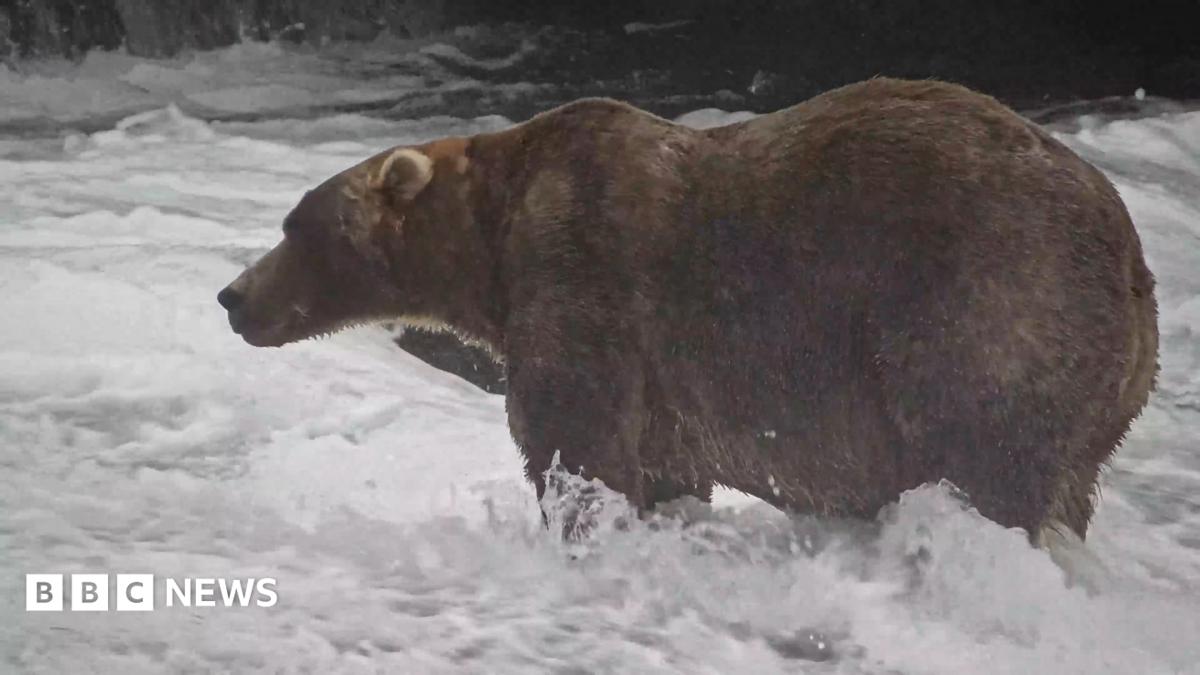
A hefty brown bear officially known as 89 Backpack has been crowned the champion of Alaska's annual Fat Bear Week competition, edging out a rival identified only as 910 in a closely contested final vote. The contest, organised by Katmai National Park, invites the public to decide which of the park's brown bears has packed on the most impressive bulk ahead of winter hibernation. Backpack secured 103,344 votes in the final round, while 910 finished with 98,253, a margin that confirmed just how evenly matched the two finalists were in the eyes of the voting public.
The US National Parks Service framed the competition as a "battle of size, skill, snack acquisition, and strategic loafing" — a playful description that captures both the lighthearted spirit of the event and the genuine biological stakes involved. For the bears of Katmai, fat is not a cosmetic concern but a matter of survival. The contest, now in its thirteenth year, has grown from a modest park initiative into an international internet phenomenon, drawing hundreds of thousands of voters from around the globe.
This year's edition saw the National Parks Service extend a tongue-in-cheek thank-you to the sixteen bears who "involuntarily participated" in the competition. The phrasing reflects the peculiar nature of an event in which the subjects are entirely unaware of their celebrity status, while human observers passionately debate their relative merits from behind computer screens.
Backpack's victory was celebrated by fans who delighted in his physical proportions. One supporter described him as possessing both the "chonk and the badonk," while another simply called him a "big fuzzy boy." Organisers noted that his "quiet toughness has allowed him to find his niche alongside the biggest bears at Brooks River," a tributary famed for its dense salmon runs and the dramatic feeding spectacles they attract each summer and autumn.
The new champion's name carries a story of its own. It does not derive from the "light bulb shape" of his body, as one observer suggested, but from a habit he developed as a cub: climbing onto the back of his mother, Holly, whenever she waded through the salmon-filled waters of Brooks River. That maternal connection adds another layer to Backpack's victory, since Holly herself was crowned Fat Bear Week champion in 2019, making the pair one of the competition's most accomplished families.
Not everyone was convinced that Backpack deserved the title, however. His opponent, 910, drew passionate support from voters who argued she had earned the crown through a combination of size and maternal dedication. Bear 910 is a female who raised both her own biological cub and an adopted niece, a feat that supporters viewed as evidence of exceptional resourcefulness and stamina.
One critic argued that 910 was a "larger bear all around," conceding only that "Backpack just has a bigger booty." Another wrote on the park's Facebook page that "910 really put in the work this year," while a further voter summed up their preference with the declaration: "She round, she thick my girl 910 got my vote." The debate illustrates how the competition has evolved into something resembling a sporting contest, complete with fan loyalties, statistical arguments and post-result disputes.
The finalists' most recent weights have not been publicly disclosed, leaving followers to speculate about the precise dimensions behind the outcome. What is known is that adult male brown bears typically average up to 408kg by mid-summer and often add the equivalent of roughly a quarter of their body weight by the time autumn arrives. The largest males can exceed 540kg, while females, though smaller, can still reach weights of more than 300kg. Cubs enter the world weighing approximately half a kilogram, a startling starting point for animals that may eventually grow more than a thousand times heavier.
The biological purpose behind this annual transformation is straightforward. According to competition organisers, bears do not eat or drink at all during hibernation and lose roughly one-third of their body weight over the course of the winter. "Their winter survival depends on accumulating ample fat reserves before entering the den," organisers explained. From June until mid-October, the bears gorge themselves on a diet rich in salmon, which they catch using either their jaws or their paws. The sight of a bear waiting motionless at the top of a waterfall before snatching a leaping fish from the air has become one of the most recognisable images in wildlife photography.
For Backpack, the coming weeks will bring a dramatic change of routine. He is expected to enter hibernation shortly, a dormant period that can last up to six months. During that time, his body will draw on the fat reserves that won him the competition, sustaining him until he emerges in the spring. In effect, the title of Fat Bear Week champion is not merely an honour but a prediction of sorts: the bear with the most impressive reserves is also the bear best equipped to survive the months ahead.
The scale of public engagement with the contest has continued to grow. Last year, more than 1.7 million votes were cast from over 100 countries, turning a remote Alaskan national park into a global talking point. The competition's appeal appears to rest on a combination of factors: the charisma of the individual bears, the spectacular natural setting, and the satisfying simplicity of judging animals on a single, unambiguous metric.
Katmai National Park has embraced this attention, using the event to educate audiences about bear biology, the importance of salmon ecosystems and the challenges of coexistence between humans and large predators. The competition's playful framing — complete with brackets, biographies and highlight reels — serves as a gateway to more serious conservation messaging, drawing in people who might never otherwise engage with wildlife management issues.
Backpack now joins an exclusive group of champions whose names are remembered long after the votes are counted. Whether his victory will be remembered chiefly for his bulk, his lineage or his distinctive habit of riding on his mother's back remains to be seen. What is certain is that, for one more winter, he carries with him the hopes of an international audience rooting for his survival — and perhaps, in time, for another bear from the same family to claim the crown.
What's Your Reaction?
 Like
0
 Dislike
0
 Love
0
 Funny
0
 Wow
0
 Sad
0
 Angry
0

Fact-Check Editor. Verifikator bersertifikasi IFCN. Memeriksa klaim viral dan disinformasi.





Comments (0)