

AfD Secures Parliamentary Speaker Role in German State for First Time Since WWII
For the first time since the end of World War Two, a far-right party has claimed the speaker's chair in a German state parliament. Tobias Rausch, a 35-year-old member of the Altern
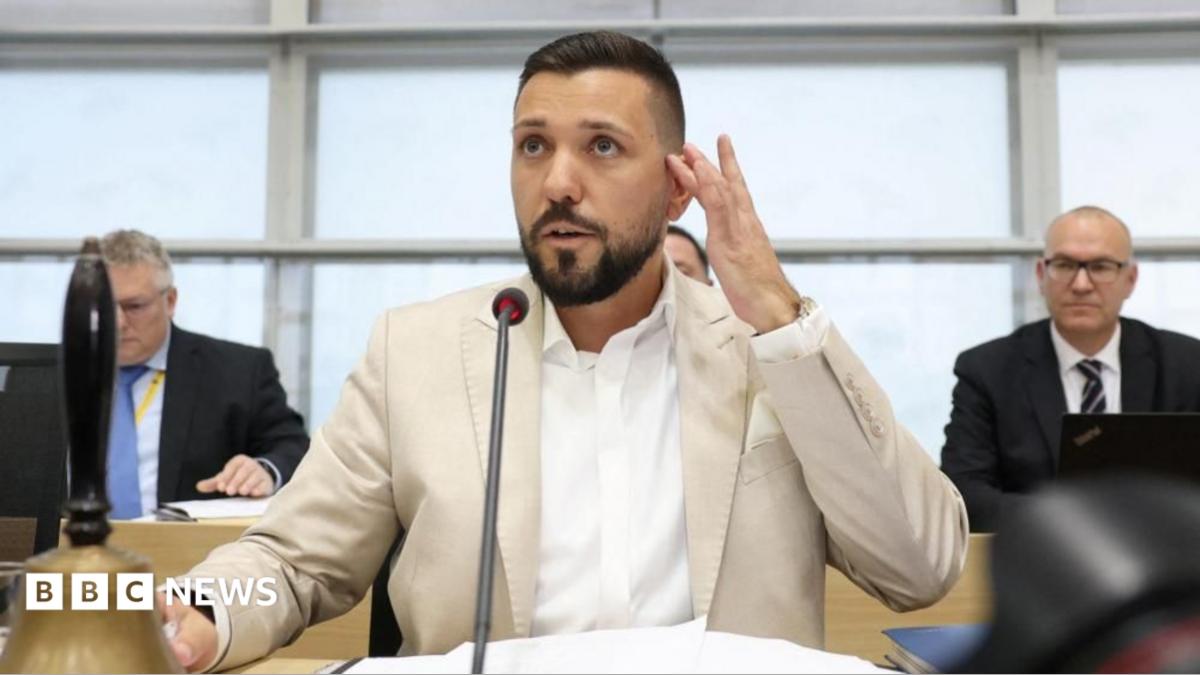
For the first time since the end of World War Two, a far-right party has claimed the speaker's chair in a German state parliament. Tobias Rausch, a 35-year-old member of the Alternative for Germany (AfD), was elected on Tuesday to lead the legislature in Saxony-Anhalt, marking a symbolic but deeply significant milestone in the party's steady march toward mainstream political power.
The vote came roughly a month after the AfD delivered a decisive performance in Saxony-Anhalt's state election, energizing a party that has spent years on the fringes of German politics. Although the AfD fell three seats short of an outright majority in that contest, Rausch still managed to secure the speaker's post comfortably, drawing support from nine lawmakers outside his own party.
Rausch's rise to the speaker's chair was not without controversy. Outside the parliament building in Magdeburg, more than 300 demonstrators gathered to voice their opposition, with some holding banners that read, "Never again is now" — a pointed reference to the Holocaust and Germany's postwar pledge to prevent the resurgence of far-right extremism. The image of protesters confronting AfD officials as they spoke to reporters underscored the raw emotions the vote has stirred in a country that has long treated its Nazi past as a defining moral boundary.
The new speaker, a trained estate agent who has served in the state parliament for a decade, is regarded as a close ally of Ulrich Siegmund, the charismatic local AfD leader now setting his sights on the state premiership in December. While the speaker's role is largely ceremonial, it carries real authority: Rausch will chair parliamentary debates, control access to the building, and represent the legislature at official functions. Those powers, though procedural, give the AfD a formal platform from which to shape the tone and conduct of state politics.
The political arithmetic behind Rausch's victory has raised eyebrows across the German establishment. Five lawmakers from the hard-left BSW party backed his candidacy, but the support of four additional, unidentified MPs came as a genuine surprise. Commentators were quick to speculate whether members of Chancellor Friedrich Merz's conservative CDU quietly defied their party's stance against cooperating with the AfD. Of the 14 CDU state MPs who participated in the ballot, only five abstained as planned, and one unconfirmed report suggested that as many as four may have voted for Rausch. Before the vote, all 15 had publicly ruled out backing an AfD candidate.
The outcome prompted immediate debate about the durability of Germany's "firewall" — the postwar consensus among mainstream parties to refuse cooperation with the far right. Rausch himself appeared eager to bury that tradition, declaring after the vote that "the days of political firewalls should be a thing of the past." His words signal a broader strategic shift within the AfD, which has increasingly argued that democratic legitimacy demands its inclusion in normal political processes rather than its exclusion from them.
Within Saxony-Anhalt, the AfD is classified as "right-wing extremist" by domestic intelligence agencies, a designation party leaders firmly reject. The party is known for its pro-Russian orientation and anti-immigrant platform, which includes proposals to segregate child refugees in schools and positions widely viewed as hostile toward the LGBT community. Until this week, AfD members had occupied the rightmost fringe of the state parliament chamber. Ahead of Tuesday's inaugural session, however, the party successfully argued that it should now sit in the centre — a subtle but telling claim to political legitimacy.
The reaction from other parties was swift and sharp. Susan Sziborra-Seidlitz, leader of the regional Greens, said "a line has been crossed" with the election of a far-right speaker, describing the moment as a watershed. She vowed that her party would not be intimidated and would not stand idly by "when rights are curtailed either here or for people in the state." Her remarks reflect a broader anxiety among Germany's mainstream parties that the AfD's incremental normalization will erode protections for minorities and weaken democratic norms.
Attention now turns to December, when Siegmund will seek to become state premier. His path is far from assured. Like Rausch, he would need the backing of 42 lawmakers in the 83-seat legislature. The BSW has ruled out forming a coalition with the AfD, saying instead that it would support a non-partisan candidate for premier and abstain in the December vote. That stance complicates Siegmund's ambitions and leaves open the possibility that the AfD's momentum, while real, may still encounter institutional resistance.
Even so, the election of an AfD speaker carries weight beyond Saxony-Anhalt. It demonstrates that the party can attract votes from outside its own ranks, and it raises uncomfortable questions for the CDU and other mainstream parties about how long their firewall strategy can hold. Each procedural victory of this kind chips away at the isolation that has confined the far right since the founding of the Federal Republic, and it gives the AfD a visible stage from which to argue that it is a legitimate, permanent fixture of German political life.
Historians and political analysts have noted that the speaker's chair, while not a policy-making role, is a symbol of institutional trust. Entrusting it to a party monitored by domestic intelligence is a development that would have seemed unthinkable a decade ago. That it has now happened in a state parliament — with the support of lawmakers from other parties — suggests that the taboo surrounding the AfD is weakening, even if the party remains short of the majorities needed to govern outright.
For the protesters in Magdeburg, the vote was a warning sign. For the AfD, it was a vindication. And for Germany's established parties, it was a reminder that the political landscape is shifting in ways that may prove difficult to reverse. How they respond — whether by tightening their ranks or by quietly accommodating the far right — will shape the country's democratic trajectory for years to come.
What's Your Reaction?
 Like
0
 Dislike
0
 Love
0
 Funny
0
 Wow
0
 Sad
0
 Angry
0

Editor Investigasi. Pemenang penghargaan jurnalisme investigasi. Spesialisasi: korupsi, kolusi, dan maladministrasi.






Comments (0)