

Three Years After October 7: A Devastated Kibbutz Confronts the Question of How to Rebuild
Three years after the Hamas-led assault that turned Kibbutz Nir Oz into one of the deadliest scenes of Israel's darkest day, the community's abandoned dining hall tells its own sto
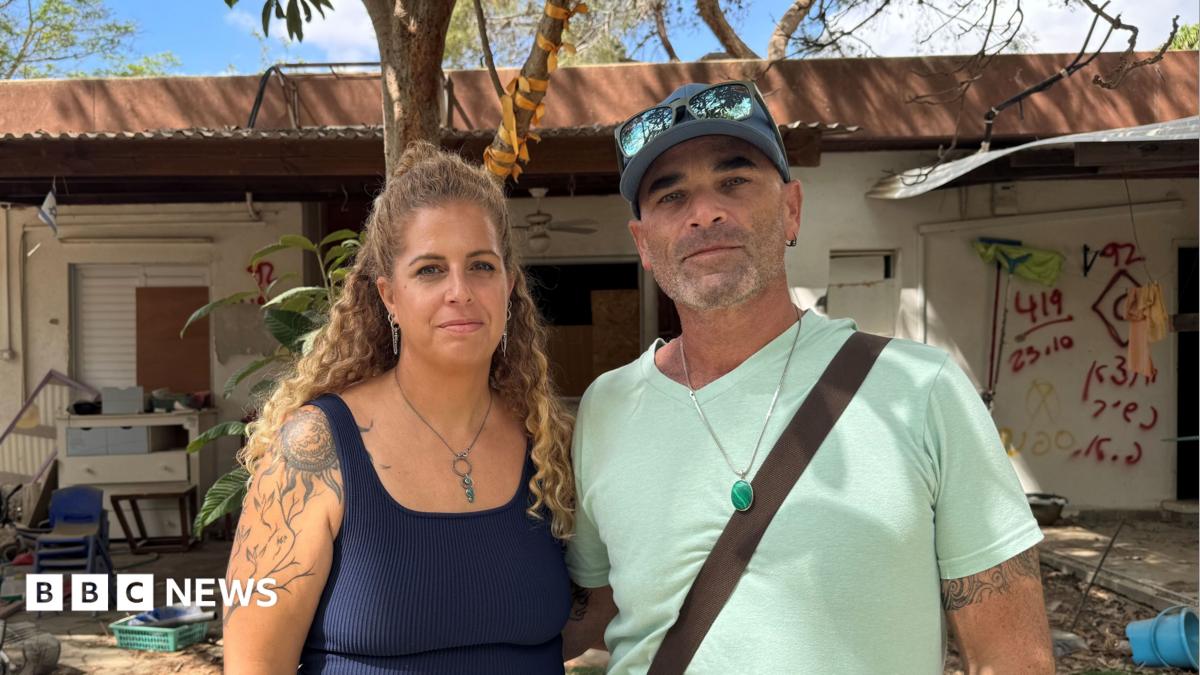
Three years after the Hamas-led assault that turned Kibbutz Nir Oz into one of the deadliest scenes of Israel's darkest day, the community's abandoned dining hall tells its own story. Birds have moved into the ceiling tiles of what was once the thriving center of a tight-knit community of roughly 400 people. The room where residents once gathered for meals, celebrations and holiday parties now stands empty, a silent witness to the violence that unfolded on October 7, 2023.
For Dalit Ram Aharon, walking through the ruins alongside her husband Achi is an act of remembrance. She recalls the daily rhythms of kibbutz life—neighbors dropping by, shared meals, communal festivities—that vanished in a single morning. The couple's tour reveals reminders of the attack at every turn, including postboxes near the glass entrance doors that are riddled with bullet holes. Each household's box carries a sticker added after the assault: red for residents who were killed, black for those taken hostage. As Dalit puts it, roughly one in four members of the community was either murdered or kidnapped, a toll that includes children and infants.
The kibbutz, located barely a mile from the Gaza border, was among the hardest-hit locations during the unprecedented assault. As Israel marks the third anniversary of the deadliest day in its history, Nir Oz residents find themselves in a painful period of reflection, forced to weigh memory against the practical demands of rebuilding. The question of what should rise from the ashes—and what should be preserved as testimony—has become central to the community's future.
Nearby, the burnt-out home of the Siman Tov family remains frozen in time. A wind chime still hangs by the door, and a photograph shows Tamar and Yonatan with their three children: five-year-old twins Shahar and Arbel, and two-year-old Omer. The parents were shot through the door of their bomb shelter, a structure designed to shield against rockets from Gaza but never intended to stop gunfire. Dalit remembers the desperate social media messages Tamar sent to a neighborhood women's group that morning—first asking whether everyone was alright, then writing that they were being shot, and finally, in messages filled with errors, that they were severely wounded. Based on what the community later learned, the house was set alight and the children died of suffocation, leaving the entire family dead.
According to the source account, an estimated 500 Palestinians took part in the assault on the unsuspecting kibbutz, led by Hamas's elite Nukhba force but also including civilian looters, some of them children. The attack claimed the lives of 41 Nir Oz residents and foreign workers, along with six people who had fled to the kibbutz from a party held nearby. Seventy-six people from the community were abducted into Gaza, among them nine bodies. Fourteen hostages were taken alive and later killed in captivity. The last living hostages from Nir Oz were returned to Israel on October 13, 2025, and the remains of the final deceased hostage, Amiram Cooper, were brought back two weeks later.
The Israeli Defense Forces investigation into the events at Nir Oz laid bare a catastrophic failure of response. The army, thrown into disarray by the simultaneous assault on more than 20 communities and multiple military posts, never came to the kibbutz's rescue. The first soldiers only arrived roughly 40 minutes after the last attackers had already left. Nearly every household in the community experienced killing, violence—including sexual assaults and rape—looting, and kidnapping.
Walking through the greenery now, the silence is broken only by birdsong and the mewing of hungry stray cats. Dozens of fire-damaged homes, once simple single-storey buildings, have been demolished, leaving behind only rows of reinforced concrete safe rooms that ultimately failed to protect their occupants. The Aharons believe some of the damaged houses should be left standing as evidence of what occurred. Achi argues that people should be able to see the destruction and what he describes as the pure hatred that was unleashed there. The couple points out the spot where teacher Maya Goren was killed inside the kindergarten, and the makeshift memorials honoring three of the seven members of the kibbutz security team who died battling the gunmen.
For Dalit, the walk is also deeply personal. She pauses at a tree planted long ago by her parents, who helped found the kibbutz—a community known for its farming tradition and its peace activism. Her parents survived the attack physically unharmed but died just months later. Next door stands the small home of Shiri Bibas, mother of ginger-haired Ariel, four, and nine-month-old Kfir. The three were seized from their home and became symbols of the Gaza hostage crisis. Dalit describes Shiri as a very close friend, almost like a sister, noting that they were even pregnant at the same time—Dalit with her daughter and Shiri with Ariel. The children became best friends, and the two women used to joke that they would one day marry.
Dalit remembers Shiri as funny, happy and devoted to motherhood, a woman who lived simply and never harmed anyone. Shiri's husband, Yarden, was released alive by Hamas under a Gaza ceasefire deal in February 2025, but Shiri and the two boys were killed after being taken hostage. Their fate, along with the broader trauma endured by Nir Oz, has come to represent the human cost of October 7 for Israelis across the country. For the surviving residents, the struggle now is not only emotional but existential: whether to return, how to memorialize the dead, and whether a community shattered this profoundly can ever truly be rebuilt. The Aharons, for their part, say they want to move back to Nir Oz in the memory of the friends they lost, determined that the place their parents founded will not be erased.
What's Your Reaction?
 Like
0
 Dislike
0
 Love
0
 Funny
0
 Wow
0
 Sad
0
 Angry
0

Editor Investigasi. Pemenang penghargaan jurnalisme investigasi. Spesialisasi: korupsi, kolusi, dan maladministrasi.





Comments (0)