

Swedish Prime Minister Ulf Kristersson Steps Down Following Narrow General Election Defeat
Sweden’s Prime Minister Ulf Kristersson has officially resigned from his post after his governing right-wing coalition suffered a narrow defeat at the hands of the centre-left oppo
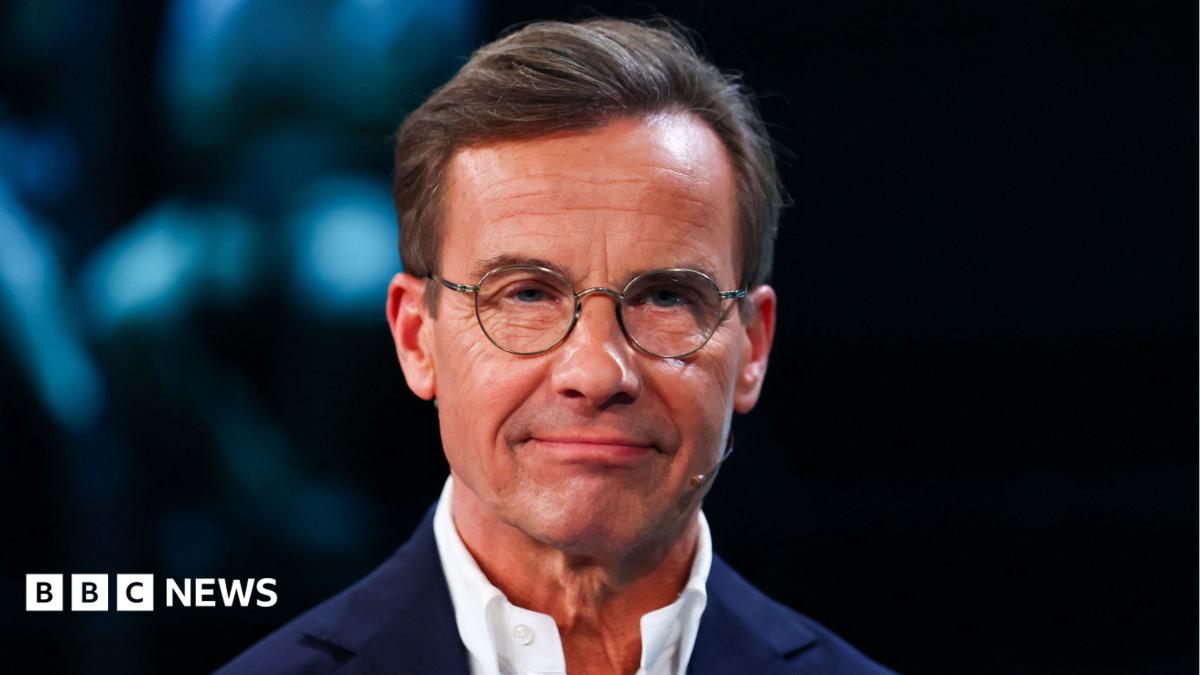
Sweden’s Prime Minister Ulf Kristersson has officially resigned from his post after his governing right-wing coalition suffered a narrow defeat at the hands of the centre-left opposition in the country’s general election. Kristersson confirmed his departure on Thursday afternoon through a public statement on the social media platform X, bringing an end to his tenure following a hard-fought and closely watched national race.
The final outcome of the election underscores just how divided the Nordic nation has become. According to preliminary figures released after Sunday’s vote, a razor-thin gap of approximately 50,000 votes ended up deciding the balance of power between the two main political blocs in a country with a total population of roughly 10 million people.
Figures compiled by the Swedish Election Authority indicate that the centre-left opposition, headed by Social Democratic Party leader Magdalena Andersson, is poised to secure a total of 176 seats in the national parliament. This leaves Kristersson’s conservative-led bloc with 173 seats in the 349-seat Riksdag, giving the opposition a slight but decisive three-seat majority.
While these preliminary tallies have effectively sealed Kristersson's resignation, the official election results are still subject to a final certification process in the coming days. Electoral officials are reviewing all submitted ballots, with the formal confirmation of the final results expected to be officially finalized by the end of this weekend.
In the wake of Kristersson’s resignation announcement, Andersson has wasted no time in launching official talks with potential coalition partners. She has reached out to the three other parties within the left-leaning opposition—the Left Party, the Centre Party, and the Green Party—in an effort to assemble a working majority capable of forming a viable administration.
Despite Andersson's clear arithmetic advantage in parliament, the path toward a functioning government is expected to be fraught with political obstacles. Substantial ideological disagreements remain between the prospective coalition members, particularly over economic policy, public expenditure, and tax policy, which could significantly prolong cross-party discussions.
Prolonged coalition negotiations are far from unusual in Swedish politics. Following the general election held in 2022, party leaders spent 37 days in intensive negotiations before establishing a viable administration. Even more strikingly, after the 2018 national election, it took a record 134 days of political maneuvering before a governing consensus could be finalized.
The Swedish political system is structured around two dominant blocs, typically featuring four distinct political parties aligned on the right and four parties aligned on the left. Because parliamentary majorities are rarely held by a single party, the Swedish electorate is well accustomed to minority governments and complex coalition agreements that take substantial time to negotiate.
Kristersson’s outgoing right-wing alliance consisted of his own centre-right Moderate Party alongside the Christian Democrats, the Liberals, and the hard-right, anti-immigration Sweden Democrats. Throughout his time in office, Kristersson relied on this delicate arrangement to maintain control of the legislative agenda in the Riksdag.
Ahead of this election, Kristersson had pledged to formally bring the Sweden Democrats into government, offering them official cabinet positions if the right-wing bloc secured a renewed mandate. This marked a notable shift from the previous arrangement, where the party provided vital external support without occupying formal ministerial roles.
Under that prior arrangement, the Sweden Democrats wielded considerable influence over government policy. In exchange for supporting the centre-right coalition from the outside, the party successfully pushed through a dramatic tightening of Sweden’s migration and border policies, which became a cornerstone of the outgoing administration’s domestic agenda.
However, the election results proved to be an unexpected setback for the Sweden Democrats. For the first time since the anti-immigration party first entered the Riksdag in 2010, it suffered a decline in overall voter support, dropping by three percentage points compared to its previous performance in the 2022 vote.
The definitive outcome of Sunday's election became clear only after days of meticulous counting across the country. Preliminary counting began immediately after polls closed on Sunday night, but the narrowness of the race meant election officials had to wait until Wednesday to process late-arriving early ballots and international votes sent by Swedish citizens living abroad.
With the final counting confirming the centre-left’s advantage and Kristersson’s resignation now finalized, the responsibility falls squarely on Andersson to navigate the competing demands of her allies. As formal results are finalized this weekend, Sweden enters a pivotal transitional phase that will determine the ideological direction of its next government.
What's Your Reaction?
 Like
0
 Dislike
0
 Love
0
 Funny
0
 Wow
0
 Sad
0
 Angry
0

Editor Investigasi. Pemenang penghargaan jurnalisme investigasi. Spesialisasi: korupsi, kolusi, dan maladministrasi.





Comments (0)