

South Korea Summons Ukraine's Envoy After Zelensky Reveals Secret Transfer of North Korean POWs
South Korea has formally summoned Ukraine's acting ambassador in Seoul, lodging a sharp diplomatic protest after President Volodymyr Zelensky publicly disclosed that two captured N
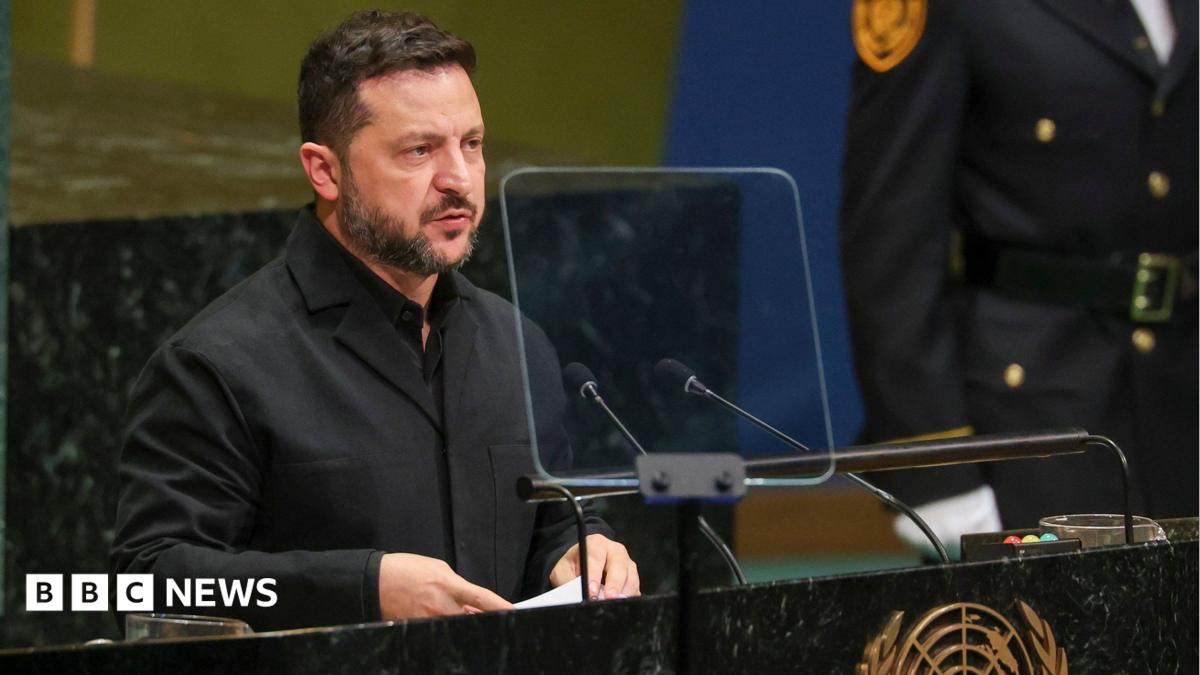
South Korea has formally summoned Ukraine's acting ambassador in Seoul, lodging a sharp diplomatic protest after President Volodymyr Zelensky publicly disclosed that two captured North Korean soldiers had been quietly handed over to South Korean custody. The move marks an unusually public rupture between two countries that had, until recently, carefully managed a behind-the-scenes partnership over the fate of North Korean troops fighting for Russia.
Vice Foreign Minister Park Yoon-joo delivered the complaint directly to acting ambassador Andrii Vieshkin, expressing what Seoul described as "strong regret" that Zelensky had revealed a transfer that South Korean officials say was meant to remain confidential. The disclosure, made during Zelensky's address to the United Nations General Assembly last Wednesday, caught Seoul off guard and triggered a political firestorm at home.
The two North Korean soldiers were captured earlier by Ukrainian forces in Russia's Kursk Oblast, a region where Kyiv launched a surprise cross-border incursion. Ukraine announced in early 2025 that its troops had taken the pair as prisoners of war. Both men had reportedly told local media they wished to be sent to South Korea, a request that set in motion more than a year of discreet negotiations between Seoul and Kyiv.
President Lee Jae Myung publicly called Zelensky's disclosure "greatly disappointing," framing the transfer as a "highly sensitive issue" with direct implications for South Korea's national security. His office said the secrecy was intended partly to shield the soldiers' families in North Korea from possible reprisals, and partly to spare Kyiv criticism that it had forfeited a valuable bargaining chip—namely, the chance to exchange the North Koreans for Ukrainian prisoners of war held by Russia.
According to Lee's office, Ukrainian officials had signalled in advance that the soldiers would be referenced in Zelensky's UN speech, but had given no indication that the fact of their transfer to South Korea would be announced. Seoul maintains that this crossed a line, and the dispute escalated quickly. Zelensky's office countered that the two countries had never signed a non-disclosure agreement covering the arrangement, a claim that South Korean officials rejected outright.
Seoul then demanded an apology from Kyiv for what it characterised as "announcing a falsehood," warning that the episode had seriously damaged trust between the two governments. Ukraine's foreign ministry declined to comment when approached by the BBC, leaving the diplomatic standoff unresolved.
The fallout has been felt acutely in South Korean domestic politics. Opposition parties accused President Lee of concealing the transfer to avoid antagonising Pyongyang, given his administration's avowedly conciliatory stance toward the North. Lee, whose party favours engagement over confrontation, has been attempting to revive peace talks with North Korea, so far without success. Critics argue that the quiet handling of the soldiers' transfer fitted a broader pattern of prioritising diplomatic outreach to Pyongyang over transparency with the South Korean public.
The episode also underscores the delicate position South Korea occupies in the wider war. Seoul has been broadly sympathetic to Ukraine since Russia's full-scale invasion and has provided non-lethal assistance, but it has refused to abandon its longstanding policy of not supplying lethal weapons to any country engaged in active conflict. In July, Seoul announced a $100 million assistance package for Ukraine, which Lee's office described as an expansion of earlier support that included helmets, personal armour and medical equipment rather than arms.
Ukraine has been pressing hard for more. After North Korean troops were deployed to support Russia in 2024, Kyiv intensified its lobbying for South Korea to supply cutting-edge anti-air missiles capable of defending Ukraine's energy infrastructure against Russian drone and missile strikes. Mykhailo Podolyak, a senior adviser to Zelensky, argued that Seoul's interests are directly at stake, saying that when North Korea actively participates in a war in Europe, South Korea cannot remain a distant observer. He framed the transfer of defence technologies and capabilities as a matter of South Korea protecting its own long-term security by containing what he called an aggressive totalitarian axis.
Moscow has warned that it would have "no choice but to retaliate" if South Korea supplied arms to Ukraine, without specifying what measures it might take. The threat adds another layer of risk for Seoul, which has spent decades cultivating cordial ties with countries opposed to the United States. Since the collapse of the Soviet Union, South Korea has worked to deepen trade and diplomatic relations with Russia, which shares a border with North Korea, and regards both Moscow and Beijing as key partners in efforts to influence Pyongyang.
The prisoner transfer row therefore cuts across several of South Korea's most difficult foreign policy dilemmas at once: its balancing act between Washington and Moscow, its refusal to arm Ukraine while North Korean soldiers fight in Europe, and its fragile attempts to re-engage with the North. For Ukraine, the episode risks alienating a sympathetic but cautious partner whose non-lethal aid and potential future defence support remain valuable. For the two North Korean soldiers at the centre of the dispute, the diplomatic uproar has only heightened uncertainty about what comes next, even as Seoul confirmed it has taken them into custody.
What's Your Reaction?
 Like
0
 Dislike
0
 Love
0
 Funny
0
 Wow
0
 Sad
0
 Angry
0

Editor Investigasi. Pemenang penghargaan jurnalisme investigasi. Spesialisasi: korupsi, kolusi, dan maladministrasi.





Comments (0)