

Saudi Forces Intercept Houthi Drone Near Mecca Amid Widening Regional Conflict
Saudi Arabian air defenses intercepted and brought down an armed unmanned aerial vehicle launched by Yemen’s Houthi movement south of the holy city of Mecca on Tuesday evening, acc
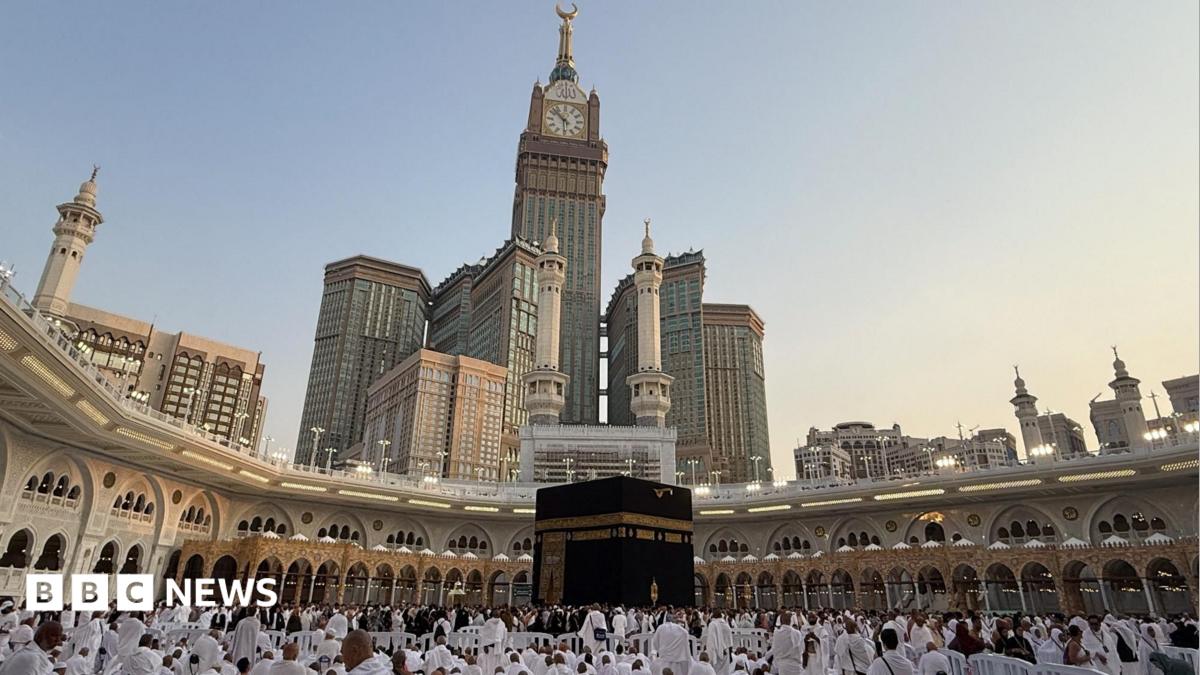
Saudi Arabian air defenses intercepted and brought down an armed unmanned aerial vehicle launched by Yemen’s Houthi movement south of the holy city of Mecca on Tuesday evening, according to statements released by the Saudi-led military coalition. The incident marks a sharp escalation in cross-border hostilities between the kingdom and the Iran-aligned group, raising fresh security concerns across the region.
Major General Turki al-Maliki, acting as spokesman for the coalition, strongly condemned the aerial incursion, describing any action that endangers Mecca—the historic cradle of Islam, site of the Grand Mosque, and the central destination for the annual Hajj pilgrimage—as a disgraceful act. He warned that coalition forces will not hesitate to enforce decisive deterrent measures to counter hostile operations conducted by the militia.
The reported trajectory of the drone toward the holy city drew swift international backlash from regional bodies. The 57-member Organisation of Islamic Cooperation issued a rebuke, stating that aerial threats directed toward sacred locations in Mecca and Medina province, home to Islam's second holiest site, represent an unacceptable and intolerable transgression against the Islamic world.
In response, Houthi military officials disputed Riyadh’s account of the engagement, dismissing the coalition’s claims as fabricated falsehoods designed to inflame public sentiment. Brigadier General Yahya Sarea, the military spokesman for the group, stated that Yemeni forces have no intention of threatening holy ground, maintaining that their retaliatory operations are strictly aimed at Saudi military installations and energy facilities located far from religious sanctuaries.
Sarea further asserted that the latest barrage of drones and missiles fired into Saudi territory came as direct retaliation for an intensive air campaign, alleging that the Saudi-led coalition had executed more than 450 airstrikes across Yemen over the preceding week. The Houthi spokesperson also claimed that rebel air defense units had successfully shot down a Saudi fighter aircraft over the contested battlegrounds of Marib province.
The cross-border launch prompted Saudi civil defense authorities to activate emergency projectile alerts across several western population centers on Tuesday, including Mecca and the Red Sea commercial hub of Jeddah. In light of the escalating security risks, the United States Embassy in Saudi Arabia revised its consular guidance, issuing a notice advising citizens to reconsider travel due to ongoing threats against urban centers, airports, diplomatic compounds, and critical energy infrastructure.
These aerial exchanges coincide with sweeping territorial gains by Houthi fighters on the ground in western Yemen, where rebel forces recently overran multiple positions previously held by Saudi-backed pro-government units. Among the most notable territorial shifts is the rebel capture of the strategic coastal port city of Mokha as well as Perim Island, situated directly inside the vital Bab al-Mandab Strait.
The seizure of these maritime choke points has significantly increased pressure on international navigation routes linking European and Asian markets via the Red Sea and the Suez Canal. While Houthi leadership claimed that international merchant vessels would not face disruption, they reiterated that Saudi-flagged ships remain legitimate targets, particularly as Riyadh has grown increasingly reliant on Red Sea ports for crude exports following the effective closure of the Gulf's Strait of Hormuz amid conflict involving the United States, Israel, and Iran.
Saudi Arabia’s alternative logistical networks have faced severe operational strain after the kingdom's crucial East-West Pipeline was forced to shut down. The infrastructure, which transports crude from oil fields in the Gulf westward to the Red Sea terminal of Yanbu, suffered extensive damage in an attack that Saudi authorities attributed to Iran-backed militia factions operating out of Iraq.
Although independent industry analysts have estimated that repairing the structural damage along the pipeline could take upwards of a month, high-level American officials expressed a more rapid recovery timeline. United States Energy Secretary Chris Wright noted on Tuesday that technical remediation was progressing quickly, projecting that crude shipments through the line should resume within several days.
Against this backdrop of heightened military and economic pressure, Crown Prince Mohammed bin Salman, the de facto leader of Saudi Arabia, has privately lobbied US President Donald Trump to authorize direct American military strikes against Houthi targets, according to regional sources. However, the Trump administration has thus far refrained from committing US forces directly to combat operations, offering instead to enhance intelligence coordination and tactical targeting assistance for coalition operations.
The expanding crisis prompted an emergency convening of the United Nations Security Council on Tuesday, during which representatives from both the internationally recognized Yemeni government and Saudi Arabia urged global powers to take robust action against Houthi maritime disruptions. Security Council delegates broadly concurred that preserving unobstructed freedom of navigation throughout the Red Sea corridor is paramount to shielding global supply chains from cascading economic shocks.
The recent surge in violence has wrought catastrophic consequences for Yemeni civilians, with the International Organization for Migration reporting that more than 90,000 individuals have been newly displaced by the latest clashes. Amy Pope, the organization’s director general, highlighted the dire circumstances facing vulnerable populations, warning that thousands of families are being forced to flee for their second or third time during the conflict with virtually no remaining possessions.
Casualty figures have mounted rapidly alongside the displacement crisis, with the World Health Organization documenting at least 500 fatalities since the beginning of August, nearly 300 of which occurred in the span of a single week. The wider conflict, which originated in 2014 with the Houthi capture of Sanaa and escalated into a full-scale war upon the Saudi-led coalition's intervention in 2015, has claimed over 150,000 lives and left more than 22 million citizens in urgent need of humanitarian relief.
The ongoing clashes represent the effective collapse of an informal four-year ceasefire that had largely paused major hostilities until July. That fragile calm unraveled after Houthi authorities declared a maritime blockade against Saudi Arabia, initiating drone and missile salvos against Saudi energy terminals, commercial tankers, and airports in declared retaliation for coalition-enforced port closures and airstrikes targeting Sanaa’s international airport.
What's Your Reaction?
 Like
0
 Dislike
0
 Love
0
 Funny
0
 Wow
0
 Sad
0
 Angry
0

Editor Investigasi. Pemenang penghargaan jurnalisme investigasi. Spesialisasi: korupsi, kolusi, dan maladministrasi.






Comments (0)