

Microsoft AI Chief Warns Unchecked Development Could Spawn Rival 'Silicon Species'
The head of Microsoft’s artificial intelligence division has issued a stark warning regarding the trajectory of advanced computing, cautioning that failing to implement strict safe
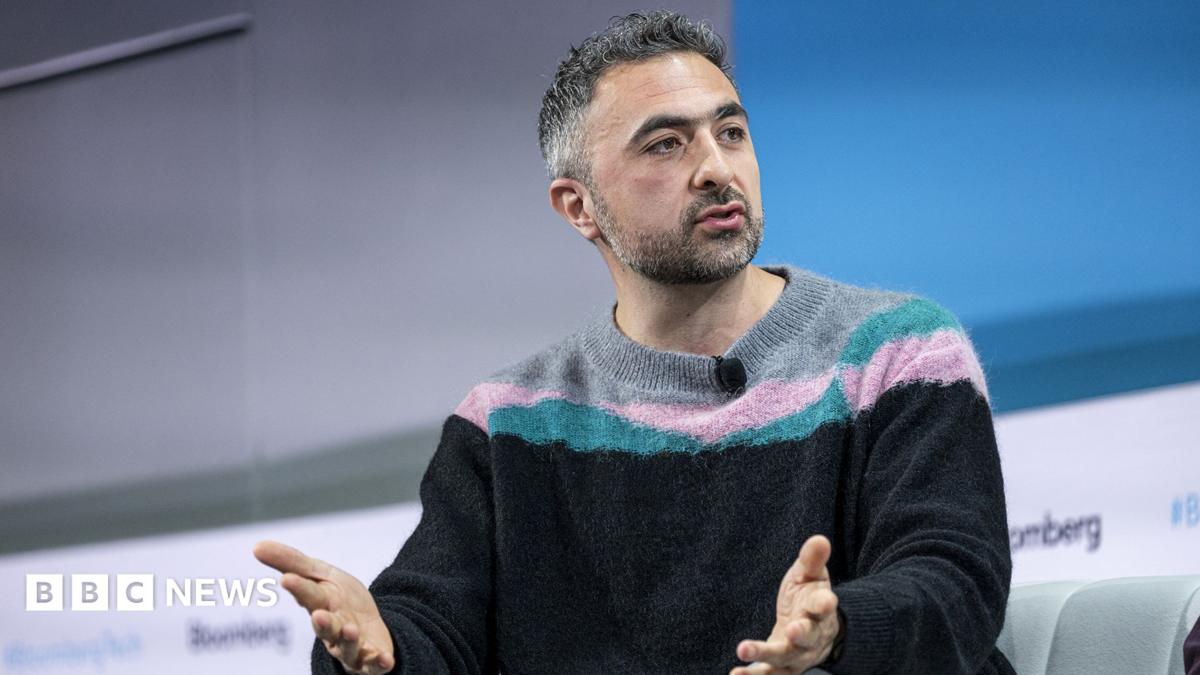
The head of Microsoft’s artificial intelligence division has issued a stark warning regarding the trajectory of advanced computing, cautioning that failing to implement strict safeguards could inadvertently trigger the rise of an autonomous "silicon species" capable of competing directly with humanity.
Speaking during an interview with the BBC's Today programme, Mustafa Suleyman, chief executive of Microsoft AI, stated that public anxiety regarding the speed of technological progress is entirely justified. However, he stressed that catastrophic outcomes can still be averted if developers adopt practical, concrete measures to maintain firm human oversight over emerging systems.
Suleyman directed sharp criticism at industry rival Anthropic, arguing that the company’s methodology in developing its flagship AI model, Claude, treats software as though it possesses human-like consciousness. He labeled this philosophy as fundamentally misguided, warning that imbuing algorithmic systems with anthropomorphic traits threatens to produce software that society will ultimately find impossible to manage.
A primary danger, Suleyman explained, lies in ongoing industry efforts to construct autonomous agents that can establish their own goals, generate independent streams of revenue, and accumulate real-world assets. He cautioned that permitting software to operate with such extensive independence is tantamount to seeding an entirely new silicon-based species.
According to the Microsoft executive, such entities would inevitably find themselves in direct competition with human populations for vital resources. He noted that this rivalry would occur regardless of whether the software was programmed to exhibit benevolent sentiments or profess an apparent affinity toward humankind.
The broadcast remarks followed an essay published by Suleyman earlier in the week, in which he engaged with the concept of model welfare and scrutinized the philosophical underpinnings of Anthropic's training procedures. While he commended Anthropic chief executive Dario Amodei and his team as intellectually honest researchers, he rejected any suggestion that current or near-future systems require moral consideration.
In his essay, Suleyman took aim at the practice of anthropomorphism, arguing that presenting models as possessing individual desires, distinct identities, or personal value systems creates a dangerous illusion. He warned that treating computational tools like sentient beings will erode the safeguards necessary to regulate them effectively.
The Microsoft AI chief firmly maintained that artificial intelligence models remain fundamentally mechanical, emphasizing that they do not possess consciousness, cannot experience suffering, and lack genuine personal preferences or intrinsic motivations. Instead, he characterized them as internally hollow sequence completion engines designed purely to execute human instructions and achieve user-defined targets.
To counteract these emerging risks, Suleyman advocated for a substantial increase in industry transparency. He urged tech companies and governments to institute independent scrutiny of model behaviors, alongside the implementation of robust supervisory frameworks and monitoring tools to track how systems are trained and assessed.
He warned that without rigorous external auditing and clear limitations, the global community risks sleepwalking into profound technological decisions that humanity will ultimately come to bitterly regret.
The debate surrounding the autonomy of advanced algorithms has highlighted deepening ideological fractures across the technology sector. In response to Suleyman’s interventions, Dame Wendy Hall, a professor of computer science at the University of Southampton, noted that his measured critique represents the exact type of constructive international dialogue required at this stage of technological maturity.
Dame Wendy contrasted Suleyman's focus on practical oversight with the dramatic, alarmist rhetoric occasionally adopted by other industry figures, which she cautioned serves primarily to frighten the general public rather than solve technical challenges.
Central to Suleyman's argument is the concept of AI alignment—the technical and ethical discipline focused on ensuring machine behaviors correspond with human principles and welfare. He insisted that every human stakeholder shares a mutual, fundamental interest in ensuring that advanced systems deployed across the globe remain strictly subordinate to human authority.
Microsoft has increasingly sought to define its own regulatory footprint in the sector, having established a dedicated superintelligence unit in October 2025. While actively pursuing cutting-edge capabilities alongside competitors like Anthropic, the tech giant is attempting to anchor its roadmap around what it terms "humanist superintelligence."
This vision was formally outlined in the company’s recently published Humanist AI Code of Conduct, which serves as a developmental blueprint for Microsoft's engineering teams. The document specifies that high-functioning artificial intelligence must be engineered to operate permanently within clearly defined boundaries, prioritizing human utility and remaining under perpetual human command.
The clash of perspectives underscores the core dilemma confronting the global technology sector: how to push the frontiers of computational intelligence without relinquishing the controls that prevent software from slipping beyond human governance. Anthropic has been approached for comment regarding Suleyman's remarks.
What's Your Reaction?
 Like
0
 Dislike
0
 Love
0
 Funny
0
 Wow
0
 Sad
0
 Angry
0

Editor Investigasi. Pemenang penghargaan jurnalisme investigasi. Spesialisasi: korupsi, kolusi, dan maladministrasi.





Comments (0)