

Kuala Lumpur starts first Rohingya sea repatriation to Myanmar, drawing rights condemnation
Malaysia has begun a controversial mass repatriation of asylum seekers from Myanmar, with three naval vessels from the Burmese military government due to depart from Malaysian wate
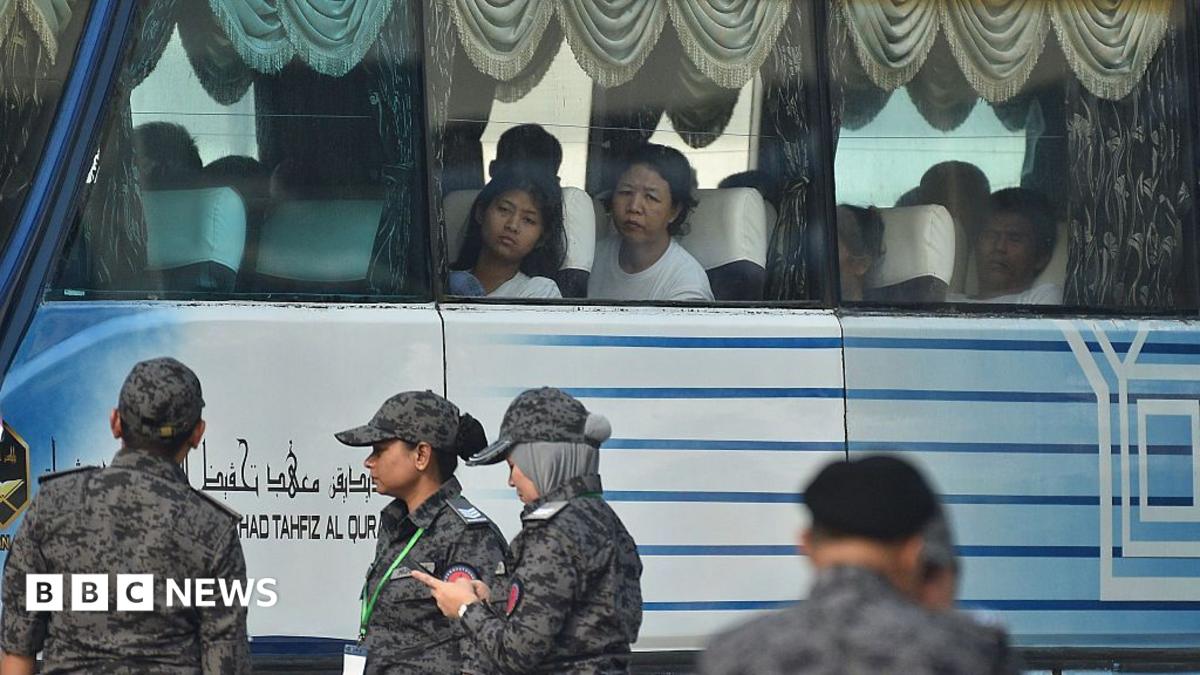
Malaysia has begun a controversial mass repatriation of asylum seekers from Myanmar, with three naval vessels from the Burmese military government due to depart from Malaysian waters on Tuesday carrying the first 1,476 of roughly 5,000 people covered by a deal struck with Myanmar's military ruler, Min Aung Hlaing. The transfers, the first of their kind under the agreement, mark a dramatic reversal for a country that only two years ago refused to recognise the regime at the centre of Myanmar's civil war.
Human rights organisations have sharply criticised the operation, warning that those returned face violence, persecution and, in the case of men of military age, the threat of forced conscription into the Burmese army. The Malaysian government has insisted the movement is entirely voluntary, but it has blocked the UN refugee agency from observing or interviewing the returnees, who are being held in detention centres in the meantime — a restriction rights groups describe as incompatible with any genuine assessment of informed consent.
Prime Minister Anwar Ibrahim said the group will includeinale-fixated Rohingya, a heavily persecuted Muslim minority who fled Myanmar and are not recognised as citizens there. Large numbers have travelled to Malaysia over the past decade, particularly after conditions in Bangladeshi refugee camps became so severe that those able to raise the money risked the dangerous sea crossing in search of safety and paid work.
Anwar acknowledged that the Rohingya "have clearly become a burden" on Malaysia — describing them as a security burden, an economic burden and a source of public hostility — while insisting the government retains a duty of basic decency towards them. In the same recent podcast interview, he said authorities could arrest undocumented migrants, but should not beat, intimidate or humiliate them, a standard that rights groups say has not been upheld in immigration detention facilities.
The shift is all the more striking because of Anwar's own political biography. A former political prisoner who spent much of his career railing against arbitrary detention, he has built much of his public image as a defender of human rights and civil liberties, and has repeatedly called for greater protection for the Rohingya. Under his premiership, Malaysia declined to recognise Min Aung Hlaing's junta and became one of the loudest voices in South East Asia pressing for a negotiated settlement to the civil war.
Analysts point to two forces driving the about-turn. The first is economic. Lower-income Malaysians have absorbed a heavy blow since the Covid-19 pandemic, and that strain has hardened attitudes towards newcomers competing for scarce work. The second is political: Malaysia has been in a state of chronic instability since 2018, when a historic election ended the monopoly of the United Malays National Organisation, the ethnic Malay party that had governed for more than 60 years, and opened the door to a revolving door of fragile coalition governments.
For many years, Malaysian public opinion was markedly sympathetic towards Rohingya arrivals, seen in part as fellow Muslims facing persecution. That sympathy was built on a foundation of international outrage: in August 2017, a brutal military campaign in Rakhine State drove three-quarters of a million Rohingya from their homes into neighbouring Bangladesh, one of the fastest forced displacements in modern history.
Although the Malaysian navy and coastguard have long attempted to turn back Rohingya boats, many migrants arrived by other routes and, for years, were quietly tolerated. More than 200,000 are now believed to be living in Malaysia, the vast majority subsisting on low-wage manual labour. Public sentiment began to sour during the pandemic, when fears about the virus spread alongside unsubstantiated social media claims that Rohingya migrants were free-loading, fuelling calls for their deportation. The government of the day responded by declaring that Malaysia could accept no further refugees and ordering raids on communities suspected of sheltering undocumented migrants.
The same pattern has repeated more recently. In May, an online post complaining that Rohingya residents had failed to dispose of animal waste properly after the Muslim festival of Eid al-Adha triggered a viral campaign that falsely alleged Rohingya leaders were demanding land and citizenship in Malaysia. Soon afterwards, a Change.org petition demanding that Malaysians expel the Rohingya drew more than 400,000 signatures before it was removed.
Given his one-time reputation as a champion of liberal values, Anwar might have been expected to push back against what critics see as a wave of hate and disinformation. Instead, he has framed the agreement as a matter of political necessity, arguing that with public opinion so hostile there is no realistic alternative to negotiating with Myanmar's government. Some former supporters have branded that a betrayal of principle. Latheefa Koya, the former head of the Malaysian Anti-Corruption Commission, called the decision disgraceful and amoral, saying it shames the nation in the eyes of the international community.
The pressure on the prime minister is intense. Once nicknamed a perennial prime minister-in-waiting, Anwar finally reached the top job in 2022, but only by assembling an uneasy coalition with UMNO, the party of his former adversaries. Since then his personal popularity has fallen sharply and his own party has lost ground in recent local elections, while a string of corruption scandals has dogged the administration. A general election must be called by early 2028.
"He is in a corner, at his weakest point," said Tricia Yeoh, director of the Asian Institute for Policy and Engagement at the University of Nottingham Malaysia, who argues Anwar has been forced to concede ground to his UMNO partners and is now paying for years of difficult compromises with a divided party and a battered image.
For the roughly 1,476 people boarding the ships, the immediate question is what awaits them. Without access for UNHCR officials, independent verification of the voluntary character of the return is unlikely before they land. For Malaysia, the deeper test will be whether a deal concluded under duress can be squared with a human rights record built on Anwar's own long history of opposition to arbitrary state power.
What's Your Reaction?
 Like
0
 Dislike
0
 Love
0
 Funny
0
 Wow
0
 Sad
0
 Angry
0

Editor Investigasi. Pemenang penghargaan jurnalisme investigasi. Spesialisasi: korupsi, kolusi, dan maladministrasi.




Comments (0)