

Historic Aztec Codex Returns to Mexico for Landmark Exhibition After Nearly Two Centuries Abroad
A priceless centuries-old manuscript chronicling the rise and collapse of the Aztec empire is going on public display in Mexico for the first time in 186 years, marking a historic
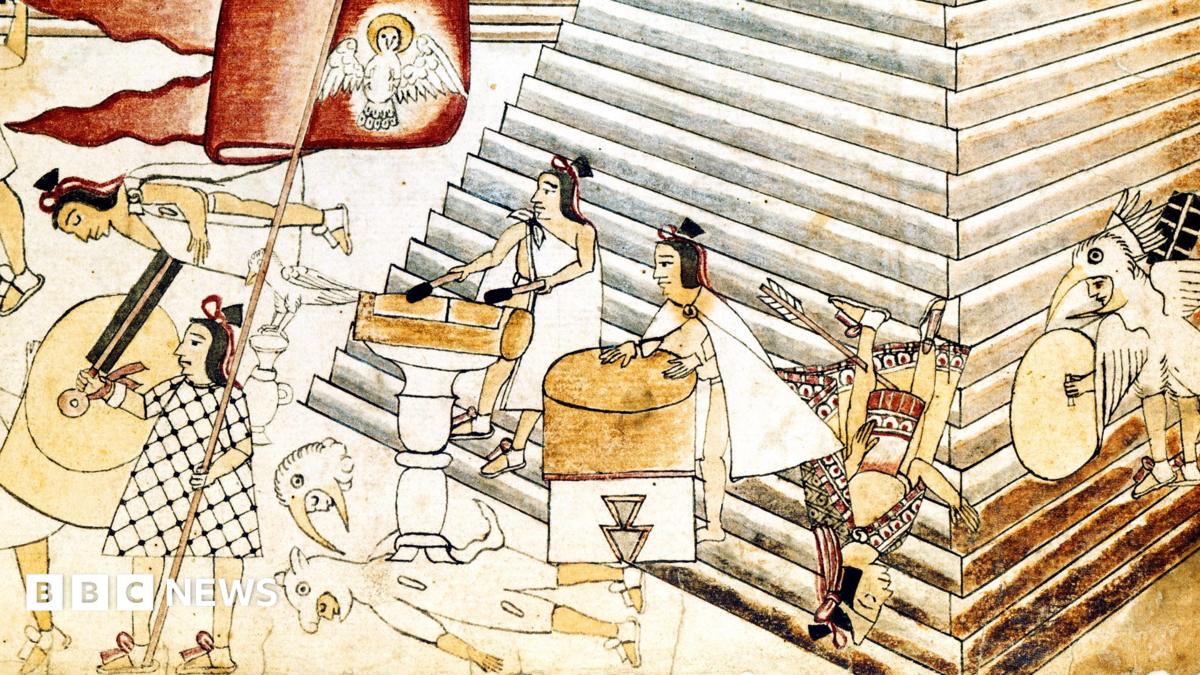
A priceless centuries-old manuscript chronicling the rise and collapse of the Aztec empire is going on public display in Mexico for the first time in 186 years, marking a historic cultural milestone for the country. The document, which illustrates the history of pre-Hispanic civilization and the arrival of Spanish colonisers through vivid pictograms, has spent nearly two centuries preserved in foreign collections across the Atlantic.
The rare pictorial manuscript, known as the Codex Azcatitlán, is set to be showcased to the public starting this Thursday at the renowned National Museum of Anthropology in Mexico City. Its temporary homecoming offers visitors and researchers in Mexico an unprecedented opportunity to view one of the most significant visual narratives of indigenous Mesoamerican history in existence.
Scholars believe the Codex Azcatitlán was illustrated during the 16th century, created only a few years following the arrival of Spanish conquistadors in what is now modern-day Mexico. Due to its detailed visual storytelling and proximity to the events it illustrates, the document is widely regarded by historians and cultural experts as one of the most valuable, nuanced, and insightful surviving records detailing the life and eventual downfall of the Aztec civilisation.
The manuscript presents a sequential account of the Mexica people, employing traditional pictographic storytelling methods to convey historical events spanning pre-colonial times through the Spanish conquest. The hand-painted pages capture major historical milestones, portraying both the everyday cultural landscape of the Aztec empire and the violent upheaval brought about by European contact.
Among the striking scenes preserved within the Codex Azcatitlán is the initial arrival of the Spanish expedition led by conquistador Hernán Cortés. The detailed drawings illustrate Cortés advancing alongside heavily armed European soldiers dressed in protective metal armour, carrying combat shields and weaponry, accompanied by indigenous men bearing heavy supplies on their backs, with the expedition marching beneath a distinctive banner adorned with an angel.
Other surviving folios in the manuscript offer a dramatic, ground-level perspective on the fierce military clashes that occurred between the native defenders and the invading European forces. The artwork vividly captures the determined resistance of Aztec warriors as they fought to protect the Great Pyramid of Tenochtitlán from the advancing conquistadors.
The battle illustrations within the codex highlight remarkable individual actions and the intense drama of the conflict. In one notable sequence, an Aztec warrior disguised in ceremonial bird attire is depicted clutching a combat shield, while another fighter is shown tumbling down the steep stone steps of the pyramid after suffering an arrow wound to the leg, all while two musicians provide rhythmic accompaniment on traditional drums nearby.
Despite its Mexican origin and indigenous authorship, the Codex Azcatitlán has spent the vast majority of modern history far from its homeland. The manuscript has been preserved in France's Bibliothèque Nationale since 1898, having already spent several decades circulating in European hands and collections prior to entering the national library's permanent holdings.
The journey of the codex back to Mexico City is the result of an international cultural cooperation initiative between the French and Mexican governments. France agreed to lend the Codex Azcatitlán to Mexico specifically to commemorate the bicentenary marking 200 years of established bilateral relations and diplomatic ties between the two nations.
The terms of the cultural exchange were officially finalized during a high-level diplomatic summit, when French President Emmanuel Macron traveled to Mexico last year for an official state visit and met with Mexican President Claudia Sheinbaum. The two leaders agreed upon a reciprocal loan of foundational cultural heritage documents between their respective national institutions.
In exchange for receiving the Codex Azcatitlán on loan, Mexico agreed to send another of its most revered historical treasures across the Atlantic to be put on display in France: the Codex Boturini. This parallel loan allows French audiences to view another foundational work of ancient Mexican historical writing.
The Codex Boturini holds immense cultural and historical importance in its own right, utilizing indigenous pictograms to chronicle the legendary journey and migration of the Aztecs, also referred to as the Mexica. Its illustrations narrate their departure from their ancestral homeland and their epic pilgrimage to the shores of Lake Texcoco, the historic location where they established their magnificent capital city of Tenochtitlán.
The temporary return of the Codex Azcatitlán aligns closely with a broader, long-term campaign by the Mexican government to recover cultural patrimony and lobby foreign institutions for the restitution of historical artefacts removed from the country in previous centuries. Mexican authorities have consistently pressed international museums, private collectors, and foreign governments to facilitate the return of pre-Hispanic relics and colonial-era documents.
These sustained diplomatic and legal initiatives have yielded substantial results in recent times. According to official figures released by Mexico's Ministry of Foreign Relations, more than 2,000 historical objects and cultural artefacts were successfully repatriated to Mexican custody over the course of the past year alone.
The exhibition of the Codex Azcatitlán at the National Museum of Anthropology represents a deeply symbolic moment in this ongoing cultural effort, bringing one of the country's most iconic illustrated chronicles back to the soil where it was created after 186 years abroad.
What's Your Reaction?
 Like
0
 Dislike
0
 Love
0
 Funny
0
 Wow
0
 Sad
0
 Angry
0

Editor Investigasi. Pemenang penghargaan jurnalisme investigasi. Spesialisasi: korupsi, kolusi, dan maladministrasi.





Comments (0)