

France Suspends Stun Grenades in School Protests After Teenager Loses Hand
France has ordered a nationwide suspension of anti-encirclement stun grenades in policing operations against student demonstrations after a 15-year-old boy's hand was severed durin
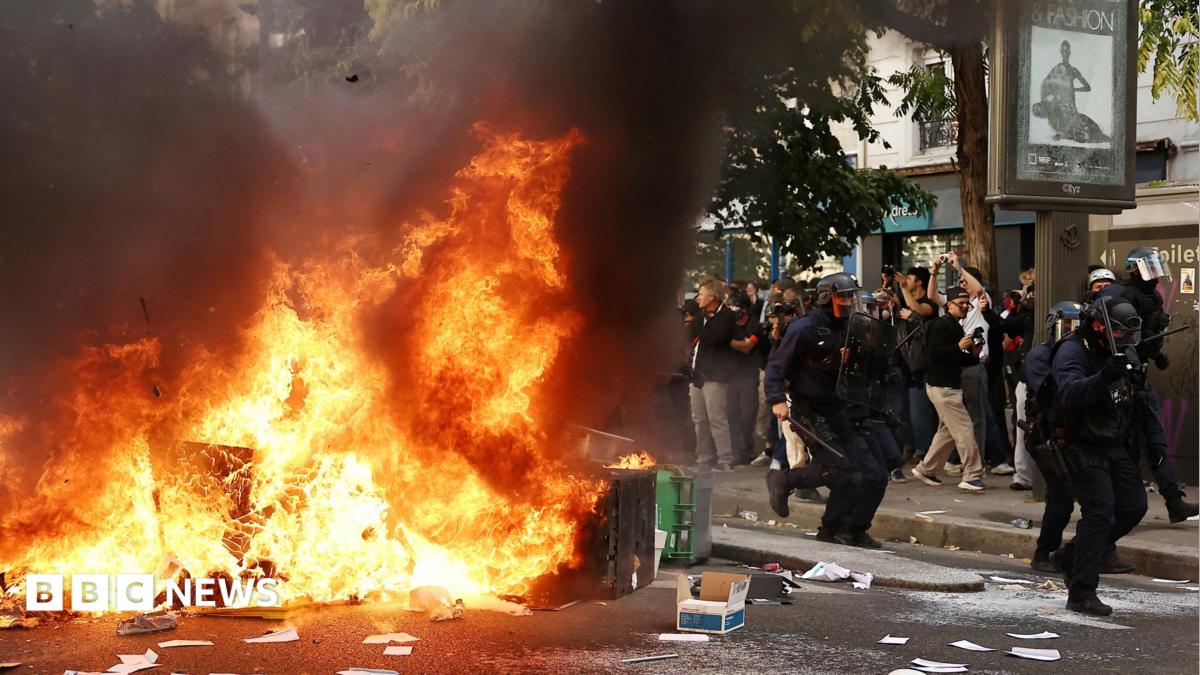
France has ordered a nationwide suspension of anti-encirclement stun grenades in policing operations against student demonstrations after a 15-year-old boy's hand was severed during an incident outside a high school earlier this week. Interior Minister Laurent Nuñez announced the pause on Wednesday, saying it would remain in place until the circumstances of Monday's events in the northern city of Lens had been fully established. The decision marks the most significant concession by the government since protests over conditions in French schools erupted in mid-September and steadily expanded in size and scope.
The injured teenager was hurt near the Auguste Béhal high school in Lens, a town close to Lille in northern France. According to authorities, the boy picked up a device that subsequently detonated, while student witnesses have alleged that an officer fired the grenade directly at him. The local prefect said police had been confronting a group of 200 to 250 young people who were throwing stones and fireworks at the time. Anti-encirclement grenades are classified as non-lethal weapons, but they release small rubber pellets upon detonation and can cause serious injury at close range.
Nuñez told French radio station RTL that the police watchdog IGPN had launched 18 separate investigations into whether officers had behaved proportionately during the demonstrations. He singled out the Lens incident as one that "raises questions for all of us within the Ministry of the Interior" and confirmed that the grenade suspension would hold "until the facts surrounding this case have been clarified." The contrasting narratives offered by officials and protesters have made establishing a clear account of the incident difficult, a factor the minister cited in justifying the pause.
The unrest has grown well beyond its original base. What began as action by high school pupils has drawn in their parents, university students and trade unions. Hundreds of thousands of people marched across France on Tuesday, with tear gas and water cannon deployed in some cities. The interior ministry reported 488 arrests and said 43 members of the security forces had been injured during that day of action. The ministry has also said more than 6,500 people have been stopped or arrested since the movement began.
More than 500 schools were fully or partially closed on Wednesday as the disruption continued. Prime Minister Sébastien Lecornu was scheduled to address the school protests in an evening broadcast, under mounting pressure to chart a path out of the crisis. On Tuesday he condemned violence seen at some demonstrations, noting that 215 students, 85 school staff and 715 police officers had been hurt since mid-September. President Emmanuel Macron convened an emergency meeting late on Tuesday with Lecornu and other senior ministers after nearly a quarter of all lycées were affected by that day's protests.
The scale of the mobilization remains contested. Government figures put Tuesday's turnout at more than 250,000, while student unions claimed 450,000 participants. The unions have announced a fourth round of protests for Thursday in Paris and other cities, indicating that neither the suspension of stun grenades nor the prime minister's scheduled address has defused the movement. Ryad Rani, head of the USL high school union, urged the interior minister on Wednesday to restrain the police, telling French radio: "We are telling M. Nuñez, calm your police officers down and call for restraint."
The Lens case is not the only incident to have intensified scrutiny of police tactics. Last week, a 14-year-old boy was struck in the face by a tear gas grenade in Saint-Ouen-l'Aumône, north-west of Paris. His lawyer said he lost several teeth and suffered a fractured jaw, and a police officer has since been charged in connection with the matter. The case has become a rallying point for critics who argue that the force used against young demonstrators has been excessive and poorly supervised.
Separately, prosecutors said on Wednesday that they had opened an attempted murder investigation after a 17-year-old student protester alleged that an officer held his head underwater while attempting to arrest him near a river in Belfort, in north-eastern France. The allegation adds to a growing list of complaints that the IGPN is now examining. Taken together, the Lens, Saint-Ouen-l'Aumône and Belfort cases have focused attention on the conduct of individual officers rather than on the grievances that initially sparked the protests.
Those grievances center on the state of France's schools. Students have cited overcrowded classrooms, teacher shortages, deteriorating buildings and, in some cases, excessively hot classrooms during this year's heatwaves. The movement began in the Île-de-France region around Paris before spreading to cities nationwide. The breadth of the demands has helped the protests attract support from parents and unions, transforming a school-based dispute into a wider challenge for a government already navigating a difficult political period.
The suspension of anti-encirclement grenades represents a notable reversal for the interior ministry, which had defended the weapon as a necessary tool for controlling violent crowds. Its use has long been controversial in France, where successive rounds of protest have renewed debate over the appropriate balance between maintaining public order and protecting the safety of young people. The IGPN investigations now underway are expected to weigh heavily in that debate, particularly if they conclude that officers departed from accepted practice.
For the government, the immediate challenge is twofold. It must demonstrate that it is addressing the safety concerns raised by the injuries, while also finding a way to engage with students and unions whose demands extend far beyond policing. Lecornu's evening address is likely to be scrutinized for signals about whether the executive intends to offer concessions on school funding and staffing or to take a firmer line as Thursday's demonstrations approach.
Protest organizers have shown little inclination to scale back. With a fourth day of action already planned and unions describing the government's response as insufficient, the coming days will test whether the suspension of stun grenades can lower tensions or merely shifts attention to other contested police tactics. The interior ministry's admission that it is examining its own officers' conduct suggests the crisis has entered a phase in which the government must answer questions about how it polices dissent, not only about the conditions that provoked it.
For now, the 15-year-old from Lens remains at the center of the story. His injury, and the dispute over how it occurred, prompted the suspension that has now been extended across the country. Whether that measure proves sufficient to restore calm will depend on investigations that could take weeks to complete, on the tone of the prime minister's address, and on whether Thursday's protests pass without further injuries to students, staff or police.
What's Your Reaction?
 Like
0
 Dislike
0
 Love
0
 Funny
0
 Wow
0
 Sad
0
 Angry
0

Editor Investigasi. Pemenang penghargaan jurnalisme investigasi. Spesialisasi: korupsi, kolusi, dan maladministrasi.






Comments (0)