

Evan Gershkovich Recounts the Moment He Realised Russia Had Set a Trap: 'I Was a Pawn in a Greater Game'
US journalist Evan Gershkovich has revealed that he understood almost immediately upon his arrest by Russian security agents that he was not being treated as a genuine espionage su
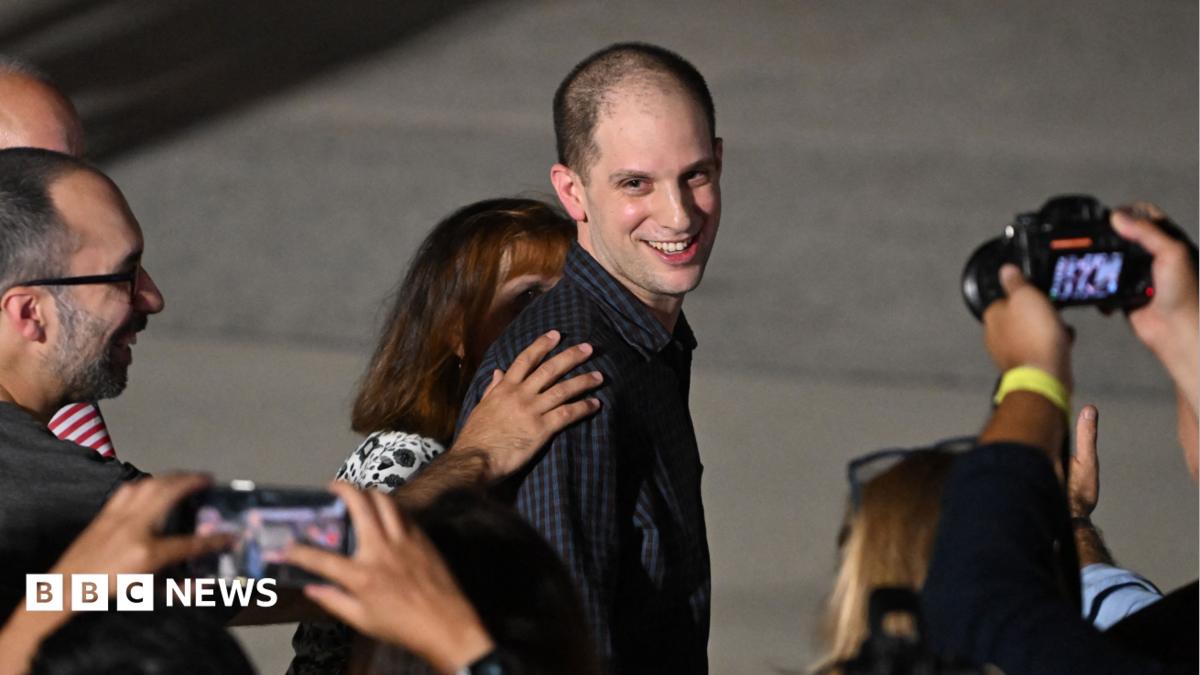
US journalist Evan Gershkovich has revealed that he understood almost immediately upon his arrest by Russian security agents that he was not being treated as a genuine espionage suspect, but rather as a fabricated case designed to turn him into a bargaining chip for the Kremlin.
Speaking to BBC Radio 4's Today programme, the 34-year-old described the moment in 2023 when masked men surrounded him at a restaurant in Yekaterinburg, roughly 1,600km east of Moscow, and informed him he was under arrest. He said he recognised at once that he had been lured into a trap.
Gershkovich, who had lived in Russia since 2017 and was working as the Wall Street Journal's Moscow correspondent, was meeting someone he believed to be a source for a story on the day of his detention. The two men were sitting in a half-empty dining hall when around half a dozen masked men walked in and said, "I think we booked that table."
The journalist described the phrase as odd but clever, noting that it had the effect of freezing him in place. Both men stood up, and Gershkovich was told he was under arrest by the FSB, Russia's powerful domestic security service. He said that was the moment he realised the situation was genuinely serious, because when the FSB is involved, it is clear the operation has been planned in advance.
The man he had been meeting with then disappeared into the crowd, a detail that reinforced Gershkovich's suspicion that the encounter had been staged. He and his employer have always maintained that the espionage charges against him were false.
What struck Gershkovich most in the aftermath of his arrest was what did not happen. He was neither interrogated nor tortured, tactics Russian security services commonly deploy against people accused of spying. That absence, he said, brought an unexpected sense of relief rather than fear.
"I realised they're not treating me like a real spy," he recalled. Instead, he concluded that the case against him had been fabricated so that he could serve as a valuable hostage — a pawn in a larger geopolitical game. That understanding, though grim, gave him a measure of stability and discipline during his time behind bars, and it also shaped his predictions about how his case might eventually end.
One of those predictions was a prisoner exchange. Gershkovich assumed his detention would provoke a loud global response, given his position as a foreign correspondent for a major American newspaper. His assessment proved correct.
Media organisations around the world covered the case extensively, his face appeared on a billboard in Times Square, and then-US President Joe Biden said he had "no higher priority" than securing Gershkovich's release. The journalist believes this high-profile attention was exactly what Moscow had anticipated and counted on.
He suggested that Russia's strategy was to hold a prominent prisoner who could eventually be exchanged for one of its own operatives. That operative turned out to be Vadim Krasikov, an assassin serving a life sentence in Germany at the time of the swap.
Gershkovich was sentenced to 16 years in prison but was freed after 16 months as part of a high-profile prisoner swap on 1 August 2024. He now lives in Berlin, Germany.
During his detention, Gershkovich was held at Moscow's Lefortovo jail, a facility that has housed some of Russia's most prominent political prisoners and dissidents over the decades. During Joseph Stalin's Great Terror in the 1930s, torture and execution were routine there. Gershkovich described his own experience as deeply isolating, spent in a very small space, which he said wears on a person psychologically. He added, however, that he was treated reasonably well, was allowed to sleep, and found the food acceptable.
Pictures of Gershkovich smiling at cameras during his court appearances in Moscow were broadcast worldwide, and he said the smiles were deliberate. He wanted to project defiance and to signal to the outside world that he was alright. His reasoning was that if the proceedings were a form of theatre, there was no reason to let Moscow dictate how the performance unfolded.
At the same time, Gershkovich was careful to distinguish his treatment from that of other prisoners. He noted that some detainees are tortured and psychologically broken, deprived of food and hot water, and told they will never see their families again. He stressed that his experience was entirely different.
He drew a comparison with Ukrainian journalist Viktoriia Roshchyna, who died in Russian captivity in 2024 at the age of 27. When her body was eventually returned months later, reports indicated signs of torture and that her organs had been removed.
Gershkovich knew a prisoner swap was planned three weeks before it took place, a period he described as excruciating because each day felt painfully long. When the exchange finally happened, he experienced pure joy. That feeling, however, was followed by the adrenaline subsiding and the joy fading, leaving him to confront the challenge of returning to normal life — a period he described as difficult and sometimes overwhelming.
What's Your Reaction?
 Like
0
 Dislike
0
 Love
0
 Funny
0
 Wow
0
 Sad
0
 Angry
0

Editor Investigasi. Pemenang penghargaan jurnalisme investigasi. Spesialisasi: korupsi, kolusi, dan maladministrasi.






Comments (0)