

Canada Embraces European Union Associate Membership Proposal Amid Deepening Transatlantic Realignment
Canadian Prime Minister Mark Carney has formally embraced an initiative put forward by the European Union that could see Canada become the bloc's inaugural "associate member." Addr
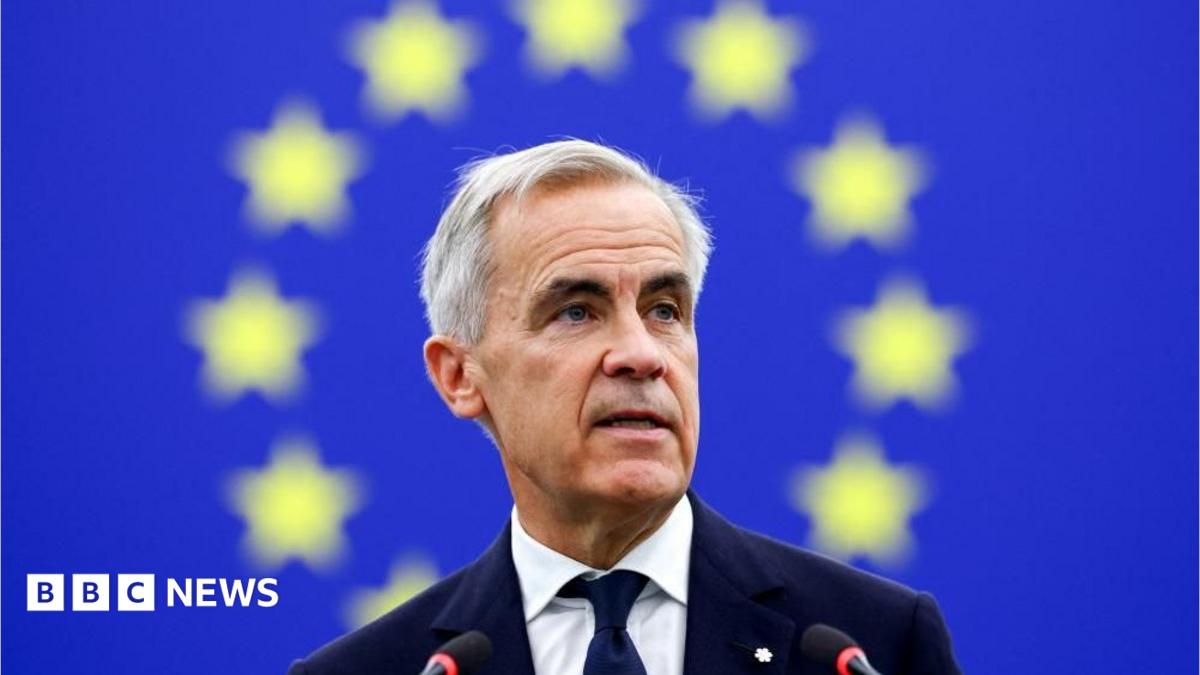
Canadian Prime Minister Mark Carney has formally embraced an initiative put forward by the European Union that could see Canada become the bloc's inaugural "associate member." Addressing the European Parliament in Strasbourg, Carney framed the potential partnership as a critical step toward shielding democratic nations from international instability, specifically urging both sides to fortify their cooperation across key sectors including defence, critical mineral supply chains, and energy resilience.
The address followed a major pitch delivered a day earlier by European Commission President Ursula von der Leyen, who proposed "opening the door" to an associate status for Canada. Although such an affiliation does not currently exist within the European Union's legal architecture, von der Leyen suggested establishing a closer framework that would span advanced manufacturing, technological innovation, economic security, defence, and critical materials.
In his remarks to European lawmakers, Carney stressed that Canada and Europe are "stronger together" during an era marked by deep "geopolitical rupture." He warned that democratic societies on both sides of the Atlantic are currently navigating severe disruptions, pointing to the combined pressures of climate change, the steady erosion of established democratic practices, and the aggressive use of commerce as an instrument of geopolitical leverage.
Carney delivered a pointed assessment of modern global economic vulnerabilities, arguing that traditional economic integration has increasingly been transformed into a coercive tool. He observed that tariffs are now routinely deployed to apply political force, financial systems are wielded to pressure sovereign states, and international supply chains have become sensitive focal points that competing powers seek to exploit for strategic advantage.
The Canadian prime minister’s European overture unfolds against the backdrop of worsening trade relations with the United States. Following the breakdown of bilateral negotiations last month, Ottawa and Washington have been locked in an intensifying trade confrontation that has resulted in both nations imposing retaliatory, tit-for-tat tariffs on cross-border goods.
The proposal has drawn sharp condemnation from US President Donald Trump, who publicly dismissed the concept of an associate EU membership for Canada as "laughable." Speaking to reporters, Trump warned that if Washington interprets the arrangement as a "hostile act" or driven by "bad intention," he would retaliate by placing severe tariffs on European imports or halting certain areas of trade with the European continent entirely.
Carney directly addressed the American president's warnings during a subsequent press conference in Strasbourg, firmly characterizing the transatlantic initiative as a positive development rather than an aggressive manoeuvre. The prime minister affirmed Canadian national resolve, declaring that Canadians stand united against external interference and will not permit outside powers to dictate their language, culture, or international agreements.
While making the case for a deeper alliance, Carney sought to dispel any notion that Canada aims to become a full-fledged member of the 27-nation union. He made clear that Ottawa is neither in a position nor seeking to join the EU fully, emphasizing instead that the two partners are creating a distinct framework designed to protect domestic sovereignty rather than construct a rival power bloc to dominate other nations.
A central pillar of the envisioned partnership involves energy cooperation. Carney outlined Canada’s capacity to bolster European energy independence by supplying liquefied natural gas and clean hydrogen. In return, Canada looks to leverage Europe’s advanced industrial expertise in clean-energy technologies, creating a mutually beneficial trade channel that reinforces long-term environmental and energy security goals.
Strategic resources also featured prominently in Carney's vision for transatlantic autonomy. The prime minister advocated for deep collaboration across the entire spectrum of strategic capabilities, placing a strong emphasis on securing reliable access to critical minerals. He also proposed the pooling of technological assets to ensure both jurisdictions maintain an innovative edge amid rising international competition.
Beyond industrial and economic policy, the prime minister championed broader social integration to reinforce transatlantic solidarity. Carney recommended expanding people-to-people connections by integrating Canada into the European Union's Erasmus+ programme, an initiative that would enable young Canadians and Europeans to live, study, and work across the Atlantic with greater ease.
Despite mutual political enthusiasm, establishing an associate member status presents substantial institutional hurdles that could take years to resolve. Because the designation represents uncharted territory for the EU, any formal framework will require the unanimous consent of all 27 member states, several of which have previously expressed hesitations regarding the introduction of alternative membership tiers.
The initiative nevertheless builds upon an established foundation of transatlantic cooperation. Canada and the European Union already maintain a comprehensive free-trade agreement, alongside operational partnerships in scientific research, commercial trade, and shared defence initiatives.
Carney cautioned that both jurisdictions remain at the beginning of a complex legislative and diplomatic path. The Canadian government intends to hold a formal parliamentary debate and vote on the prospective terms. Detailed negotiations are scheduled to advance further during an upcoming Canada-EU summit slated to take place in Montreal at the end of October, where leaders plan to hammer out the precise mechanisms of the partnership.
What's Your Reaction?
 Like
0
 Dislike
0
 Love
0
 Funny
0
 Wow
0
 Sad
0
 Angry
0

Editor Investigasi. Pemenang penghargaan jurnalisme investigasi. Spesialisasi: korupsi, kolusi, dan maladministrasi.



Comments (0)